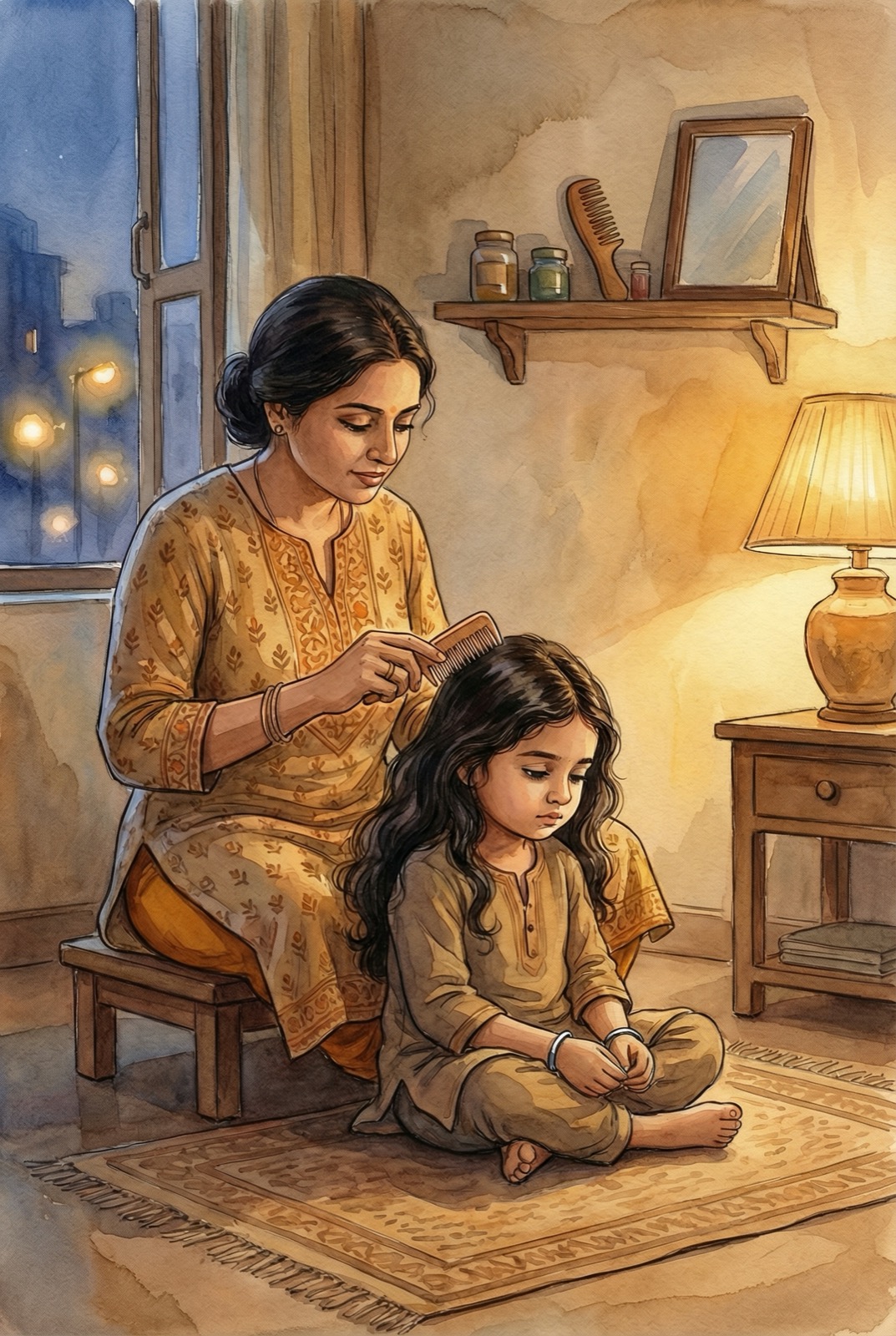
Simran Kaur and the Knot
About This Book
After a long and frustrating day, Simran Kaur returns home with tangled hair and tangled feelings. Her mother sits down with a small wooden comb and gently works through the knots — in Simran's hair and in her heart. Through patient conversation and care, Simran discovers that even the toughest tangles can be smoothed out with love and understanding. A tender story about the comfort of family and the power of slowing down.
Themes
FamilyComfortEmotions
Best For
- Bedtime reading after a child has had a visibly difficult or overwhelming day
- Families looking for Sikh or South Asian representation in everyday, non-festival picture books
- Parents who want a conversation starter about emotions without the book feeling like a feelings lesson
- Preschool and kindergarten classrooms building emotional literacy vocabulary
- Children who are tactile or sensory-sensitive and connect well with body-based metaphors
Why Parents Love This Book
Simran Kaur and the Knot does something quietly remarkable: it uses the everyday ritual of combing tangled hair as a window into a child's emotional world. The parallel between knotted hair and knotted feelings is elegant and completely believable to young readers who have sat in that same chair, wincing through a difficult afternoon. What makes the book endure is its honesty about hard days. Simran does not bounce back instantly — she needs time, a trusted adult, and patient conversation. The mother's response models exactly the kind of attentive, unhurried care that children need and parents aspire to offer. The domestic setting feels warm and culturally specific without being exclusionary, making it accessible to any family that has shared a quiet moment of repair. For Sikh families in particular, the scene of a parent tending to a child's hair carries deep resonance tied to identity and love. This is a book that earns its tenderness.
Reading Tips for Parents
This book works best read slowly, ideally during or after a real hair-combing session so the connection is immediate and concrete. Pause at the moments where Simran's mother asks questions rather than gives answers — these are good prompts to mirror with your own child. Before you begin, you might say: "Today we're going to read about a girl who had a really hard day. Let's see what helps her feel better." After reading, resist the urge to resolve every feeling your child raises; the book models sitting with emotions before smoothing them out. For children who struggle to name their feelings, the "knot" metaphor gives them a physical shorthand they can use independently afterward — "I have a knot today" is easier to say than a full explanation.
Awards & Recognition
- No major awards on record for this title
- Published 2024 — award eligibility cycle ongoing
Educational Value
This book helps children develop skills across multiple areas:
- Social-emotional learning: Introduces the concept of naming and working through difficult emotions rather than suppressing them, modeled through a realistic family interaction.
- Vocabulary: Gently expands emotional language with words for frustration, comfort, and patience that children can carry into everyday conversations.
- Family and culture: Depicts caregiving rituals that help children understand how family routines can carry emotional significance and cultural identity.
- Listening and comprehension: The quiet pacing of the story rewards careful listening, building skills in following narrative cause-and-effect across a single sustained scene.
- Self-regulation: Illustrates that strong feelings, like tangles, can be worked through slowly rather than reacted to immediately, offering children a concrete mental model for calming down.
Discussion Questions
Use these questions to spark conversation before, during, or after reading:
- Why do you think Simran's hair got so tangled? What kind of day do you think she had?
- When Simran's mother combs her hair, how does Simran start to feel different? What does her mother do that helps?
- Have you ever had a day where everything felt tangled up inside? What helped you feel better?
- Why do you think the author made the knots in the hair and the knots in Simran's heart part of the same story?
- If you were Simran's friend, what would you do to help her after a tough day?
Content Notes for Parents
There are no frightening, violent, or mature elements in this book. The emotional content — frustration and a hard day — is mild and age-appropriate, and the story resolves with comfort and connection.
Frequently Asked Questions
What age is this book best suited for?
The book is written for children ages 4 to 7 and works especially well for preschoolers and kindergartners. The emotional concepts are concrete and grounded in a physical experience — tangled hair — so even younger children on the edge of that range tend to connect with it intuitively.
Do you need to be Sikh to enjoy this book?
Not at all. While the story features a Sikh family and the ritual of hair care carries cultural meaning for Sikh readers, the core experience — a hard day, a patient parent, a moment of quiet repair — is universal. Families of any background will find it relatable and warm.
Is this book appropriate for children who are going through something genuinely difficult, like a family change or loss?
The book addresses everyday frustration and emotional overwhelm rather than grief or major life disruption. It can be a gentle entry point for bigger conversations, but parents dealing with serious situations may want to pair it with books specifically written for those circumstances. That said, the model of patient, present caregiving it portrays is broadly healing.
How long does it take to read aloud?
As a beginning reader picture book, it is designed for a single sitting of roughly five to ten minutes. The pacing is unhurried, so it rewards a slow read-aloud rather than rushing through — which fits naturally into a bedtime or wind-down routine.
Are there other books like this one that I can pair it with?
Books that pair well thematically include titles focused on emotional regulation, parent-child connection, and cultural identity in everyday settings. Look for picture books that use sensory or domestic rituals — bath time, cooking, braiding — as entry points to emotional conversations, as this book demonstrates that approach particularly well.