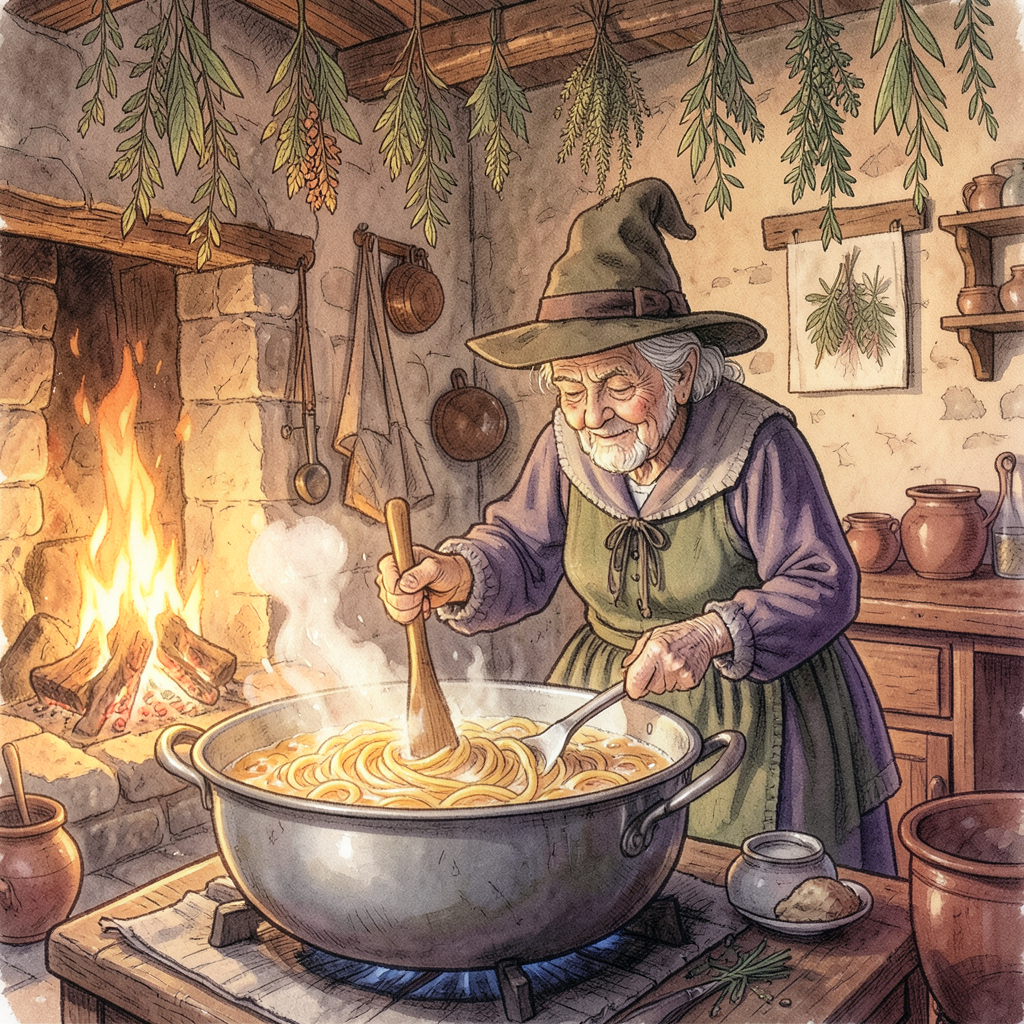
Strega Nona
About This Book
In a town in Calabria, Strega Nona (Grandma Witch) has a magic pasta pot. When her helper Big Anthony uses the pot without knowing how to stop it, pasta floods the entire town. Strega Nona saves the day, and Big Anthony must eat all the pasta as punishment.
Themes
ConsequencesMagicHumor
Best For
- Reading aloud to preschool and kindergarten groups, where the escalating silliness plays well to an audience
- Introducing young children to folktales and the idea that stories come from many different cultures and places
- Starting a conversation about following rules and listening carefully without lecturing — the story does the heavy lifting
- Families with Italian heritage looking for a warm cultural connection in picture-book form
- Children who love food, cooking, or kitchen play and will instantly connect with the magic pot premise
Why Parents Love This Book
Strega Nona has earned its place as a beloved classic for good reason. Tomie dePaola sets his retelling of an Italian folktale in sun-warmed Calabria, giving the story a warm, Mediterranean feel that comes alive through his rounded, folk-art illustrations. The magic pasta pot is the kind of concept children immediately grasp and delight in — unlimited pasta sounds like a dream, until it isn't. What makes the book genuinely special is its balance of humor and consequence. Big Anthony is not a villain; he is simply curious and overconfident, a feeling every young child understands intuitively. Strega Nona herself is a rare picture-book figure: an older woman who is wise, kind, and powerful without being frightening. The resolution — Big Anthony must eat all the pasta — is both funny and fair, delivering a satisfying sense of justice without cruelty. After fifty years, the storytelling remains tight, the pacing is excellent, and the book reads aloud beautifully, making it a genuine pleasure for the adult sharing it as much as for the child hearing it.
Reading Tips for Parents
Read this one slowly and let the illustrations do their work — dePaola fills each spread with small details that reward close looking, so pause and let your child find the pasta creeping through town. Before you turn the page after Big Anthony starts the pot, ask "What do you think will happen?" to build prediction skills and heighten the comic tension. The story's consequences are gentle enough to open a real conversation: "What should Big Anthony have done differently?" After reading, many children want to dramatize the pasta flooding the town, which is a wonderful extension activity. For families with Italian heritage, this is a lovely bridge to cultural conversation. The book is on the longer side for the age range — around 44 pages — so it works best when you have an unhurried 15 minutes rather than as a quick bedtime pick.
Awards & Recognition
- Caldecott Honor Book, 1976 (American Library Association)
- New York Times Best Illustrated Children's Books of the Year, 1975
Educational Value
This book helps children develop skills across multiple areas:
- Cause and Effect: The story is a clear, humorous chain of cause and effect — Big Anthony ignores instructions, pasta overflows, town floods, punishment follows — making the concept concrete and memorable.
- Social-Emotional Learning: Children see that curiosity without responsibility leads to real consequences, and that owning a mistake (rather than running from it) is the first step toward making things right.
- Cultural Awareness: The story introduces Italian village life, Italian words like 'Strega Nona' (Grandma Witch), and the folk-tale tradition of southern Italy, broadening children's sense of the wider world.
- Vocabulary: Words like 'Calabria,' 'bubbling,' 'overflowing,' and 'townspeople' expand language naturally within a context children find engaging.
- Narrative Structure: The book is a textbook example of a well-shaped folktale — setup, tension, climax, resolution — helping children internalize how stories work.
- Listening and Following Directions: The stakes of not listening are made vivid and funny, giving parents a memorable, low-stakes reference point for real-life conversations about why instructions matter.
Discussion Questions
Use these questions to spark conversation before, during, or after reading:
- Why do you think Big Anthony decided to use the magic pot even though Strega Nona told him not to?
- How did you feel when the pasta started overflowing and flooding the town? Were you worried, laughing, or both?
- Strega Nona punishes Big Anthony by making him eat all the pasta instead of something scarier. Do you think that was a fair punishment? Why or why not?
- If you had a magic pot that could make unlimited of one food, what food would you choose — and would you be tempted to try it when no one was looking?
- Big Anthony made a mistake by not listening carefully to instructions. Has there ever been a time you forgot or skipped a step when doing something important? What happened?
Content Notes for Parents
There are no scary, sad, or mature elements in this book. The magic is playful rather than threatening, and the punishment (eating pasta) is comic rather than harsh — this is a very gentle, humor-driven story appropriate for all children in the target age range.
Frequently Asked Questions
What age is Strega Nona best suited for?
The book is ideal for ages 4 through 7. Preschoolers enjoy the silliness and the magic premise, while kindergarteners and first-graders can engage more deeply with the cause-and-effect structure and the discussion of consequences. The text is more substantial than a simple board book, so it works best when a child can sit through a 10-15 minute read-aloud.
Is there anything in the book that might frighten young children?
No. Despite the word 'witch' in Strega Nona's name, she is a warm, grandmotherly figure — the Italian folk tradition frames her as a wise healer rather than a scary witch. The magic in the story is comic and cozy, not threatening. Even the flooding pasta is played for laughs. This is one of the gentler classics for this age group.
How can I use this book to talk about consequences without it feeling preachy?
Let the story do the work first — read it straight through without commentary. Kids almost always land on the lesson themselves because dePaola makes it so clear and funny. After you finish, a simple question like 'Was Strega Nona's punishment fair?' invites children to reason through it on their own. Avoid explaining the moral; the story earns it without your help.
Are there other books like Strega Nona if my child wants more?
Tomie dePaola wrote several sequels featuring Strega Nona and Big Anthony, including 'Big Anthony: His Story' and 'Strega Nona's Magic Lessons,' so there is a whole series to explore. For similar folk-tale-style picture books with humor and magic, 'The Sorcerer's Apprentice' picture-book adaptations cover very similar thematic ground, and Paul Galdone's fairy-tale retellings have a comparable warmth.
My child wants to act out the pasta flooding the town. Any tips?
This is one of the best natural extensions the book invites. Long strips of yellow paper, cooked (cooled) spaghetti on a baking sheet, or even coiled yellow yarn all work wonderfully as props. Let your child take turns playing Big Anthony and Strega Nona, and encourage them to narrate what is happening — it reinforces sequencing and storytelling skills at the same time.