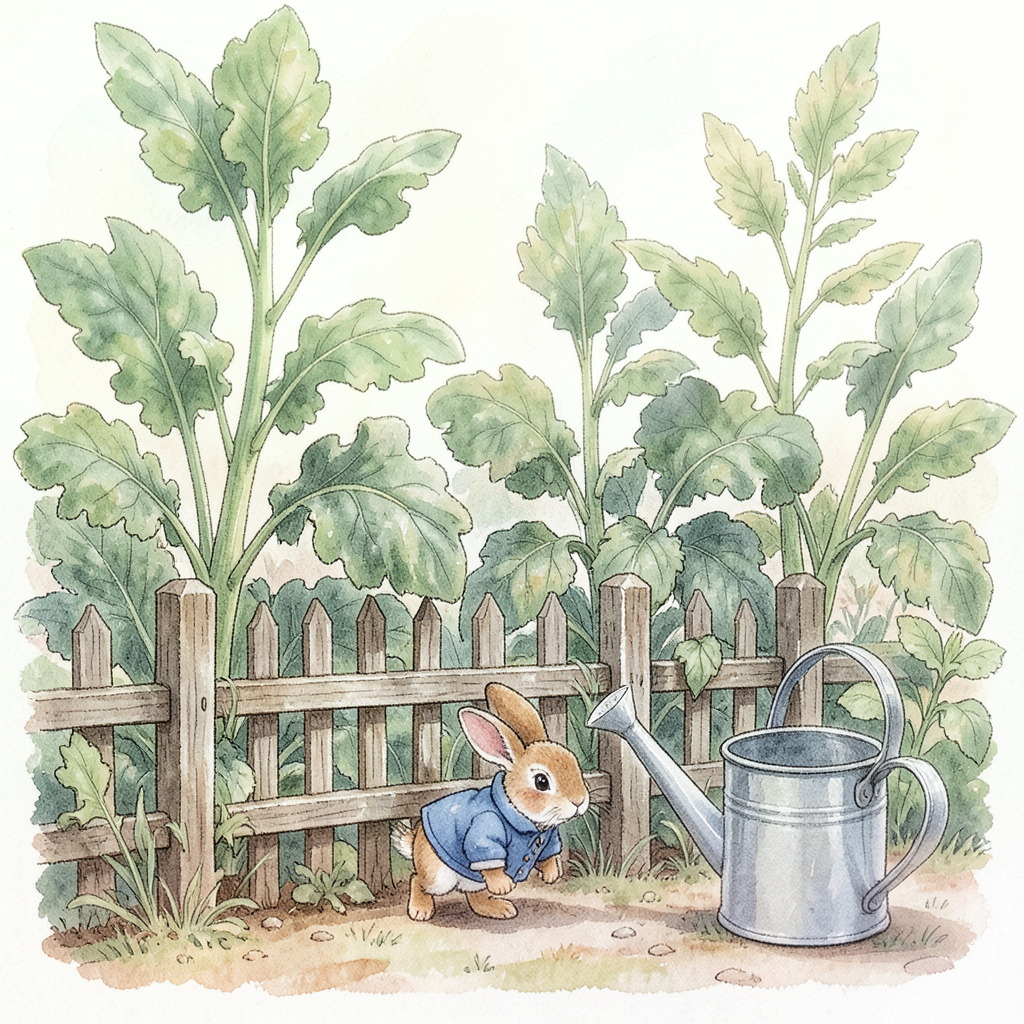
The Tale of Peter Rabbit
About This Book
Despite his mother's warning, the mischievous young rabbit Peter sneaks into Mr. McGregor's garden and feasts on vegetables. When Mr. McGregor spots him, a frantic chase ensues through the lettuce beds and gooseberry net before Peter barely escapes home to bed with a stomachache.
Themes
MischiefConsequencesAdventure
Best For
- Bedtime reading for ages 4-6, as the cozy ending — Peter tucked into bed with tea — settles children naturally toward sleep
- Starting conversations about rules and why they exist, particularly with children who are testing boundaries
- Introducing children to classic illustrated prose before chapter books, as a bridge from picture books with minimal text
- Garden-loving families who can connect the story to real vegetables and plants in their own yard or kitchen
- Children who love animals and imaginative play, especially those drawn to small-creature worlds
Why Parents Love This Book
The Tale of Peter Rabbit has enchanted children for more than a century, and it earns that loyalty honestly. Beatrix Potter's story is deceptively simple: a young rabbit disobeys his mother, sneaks into the neighbor's garden, and barely escapes with his life. Yet within that slim narrative she captures something deeply true about childhood — the magnetic pull of a forbidden place, the mounting dread when things go wrong, and the enormous relief of home. Potter's watercolor illustrations are intimate and precise, every carrot and parsley sprig rendered with botanical care. Her prose is unusually respectful of young readers; she uses real words like "exert" and "implored" without apology, trusting children to rise to the language. The consequence Peter faces — missing out on blackberries while his well-behaved siblings enjoy a lovely supper — is perfectly calibrated. It is real enough to matter, gentle enough not to frighten. This is a story about agency, risk, and the warmth of being taken in after you've made a mess of things.
Reading Tips for Parents
Read this one slowly enough to linger on Potter's illustrations — they carry as much story as the text. Point out details Peter notices but the narrator does not mention, such as the expression on Mr. McGregor's face or the white gate at the end of the garden. Before you begin, you can set up the story naturally: "His father had an accident here once. Let's find out what Peter decides to do even knowing that." After the story, resist the urge to deliver a moral lecture; the ending does that work quietly on its own. For reluctant readers around age six, the short chapters make natural stopping points if you want to stretch the book across two sittings. The vocabulary — "implored," "fortnight," "camomile tea" — is an opportunity, not an obstacle; pause and explain casually rather than skipping over.
Awards & Recognition
- One of the best-selling children's books of all time, with over 45 million copies sold worldwide
- Designated a culturally significant work by the British Library
- Listed among the 100 most influential books in history by various literary organizations
Educational Value
This book helps children develop skills across multiple areas:
- Vocabulary: Introduces rich, precise words — 'implored,' 'fortnight,' 'exert,' 'camomile' — in clear context, expanding language beyond typical early-reader fare.
- Cause and effect: The plot is a clean chain of choices and consequences, helping children trace how one decision (sneaking in) leads directly to the next problem.
- Social-emotional: Explores impulse control and the natural tension between curiosity and caution, giving children language for discussing their own rule-breaking moments without shame.
- Natural world: Potter's botanical illustrations accurately depict parsley, lettuces, gooseberry nets, and chamomile, sparking curiosity about garden plants and wildlife.
- Narrative sequencing: The chase structure — garden entry, discovery, flight, escape, recovery — provides a clear story arc ideal for practicing retelling in order.
- Character comparison: Contrasting Peter with his obedient sisters Flopsy, Mopsy, and Cottontail opens discussions about different personality types and choices within a family.
Discussion Questions
Use these questions to spark conversation before, during, or after reading:
- Why do you think Peter went into the garden even though his mother told him not to?
- How do you think Peter felt when he first got lost among the cabbages? What about when he finally found the gate?
- Peter's sisters got blackberries for supper. Peter got camomile tea in bed. Was that a fair ending? Why or why not?
- Have you ever done something you were told not to do and then wished you hadn't? What happened?
- If you were Peter's friend, what advice would you have given him before he squeezed under the gate?
Content Notes for Parents
The story includes a brief, matter-of-fact reference to the death of Peter's father, who was put into a pie by Mr. McGregor — this is mentioned in passing and rarely distresses children, but sensitive readers may ask about it. The chase scene carries genuine tension but resolves safely, and there are no other content concerns.
Frequently Asked Questions
What age is The Tale of Peter Rabbit best for?
The story works well from about age 3 for read-alouds, with the full text most engaging for ages 4 to 7. Younger toddlers enjoy Potter's illustrations even without following the plot closely. Independent readers around age 6 or 7 can tackle it on their own, though some vocabulary will still benefit from a parent nearby.
Is the story too scary for young children?
The chase through Mr. McGregor's garden is genuinely tense, but it resolves quickly and safely. Most children find it thrilling rather than frightening. If your child is particularly sensitive, you can preview the ending — 'Peter gets home safe' — before you start, which lets them enjoy the suspense without anxiety.
There is a mention of Peter's father being made into a pie. How should I handle that?
Potter mentions it in a single brief sentence and moves on immediately, so many children don't register it on a first read. If your child asks, a simple honest answer works well: 'Yes, that's sad — it's why Peter's mother worries about him going there.' It can open a gentle conversation about why parents set rules to keep their children safe.
Are there other Beatrix Potter books to read next?
Potter wrote 23 tales in the same format and style. The Tale of Benjamin Bunny is a direct sequel featuring Peter returning to the garden. The Tale of Jemima Puddle-Duck and The Tale of Mrs. Tiggy-Winkle are beloved next steps. All share the same intimate scale and detailed watercolors, so children who love Peter Rabbit typically enjoy the whole series.
Is this an abridged version or the original text?
The original 1902 text is widely available in its unabridged form and is the version most parents and educators recommend. Several abridged board-book versions exist for toddlers under 3. When buying for ages 4 and up, check that the edition includes Potter's complete text and her original watercolor illustrations, as these are central to the experience.