Sylvester and the Magic Pebble
About This Book
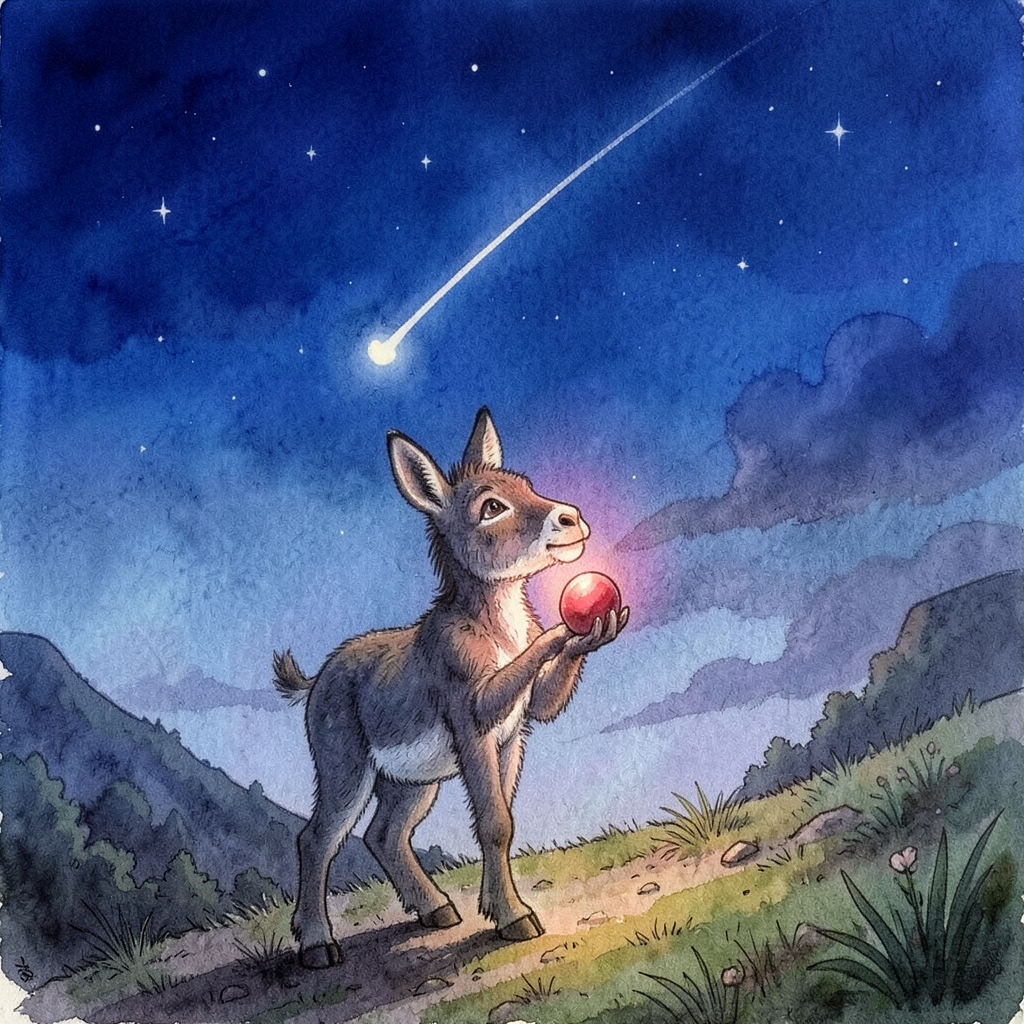
Sylvester the donkey finds a magic pebble that grants wishes. When he encounters a lion, he panics and wishes to become a rock. Unable to hold the pebble as a rock, he can't wish himself back. His heartbroken parents search everywhere until a picnic reunion brings an unexpected miracle.
Themes
FamilyLovePatience
Best For
- Children who love imaginative 'what if' scenarios and magical objects
- Families who want to open a conversation about separation anxiety in a safe, story-based way
- Read-alouds where a child and parent can slow down and talk through feelings together
- Classrooms exploring seasons, time, and cause-and-effect storytelling
- Children ages 4-7 who are ready for a longer, emotionally layered picture book
Why Parents Love This Book
William Steig's 1969 masterpiece endures because it takes a child's deepest fear — separation from family — and wraps it in a story so imaginative that children can process it without feeling overwhelmed. Sylvester is a completely relatable character: an enthusiastic, well-meaning kid who makes one panicked, impulsive decision that changes everything. The moment he turns into a rock is both clever and quietly devastating, and what follows — his parents' grief, their futile searching, the passing seasons — is rendered with a gentleness that honors the weight of loss without traumatizing young readers. Steig's illustrations are warm and expressive, with animal characters that feel fully human in their emotions. The resolution is joyful in a way that earns every tear that came before it. This is a book about how much families love each other, told through one of picture books' most inventive plots. It has never gone out of print for good reason.
Reading Tips for Parents
Before reading, let children know the story has a happy ending — this can help anxious kids stay engaged through the sad middle section without shutting down. Pause when Sylvester turns into a rock and ask your child what they think Sylvester is feeling inside, even though he can't move or speak. The passage of seasons on Strawberry Hill is a good moment to discuss time and waiting. When Sylvester's parents find him, slow down and linger on those pages — the emotional payoff is worth savoring. After reading, many children want to talk about what they would wish for with a magic pebble, which makes for a wonderful low-stakes conversation about desire, choices, and what matters most.
Awards & Recognition
- Caldecott Medal, 1970 (American Library Association — awarded to William Steig for most distinguished American picture book illustration)
- New York Times Best Illustrated Children's Books of the Year, 1969
Educational Value
This book helps children develop skills across multiple areas:
- Social-emotional learning: Explores the fear of being separated from family and the reassurance that parents keep searching and loving even when apart
- Vocabulary: Introduces rich words like 'flabbergasted,' 'cease,' 'gratified,' and 'bewildered' in context that makes meaning clear
- Cause and effect: Sylvester's impulsive wish sets off a chain of consequences that children can trace and discuss
- Seasons and time: The story moves through all four seasons, offering a natural way to discuss how time passes and what changes with each season
- Emotional literacy: Parents and Sylvester each experience grief, hope, and joy — giving children language to name complex feelings
- Creative thinking: The magic pebble premise invites imaginative 'what would you do?' thinking about choices and their unintended results
Discussion Questions
Use these questions to spark conversation before, during, or after reading:
- Why do you think Sylvester wished to become a rock instead of wishing the lion away? What would you have wished for?
- How did Sylvester's parents feel when he went missing? How do you know?
- Sylvester was stuck as a rock for a whole year. What do you think it felt like to watch the seasons change and not be able to do anything?
- What made the wish work at the very end? Why couldn't Sylvester just wish himself back earlier?
- If you found a magic pebble, what is the first wish you would make — and would you be worried about anything going wrong?
Content Notes for Parents
The middle section of the book depicts Sylvester's parents in genuine grief — they stop eating, cry, and search desperately — which may be upsetting for sensitive children or those who have experienced loss. There is a brief encounter with a lion that could startle very young listeners, though it passes quickly and is not graphic.
Frequently Asked Questions
Is this book too sad for young children?
It has genuinely sad moments — Sylvester's parents grieve and search for him through an entire year — but the story ends with a warm, joyful reunion. Most children ages 4 and up can handle the emotional arc, especially if a parent acknowledges the sad parts rather than rushing past them. Knowing ahead of time that it ends happily can help more sensitive kids stay with the story.
What age is this book best for?
The book is ideal for ages 4 to 7. Younger children in this range will enjoy the magic and the animals; older children in the range will grasp the emotional weight of Sylvester's predicament and his parents' grief. The vocabulary is rich enough to reward multiple readings as children grow.
Why are all the characters animals? Does that affect the story?
William Steig used animal characters throughout his career as a way to create slight emotional distance that actually makes feelings easier to access. Readers can engage with Sylvester's fear and his parents' grief without the story feeling too close or autobiographical. The donkey family is drawn so warmly that children identify with them completely within the first few pages.
What books are similar to this one if my child loves it?
Other William Steig books make a natural next step — 'Amos and Boris,' 'Doctor De Soto,' and 'Brave Irene' share the same warmth and imaginative storytelling. For similar themes of transformation and family love, 'The Velveteen Rabbit' and 'Alexander and the Terrible, Horrible, No Good, Very Bad Day' also resonate with this age group.
Is this book appropriate for classroom use?
Yes, it is a classroom staple and has been for decades. It supports discussions of emotions, family relationships, seasons, and cause-and-effect thinking. Teachers often use it as an anchor text for social-emotional learning units and for introducing literary vocabulary like 'setting' and 'plot structure.' The Caldecott Medal illustrations also make it useful for visual literacy lessons.