The Hello, Goodbye Window
About This Book
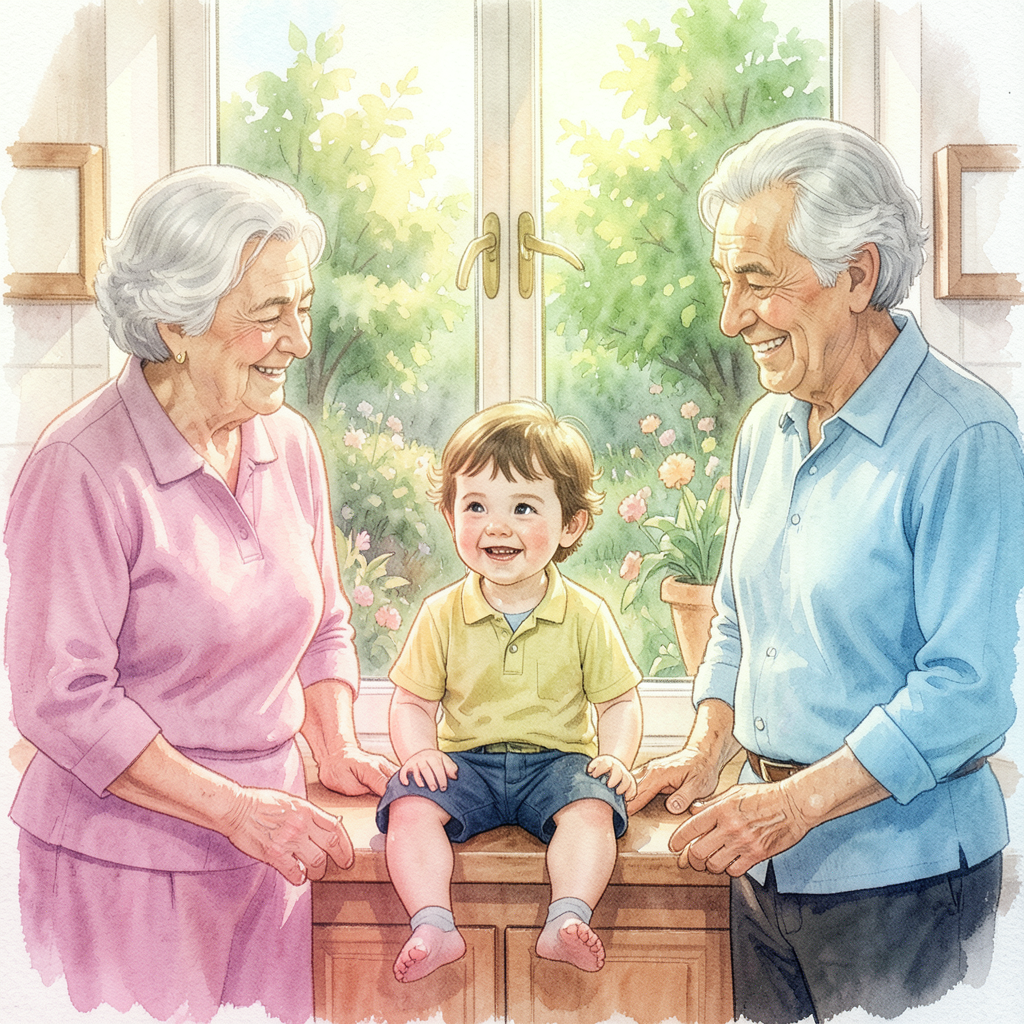
A young girl describes the special kitchen window at her grandparents' house — the window where she says hello when she arrives and goodbye when she leaves. Through it, she watches the garden, makes funny faces, and shares the everyday magic of visits with Nanna and Poppy.
Themes
FamilyLoveEveryday Magic
Best For
- Children who have a close relationship with grandparents and will recognize the feeling immediately
- Families preparing for a grandparent visit or dealing with the sadness of saying goodbye after one
- Bedtime reading when you want something warm and calm without a high-energy plot
- Classrooms or library story times focused on family, love, or everyday moments
- Children who have experienced loss of a grandparent, as a gentle way to honor those memories
Why Parents Love This Book
The Hello, Goodbye Window captures something profound in the simplest possible frame: a kitchen window at Nanna and Poppy's house. Norton Juster, beloved author of The Phantom Tollbooth, turns an ordinary pane of glass into the symbolic heart of a grandparent relationship — a place for arrivals, departures, silly faces, and quiet watching. What makes this book endure is its emotional honesty. The narrator is a small girl who notices everything: the garden outside, the light changing, the feeling of being completely loved. Chris Raschka's vibrant, loose watercolors feel joyful and alive, matching the child's sense that grandparents' homes are a kind of magic. The window is not just a window — it is where belonging happens. For children who have a special relationship with grandparents, this book names something they already feel but cannot say. For families separated by distance or loss, it is a gentle, reassuring reminder of what love looks like when it is ordinary and steady.
Reading Tips for Parents
Before reading, ask your child if they have a special place at a grandparent's or relative's house — a chair, a room, or a view they love. This activates the personal connection Juster is building. As you read, slow down at the window scenes and look at Raschka's illustrations together; the colors shift with mood and are worth noticing. After the story, try a simple activity: stand at a window in your own home and talk about what you see from it. If your child is separated from grandparents by distance, this book opens a natural conversation about keeping love close even when people are far away. The book is short enough to reread immediately, and children often want to — each reading tends to prompt new observations about the illustrations.
Awards & Recognition
- Caldecott Medal, 2006 (awarded to illustrator Chris Raschka)
- New York Times Best Illustrated Children's Books, 2005
Educational Value
This book helps children develop skills across multiple areas:
- Social-emotional: Validates the deep emotional bond children feel with grandparents and helps them name feelings of love, belonging, and the bittersweet nature of goodbyes.
- Vocabulary: Introduces expressive, descriptive language including words like 'magical' and 'ordinary' used together, building nuanced word understanding.
- Narrative comprehension: The story is told from a child's first-person perspective, giving early readers practice following an internal, reflective narrator rather than a plot-driven one.
- Visual literacy: Chris Raschka's expressionistic illustrations carry emotional weight; discussing the colors and brushstrokes builds children's ability to 'read' images alongside text.
- Family and community: Reinforces the concept of extended family, multigenerational relationships, and the rituals that make family bonds meaningful.
Discussion Questions
Use these questions to spark conversation before, during, or after reading:
- Why do you think the girl calls it the Hello, Goodbye Window? What makes it so special to her?
- What are some of the things she does with Nanna and Poppy during her visit? Which activity would you most like to do?
- Have you ever had a special spot at someone's house — a place that felt like yours? What made it feel that way?
- How do you think the girl feels when it is time to say goodbye? How do you feel when you have to leave somewhere you love?
- If you had a magic window like hers, what would you want to see through it?
Content Notes for Parents
No scary, sad, or mature content. The book contains a brief, gentle goodbye scene that is bittersweet but not distressing, and is entirely appropriate for all children in the target age range.
Frequently Asked Questions
What age is this book best for?
The book is ideal for children ages 4 to 7. Younger children in this range will enjoy the cozy feeling and the illustrations, while older children in the range can engage more deeply with the narrator's reflective voice and the emotional themes. It also reads beautifully aloud to children as young as 3.
Is this book too slow or quiet for active kids who prefer action stories?
It is a quiet, reflective book — there is no chase, no conflict, no plot twist. Some children will find it deeply satisfying precisely because of that gentleness. If your child tends to prefer high-energy books, try pairing it with the illustrations and asking them to describe what they see; Raschka's art is expressive and engaging enough to hold attention even when the text is calm.
Are there any content concerns for sensitive children?
None. The book contains no scary content, no death, and no conflict. The goodbye at the end is mildly bittersweet but handled with warmth. It is one of the gentler books available for this age group.
My children don't have grandparents nearby — will they still connect with this book?
Yes. The window functions as a symbol for any loving, safe place with a trusted adult. Children who visit aunts, uncles, family friends, or neighbors can map their own experience onto the story. It may also open a meaningful conversation about people they love who live far away.
What books are similar to this one if my child loves it?
Fans of this book often enjoy Owl Moon by Jane Yolen for its quiet wonder and grandparent connection, When I Am Old with You by Angela Johnson for its warm intergenerational love, and The Relatives Came by Cynthia Rylant for its celebration of family visits and togetherness.