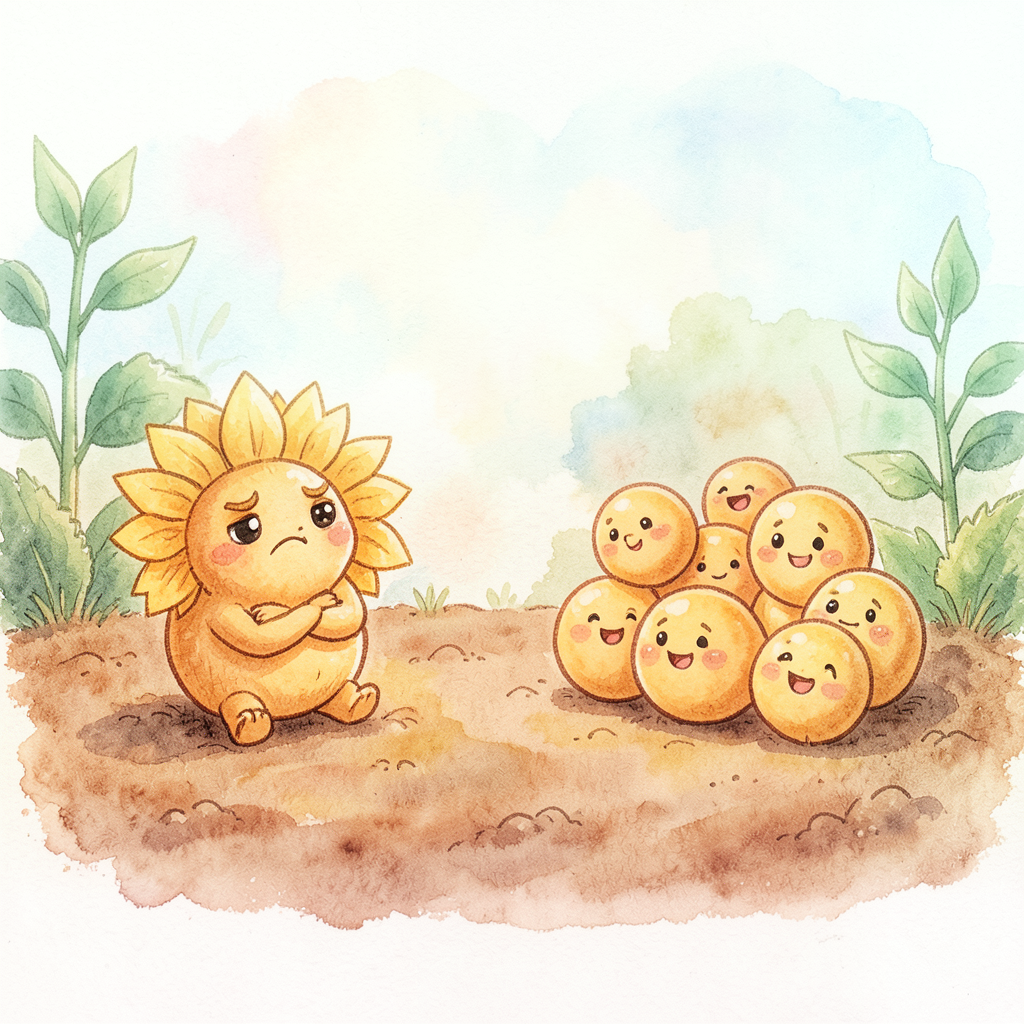
The Bad Seed
About This Book
He's a bad seed — he lies, he cuts in line, he never washes his hands, and he stares. But this bad seed didn't always feel this way, and with gentle humour and unexpected heart, the story shows that change is possible for anyone who decides to try. The first of Jory John's wildly popular food-character books that children adore for their deadpan voice.
Themes
CharacterChangeEmotions
Best For
- Children who are going through a difficult emotional phase and need to see a character who understands bad feelings from the inside
- Classroom read-alouds focused on social-emotional learning or character education
- Families who enjoy dry, deadpan humour and want a picture book that works for adults and children equally
- Opening conversations about why people (or kids) sometimes act unkindly without blaming or shaming
- Young readers who have already loved other Jory John food-character books and want to start from the beginning of the series
Why Parents Love This Book
The Bad Seed works because it never lectures. Jory John gives the sunflower seed a deadpan first-person voice — he knows he's bad, he lists his offences without shame, and then, slowly, he explains why. That backstory (getting separated from his sunflower at a baseball game) reframes everything. Suddenly the seed isn't a villain; he's a kid who had a hard day that turned into a hard life. Pete Oswald's bold, expressive illustrations match John's dry humour perfectly: the seed's scowl is genuinely funny, and the colour palette shifts warmer as his attitude softens. What makes the book endure is its honest ending — he isn't magically fixed. He's trying, and some days are better than others. That nuance is rare in picture books and gives children a realistic, non-shaming model for their own hard feelings. Parents and teachers return to it again and again precisely because it doesn't oversimplify.
Reading Tips for Parents
Read this one slowly so children can savour the seed's deadpan confessions — the humour lands when you give it room. Pause after he lists his bad behaviours and ask your child, in a light tone, "Have you ever done any of those things?" to open conversation without pressure. When you reach the backstory, lower your voice slightly; children pick up on tone shifts and it signals that this part matters. After the book, resist the urge to immediately moralize. Let the seed's own conclusion ("I'm trying") do the work. If your child is going through a hard patch at school or at home, this is an ideal book to revisit — it normalises the idea that feelings explain behaviour without excusing it. Keep it accessible on the shelf so children can return to it independently.
Awards & Recognition
- New York Times Bestseller
- Amazon Best Book of the Year 2017
Educational Value
This book helps children develop skills across multiple areas:
- Social-emotional learning: Models self-awareness — the seed identifies his own negative behaviours without being told by another character, showing children that self-reflection is the first step toward change.
- Vocabulary: Introduces expressive words like sullen, scowl, and wary in context, supported by illustrations that make meanings clear.
- Narrative comprehension: The non-linear structure (present behaviour, then backstory, then resolution) gives early readers practice with cause-and-effect reasoning across time.
- Character study: Children learn that characters — like real people — have reasons behind their actions, building empathy and critical reading skills.
- Social skills: The seed's list of bad behaviours (cutting in line, not washing hands, staring) gives children concrete, relatable examples to discuss in terms of classroom and community rules.
- Growth mindset: The ending explicitly models incremental improvement over perfection, reinforcing the idea that effort and intention matter even when change is slow.
Discussion Questions
Use these questions to spark conversation before, during, or after reading:
- Why do you think the seed acted so badly at the beginning of the story?
- What happened to the seed that made him feel so bad inside? Have you ever had a day where something went wrong and it put you in a bad mood for a long time?
- At the end the seed says he is trying to be better, but he isn't perfect yet. Do you think that counts? Why or why not?
- If you were friends with the seed before he started trying, what is one thing you might have said to him?
- The seed names all the bad things he does. If you were writing a book about yourself, what would you say you are still working on?
Content Notes for Parents
There are no scary, violent, or mature elements in this book. The seed's backstory involves an accidental separation from his sunflower family, which is briefly sad but handled with lightness and humour throughout.
Frequently Asked Questions
What age is The Bad Seed best suited for?
The book is written for ages 4 to 7, and that range holds up well in practice. Four- and five-year-olds enjoy the funny illustrations and the list of bad behaviours, while six- and seven-year-olds can engage more deeply with the backstory and the idea of choosing to change. It also reads aloud beautifully in kindergarten and first-grade classrooms.
Is there anything in the book that might upset sensitive children?
The seed is briefly separated from his sunflower at a baseball game, which is a mild sad moment, but it is treated with humour and resolved quickly within the narrative. There are no frightening images or themes. Most sensitive children handle it without difficulty, and it can actually be a gentle entry point for talking about hard feelings.
Can I use this book to address a specific behaviour problem my child is having?
Yes, but indirectly works better than directly. Rather than saying 'this book is about you,' read it together as a story and let your child make their own connections. Children are more likely to absorb the message when they feel they discovered it themselves rather than being told. The seed's self-aware voice naturally invites children to reflect on their own behaviour without shame.
Are there other books like The Bad Seed?
Jory John and Pete Oswald continued the food-character series with The Good Egg, The Cool Bean, The Couch Potato, and several others — each follows the same format and tone. For a similar social-emotional approach with a different style, The Invisible String by Patrice Karst addresses separation anxiety, and Enemy Pie by Derek Munson explores assumptions about people who seem unkind.
Does the seed actually change by the end, or is the ending ambiguous?
The ending is intentionally honest rather than tidy: the seed says he is trying to be better and that some days are easier than others. He is not miraculously transformed. This is one of the book's greatest strengths — it gives children a realistic model of growth that doesn't demand instant perfection, which is both more truthful and more encouraging than a sudden happy ending.