The Boy in the Striped Pajamas
About This Book
Nine-year-old Bruno knows only that his family has moved from Berlin to a place called Out-With, and that on the other side of the fence live people in striped pajamas. His friendship with Shmuel, a boy on the other side, is told in a naive, devastating fable that uses a child's innocence to illuminate the incomprehensible horror of the Holocaust.
Themes
HolocaustFriendshipInnocence
Best For
- Middle schoolers beginning to study World War II or the Holocaust in school
- Book clubs that want emotionally rich material with strong discussion potential
- Families who want to introduce difficult history with a child-centered entry point
- Readers who have already enjoyed Number the Stars or The Diary of a Young Girl and are ready for more complex Holocaust literature
- Classroom read-alouds paired with nonfiction Holocaust resources
Why Parents Love This Book
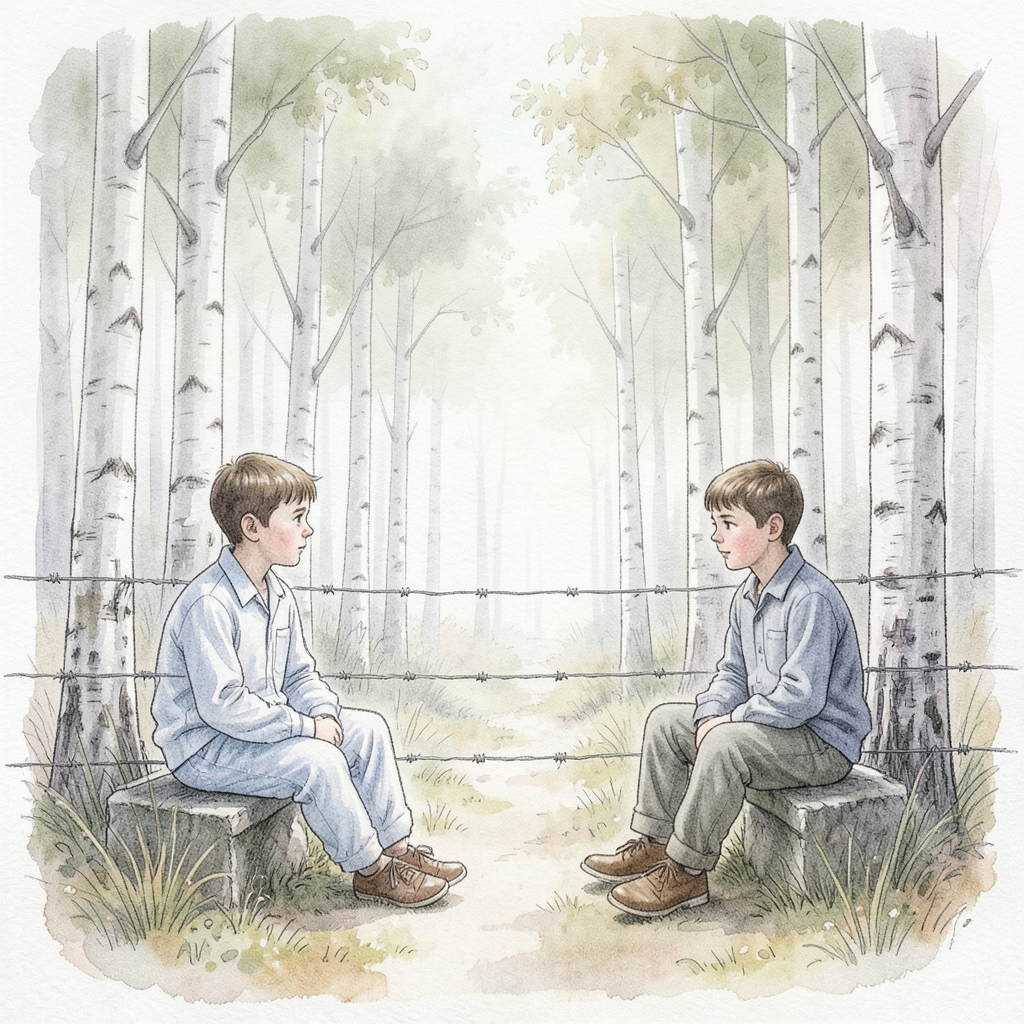
The Boy in the Striped Pajamas works because it approaches the Holocaust through a lens that few books dare to use: genuine, unfiltered childhood innocence. Nine-year-old Bruno never fully grasps what the fence and its inhabitants represent, and that gap between what the reader understands and what he does not is where the book's power lives. John Boyne wrote Bruno's voice with remarkable consistency — Bruno mishears names, misreads situations, and makes sense of an incomprehensible world through a child's logic. The result is a fable that trusts young readers to feel the weight of history even when the narrator cannot name it. The friendship between Bruno and Shmuel, conducted through a wire fence and across an impossible divide, is tender and specific. It reminds readers that atrocity becomes real when we see it through individual human lives. This book has introduced millions of young readers to the Holocaust with both honesty and care.
Reading Tips for Parents
Read this book alongside your child rather than assigning it independently. Bruno's deliberate naivety can confuse younger or less experienced readers who may not recognize the dramatic irony at work. Before starting, establish basic Holocaust context — what Nazi Germany was, what concentration camps were — so children can follow the emotional undercurrent without being blindsided by the ending. The final chapters are deeply upsetting; plan time to sit together afterward. Ask your child what they noticed Bruno misunderstanding and why that matters. Avoid rushing past the ending. Many families find it valuable to pair this novel with a nonfiction book about the Holocaust or a visit to a museum exhibit to ground the fable in documented history.
Awards & Recognition
- New York Times bestseller
- Irish Book Award (People's Choice)
- Adapted into a BAFTA-nominated film (2008)
Educational Value
This book helps children develop skills across multiple areas:
- Historical literacy: Introduces the Holocaust through a child's perspective, building a foundation for deeper study of World War II and genocide
- Critical thinking: Bruno's unreliable narration requires readers to interpret events independently, developing inference and close-reading skills
- Vocabulary: Rich literary language and period-appropriate terms support vocabulary growth for proficient middle-grade readers
- Social-emotional learning: Explores empathy, moral courage, and the consequences of silence and complicity in the face of injustice
- Perspective-taking: The dramatic irony between what Bruno perceives and what the reader understands builds sophisticated awareness of multiple viewpoints
- Ethics and civic reasoning: Invites discussion of how ordinary people — including children — are implicated in larger systems of harm
Discussion Questions
Use these questions to spark conversation before, during, or after reading:
- Why do you think Bruno keeps calling the camp "Out-With" and the commandant "the Fury"? What does this tell us about how children make sense of things they don't understand?
- Bruno and Shmuel are the same age and share a birthday, but their lives are completely different. What are some of the differences, and why do those differences exist?
- Bruno's sister Gretel seems to accept what she's told about the people behind the fence. Why do you think Bruno keeps asking questions when others don't?
- The book is called a fable. A fable usually teaches a lesson. What lesson do you think John Boyne wanted readers to take away?
- How did you feel at the end of the book? Was there a moment earlier in the story where you wished you could warn Bruno about something?
Content Notes for Parents
This book ends with the death of both main characters in a gas chamber, depicted without graphic detail but emotionally devastating. The Holocaust setting involves themes of persecution, dehumanization, and genocide that require adult guidance and prior historical context for young readers.
Frequently Asked Questions
What age is this book really appropriate for?
The publisher targets ages 8-12, but many educators and parents recommend waiting until age 10 or 11. The ending is genuinely traumatic, and younger or more sensitive readers can be deeply distressed without enough historical grounding to process what happened. Parental co-reading is strongly advised for any child under 12.
Do I need to explain the Holocaust to my child before they read this?
Yes. Bruno's naivety is a literary device — he never explicitly names what he is witnessing. Children who lack basic Holocaust context may not understand what the fence, the uniforms, or the camp represent, which undermines both the emotional impact and the book's purpose. A brief, age-appropriate conversation before reading makes a significant difference.
Is this book historically accurate?
The book is presented as a fable, not a historical document, and some historians have criticized aspects of the premise as implausible. The core truth it conveys about dehumanization and genocide is real, but parents should note that the scenario of two boys freely conversing at a concentration camp fence is not historically realistic. Pair it with nonfiction sources for a fuller picture.
My child is very sensitive. Should I skip this one?
Sensitive children can absolutely benefit from this book, but the ending requires preparation. Consider reading the last few chapters together rather than letting your child reach them alone. The grief and shock the ending produces can be a meaningful shared experience rather than an isolating one, but that requires your presence.
What books are similar to this one?
Number the Stars by Lois Lowry is a gentler Holocaust novel for the same age range. The Book Thief by Markus Zusak covers similar territory with more complexity for older readers. For nonfiction, I Survived the Nazi Invasion, 1944 offers accessible historical grounding for younger middle-grade readers.