The Day the Crayons Quit
About This Book
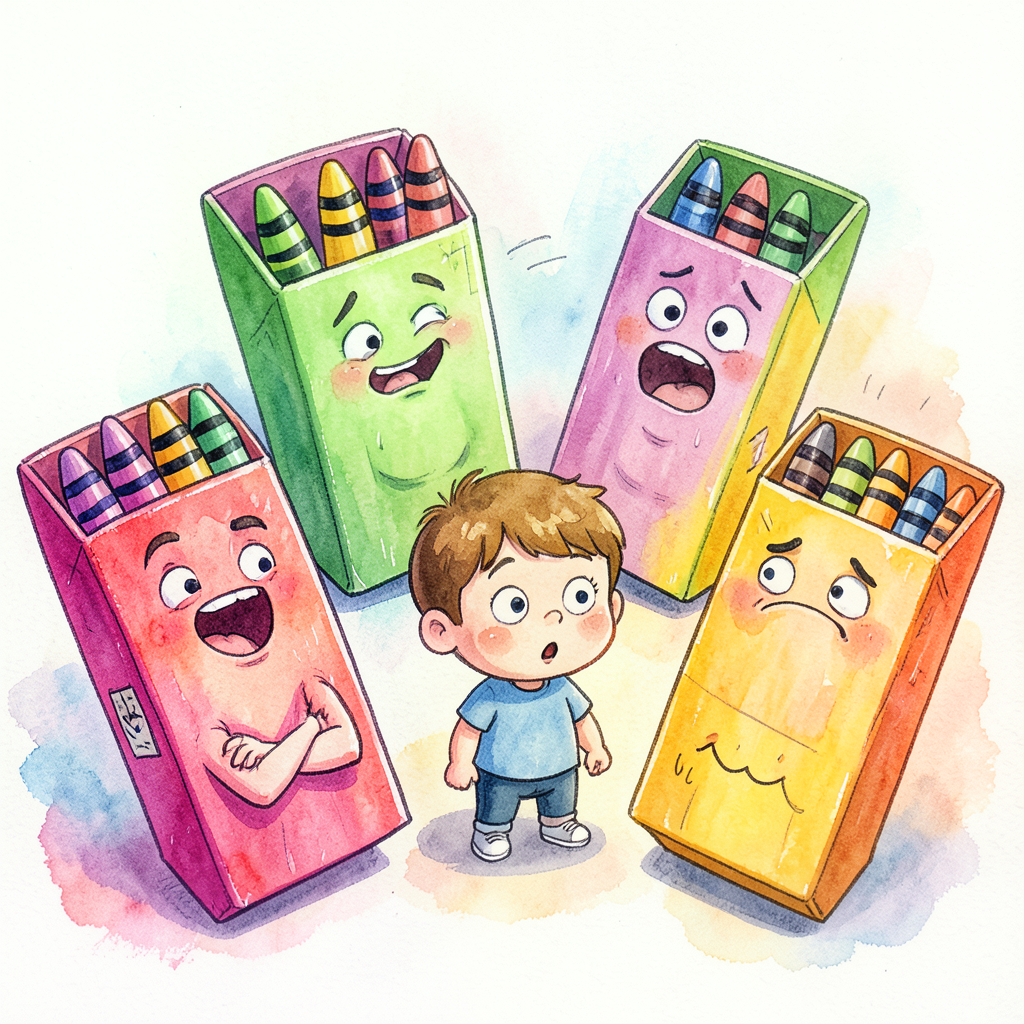
When Duncan opens his box of crayons, he finds letters instead. Each crayon has a complaint: Red is tired of working so hard on holidays, Blue needs a break from coloring oceans, and Beige feels overlooked. Duncan must find a creative solution to keep all his crayons happy.
Themes
CreativityEmpathyHumor
Best For
- Art-loving kids who have their own crayon collection and will immediately relate to the premise
- Read-alouds that need strong character voices and plenty of laughs to hold a group's attention
- Starting a conversation about empathy and noticing when others feel left out or unappreciated
- Reluctant readers who respond well to humor and an unconventional story format
- Classrooms and libraries exploring creative problem-solving or the concept of point of view
Why Parents Love This Book
The Day the Crayons Quit earns its place as a modern classic by doing something genuinely fresh: it gives voice to the overlooked objects in a child's crayon box, and those voices are hilarious, relatable, and surprisingly wise. Drew Daywalt's epistolary structure — the entire story told through letters from the crayons to Duncan — is a clever conceit that never feels forced. Red is exhausted from Christmas and Valentine's Day. Beige is hurt that everyone calls him "light brown." White feels invisible on white paper. Each crayon's complaint is distinct and funny in its own right, yet together they build a portrait of a world where everyone wants to be seen and appreciated. Oliver Jeffers' illustrations amplify the comedy perfectly, pairing each crayon's handwritten letter with drawings rendered in that crayon's color. The ending, where Duncan solves the problem through an imaginative, rule-breaking drawing, rewards both creativity and compassion. It is a book that rewards rereading — kids catch new jokes each time, and adults appreciate the quiet lesson about listening to others' needs.
Reading Tips for Parents
Read this one with full dramatic commitment — each crayon has a distinct personality, so vary your voice and tone as you go. Before you begin, let your child hold a real crayon box so they can follow along and pull out each color as it appears. After reading, pause at Beige's letter and ask your child if they have ever felt like they were not being noticed — this is a natural entry point for empathy conversations. The epistolary format (letters) is sophisticated for a picture book, so briefly explain that Duncan received letters in the mail from his crayons. If your child loves art, keep crayons nearby and invite them to draw Duncan's "rainbow" picture at the end of the story as a creative extension. The book runs about 15-20 minutes for a relaxed read-aloud with discussion.
Awards & Recognition
- New York Times Bestseller
- Amazon Best Book of the Year (2013)
- E.B. White Read Aloud Award, Picture Book Category (2014)
Educational Value
This book helps children develop skills across multiple areas:
- Social-emotional learning: Each crayon models a different feeling — exhaustion, jealousy, loneliness, pride — giving children concrete vocabulary and scenarios to identify and discuss emotions.
- Vocabulary: Words like 'exhausted,' 'overlooked,' 'appreciate,' and 'deserve' appear naturally in context, expanding language without feeling didactic.
- Reading and literacy: The letter format introduces children to a real-world text structure (epistolary writing) and models how written communication conveys tone and personality.
- Creative thinking: Duncan's unconventional final drawing celebrates problem-solving that breaks the rules in constructive ways, encouraging children to think outside expectations.
- Perspective-taking: Following ten different narrators in sequence builds the cognitive skill of holding multiple viewpoints simultaneously — a key pre-reading and social skill.
- Art appreciation: Oliver Jeffers' intentional use of each crayon's color to illustrate its own letter teaches children that artistic choices are meaningful and intentional.
Discussion Questions
Use these questions to spark conversation before, during, or after reading:
- Why do you think Red crayon was so tired? Which color do you think you would use the most if you were Duncan?
- Beige felt overlooked because people called him the wrong name. Has anyone ever gotten your name wrong or forgotten about you? How did it feel?
- Duncan solved the problem by drawing something unexpected and colorful. Can you think of a time when you solved a problem in a creative way?
- If your crayons could write you a letter, which one do you think would be the most upset, and what would it say?
- At the end, all the crayons are happy with Duncan's drawing. What does that tell you about how to treat the things — and people — around you?
Content Notes for Parents
There are no scary, violent, or mature elements in this book. The humor is gentle and accessible, and the complaints from the crayons are comedic rather than distressing — this is a worry-free read for the full 4-7 age range.
Frequently Asked Questions
What age is this book really best for?
The sweet spot is ages 4 through 7. Younger children in the 4-5 range will love the humor and the colorful illustrations, while 6-7 year olds can engage more deeply with the letter format and the emotional nuances each crayon expresses. Many parents find it still holds up well at age 8 for independent reading.
Is there a sequel, and is it as good as the original?
Yes — Drew Daywalt and Oliver Jeffers followed up with The Day the Crayons Came Home (2015), in which lost and forgotten crayons send postcards pleading to be rescued. Most families enjoy it, though reviewers and parents generally agree the original is the stronger, funnier book. It is worth reading as a companion, especially if your child loves the first one.
My child is just learning to read. Can they read this on their own?
The book is labeled a Beginning Reader but the vocabulary and sentence complexity in the letters is more advanced than a typical early reader. It is best experienced as a read-aloud for ages 4-6. By age 7-8, confident readers can tackle it independently and often enjoy reading each crayon's letter in a different voice.
Are there any content concerns I should know about before reading this to my preschooler?
None at all. The book is entirely gentle and appropriate for preschool through early elementary. The crayons' complaints are played entirely for comedy — there is nothing scary, sad in a distressing way, or mature. Even the most sensitive children typically find it delightful rather than upsetting.
What books would you recommend if my child loves this one?
Fans of this book tend to love The Bad Seed by Jory John and Pete Oswald (inanimate-object-meets-character-growth humor), This Is Not My Hat by Jon Klassen (deadpan picture book comedy), and Dragons Love Tacos by Adam Rubin and Daniel Salmieri. For more Oliver Jeffers, How to Catch a Star and Lost and Found share his distinctive warm, whimsical illustration style.