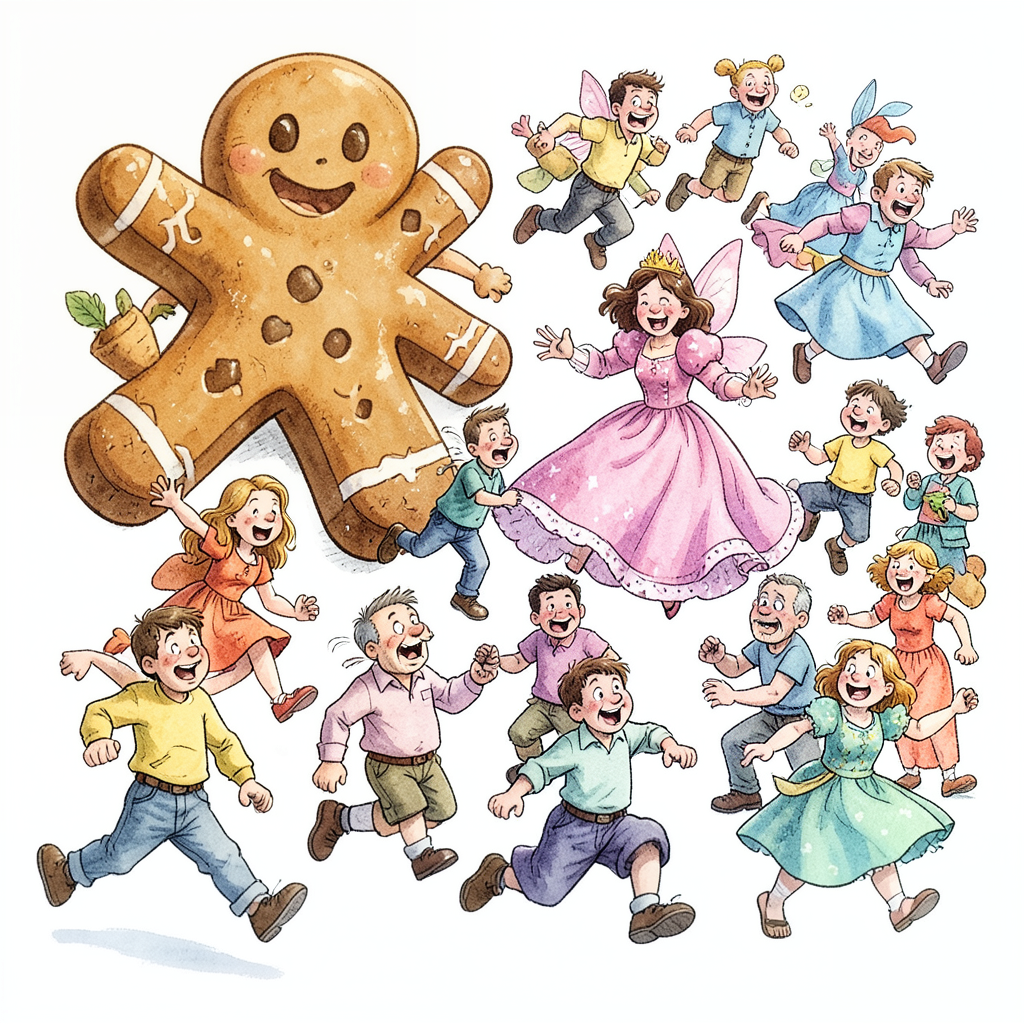
The Stinky Cheese Man and Other Fairly Stupid Tales
About This Book
Classic fairy tales get wildly reimagined in this postmodern picture book. The Gingerbread Man becomes a smelly cheese man everyone runs away from. Chicken Licken gets squashed by the table of contents. The narrating Jack can't keep order as the stories fall apart in hilarious ways.
Themes
HumorStorytellingCreativity
Best For
- Children who already know classic fairy tales and are ready to enjoy seeing them turned upside down
- Read-aloud sessions with a parent or teacher who can pause and play up the jokes
- Kids who love silliness and bathroom humor alongside smarter wordplay
- Classrooms introducing early concepts of narrative structure and authorial choices
- Reluctant readers who respond to humor and books that feel rule-breaking rather than school-like
Why Parents Love This Book
The Stinky Cheese Man and Other Fairly Stupid Tales is one of those rare picture books that treats children as genuinely smart readers. Jon Scieszka and Lane Smith tear apart the conventions of the fairy tale picture book and gleefully let the pieces scatter. The table of contents falls on Chicken Licken. The narrator argues with characters. Stories bleed into each other and end abruptly because they have to make room on the page. What results is a book that is laugh-out-loud funny for children and genuinely witty for adults — the humor operates on multiple levels simultaneously. Lane Smith's collage-style, darkly textured illustrations give the whole thing an off-kilter energy that perfectly matches the anarchic storytelling. Children who have heard classic fairy tales will delight in spotting what has been twisted, while first-time readers simply enjoy the chaos. More than thirty years after publication, it still feels genuinely fresh and surprising. This is a book that rewards rereading because there is always another joke you missed the first time.
Reading Tips for Parents
Read this book aloud more than once. The first read is for absorbing the jokes and chaos; the second and third reads are when children start catching the structural humor — the endpapers, the upside-down dedication page, the narrator breaking the fourth wall. Before reading, briefly remind your child of a few classic fairy tales (Gingerbread Man, Cinderella, Jack and the Beanstalk) so they have the reference points the humor depends on. Pause at moments where the book's format itself becomes part of the joke and let your child notice what is strange. Do not rush. The book rewards slow, attentive reading. Older children in the 6-8 range will get the most from it, though younger kids who love silliness will enjoy it too. This is an excellent book to return to as children grow, because new layers of the humor become accessible over time.
Awards & Recognition
- Caldecott Honor Book, 1993
- New York Times Best Illustrated Children's Book of the Year, 1992
Educational Value
This book helps children develop skills across multiple areas:
- Literary awareness: Children encounter concepts like table of contents, dedication pages, and narrators as active characters, building early understanding of how books are constructed.
- Vocabulary: Rich, playful language including words like 'narrator', 'version', and 'tale' expand children's literary vocabulary in a low-pressure, humorous context.
- Critical thinking: Recognizing parody requires holding the original story in mind while processing how it has been changed — a sophisticated comparative thinking skill.
- Creativity and storytelling: The book models that stories can be broken, subverted, and reinvented, giving children permission to play with narrative conventions in their own writing and pretend play.
- Humor literacy: Children learn that humor can come from structure and expectation-breaking, not just from funny words or slapstick situations.
- Reading engagement: The book's self-awareness and surprises reward careful, active reading rather than passive consumption, building habits of close attention to text and image.
Discussion Questions
Use these questions to spark conversation before, during, or after reading:
- Why does everyone run away from the Stinky Cheese Man? What would you do if you met him?
- The narrator Jack keeps trying to tell stories but things keep going wrong. Have you ever had a plan fall apart in a funny way?
- The book plays tricks on the reader — the table of contents falls on a character, and the dedication page is upside down. Why do you think the author and illustrator did those things?
- Which of the 'fairly stupid tales' in the book was your favorite, and why?
- If you could make up your own silly version of a fairy tale, which one would you choose and what would you change?
Content Notes for Parents
There are no scary, violent, or emotionally difficult elements in this book. The humor is absurdist and silly throughout, and while some jokes involve minor chaos (characters getting squashed by a table of contents, stories ending abruptly), everything is played entirely for laughs with no distressing consequences.
Frequently Asked Questions
What age is this book really best for?
The book is shelved for ages 4-7 but the postmodern humor lands most fully for children around 6-9 who already have fairy tale knowledge to draw on. Younger children who love silliness can still enjoy the physical comedy and the Stinky Cheese Man himself, but the structural jokes — the upside-down dedication, the table of contents as a plot device — will mostly be caught by older readers.
Do kids need to know the original fairy tales first?
They do not need to, but knowing the originals makes the book significantly funnier. If your child is not yet familiar with the Gingerbread Man, Cinderella, or Jack and the Beanstalk, it is worth reading one or two of those first. The parody works by contrast — the bigger the gap between expectation and what actually happens, the funnier it lands.
Is the humor appropriate — is anything mean-spirited or gross?
The humor is firmly in the silly-absurdist camp. The Stinky Cheese Man is smelly, which some younger children find hilarious and others find mildly gross — but it never tips into genuinely crude territory. Nothing in the book is mean-spirited, and no characters are harmed in any emotionally resonant way. It is a very safe book from a content standpoint.
What books would we enjoy next if we loved this one?
Jon Scieszka's The True Story of the 3 Little Pigs is a natural next read — same author, same fairy-tale-subversion sensibility. The Fractured Fairy Tales tradition more broadly (including books by authors like Eugene Trivizas or Lauren Child) scratches the same itch. For Lane Smith's illustration style, Grandpa Green or It's a Book showcase his distinctive visual approach.
Can this be used in a classroom setting?
Yes, and it works exceptionally well. Teachers use it to introduce concepts like point of view, narrator reliability, and book anatomy (what is a table of contents, what does a dedication do). It is also frequently used as a springboard for children writing their own fractured fairy tales. The book is short enough to read in a single sitting but dense enough to discuss across multiple sessions.