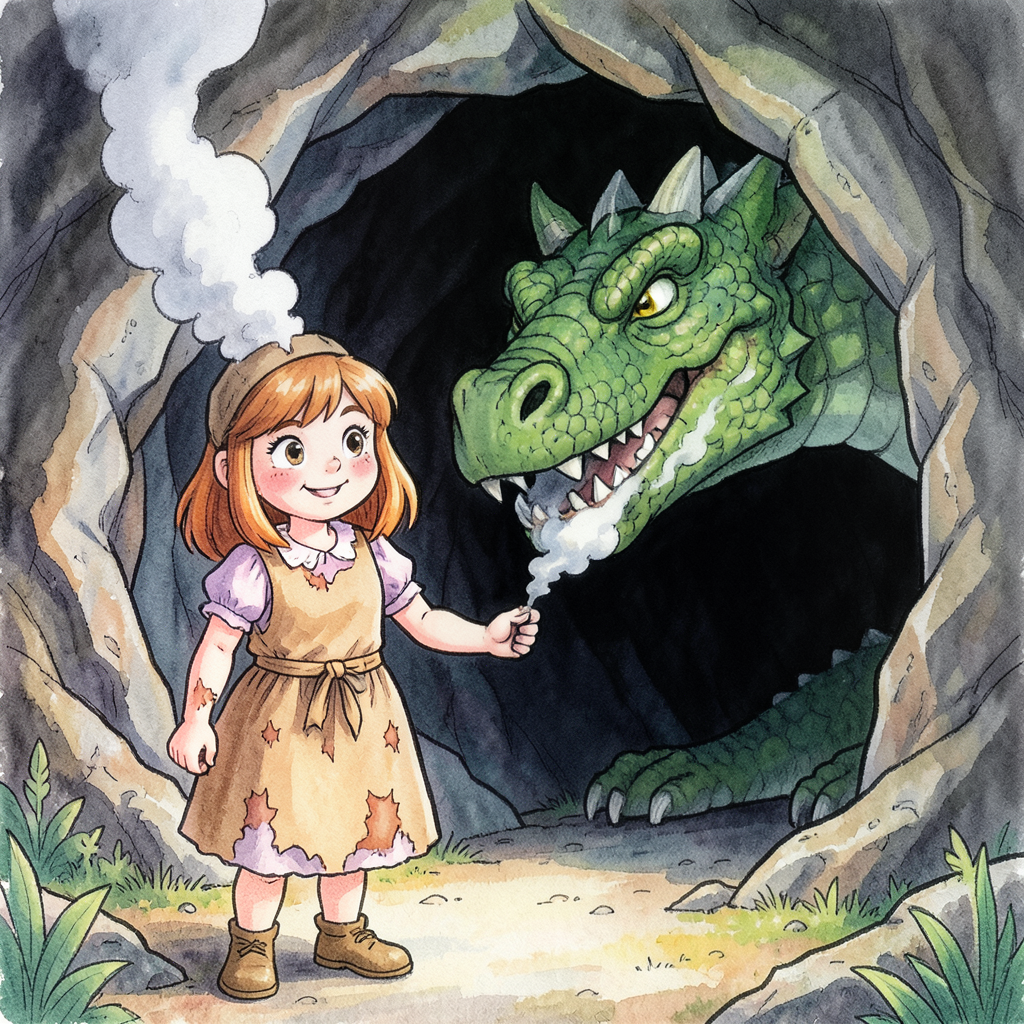
The Paper Bag Princess
About This Book
When a dragon destroys Princess Elizabeth's castle and kidnaps Prince Ronald, she puts on the only thing left — a paper bag — and cleverly outsmarts the dragon. But when she rescues Ronald and he criticizes her appearance, Elizabeth decides she doesn't need him after all.
Themes
CourageSelf-AcceptanceHumor
Best For
- Children who love fairy tales and are ready for a funny twist on the genre
- Read-alouds in early elementary classrooms discussing courage and self-respect
- Kids who have experienced someone being unkind about their appearance or efforts
- Families looking for a short, fast-paced bedtime book with a satisfying ending
- Parents who want to start a conversation about valuing yourself independently of others' opinions
Why Parents Love This Book
Published in 1980, The Paper Bag Princess arrived decades before "feminist fairy tale" became a publishing category — and it still holds up better than most. Robert Munsch flips the classic rescue story completely on its head: Princess Elizabeth is the one who outsmarts a fearsome dragon through wit and resourcefulness, not weapons or magic. She tricks the dragon into exhausting himself, rescues the prince, and then — in the book's most memorable twist — walks away from Ronald when he turns out to be ungrateful and shallow. Michael Martchenko's illustrations are expressive and funny, giving the dragon genuine menace while keeping the overall tone light and comedic. What makes this book endure is that Elizabeth never stops being herself. She doesn't apologize for her paper bag, her messy hair, or her cleverness. Children pick up immediately that she is the hero, and that her self-worth doesn't depend on Ronald's approval. That message, delivered with humor and zero preachiness, is why this slim picture book has remained in print and in classrooms for over four decades.
Reading Tips for Parents
Before reading, ask your child what they think a princess story is usually about — this sets up the delightful subversion. As you read, pause after Elizabeth tricks the dragon and let children predict what Ronald will say. The moment Ronald criticizes her appearance often produces a strong reaction from kids, which is exactly the right opening for a brief conversation: "Was that a nice thing to say? What would you have said?" Don't over-explain Elizabeth's final decision — children understand it instinctively, and letting them articulate it themselves is powerful. For younger readers around age 4, the dragon-trickery sequence is the highlight; for readers closer to 7, the Ronald scene lands harder and provokes more discussion. The book reads aloud in under 10 minutes and rewards multiple re-reads.
Awards & Recognition
- Named to the New York Public Library's 100 Books for Reading and Sharing
- Frequently listed on Canadian children's literature best-of lists as one of the most influential Canadian picture books ever published
- Has remained continuously in print since 1980, selling millions of copies worldwide
Educational Value
This book helps children develop skills across multiple areas:
- Critical thinking: Elizabeth uses logic and strategy — not strength — to defeat the dragon by making him tire himself out, modeling problem-solving through observation.
- Social-emotional learning: The book validates the idea that self-worth should not depend on how others judge your appearance or whether someone approves of you.
- Vocabulary: Words like 'magnificent,' 'exhausted,' and 'bum' (used humorously) give early readers context-rich vocabulary in a memorable story.
- Media literacy: The story actively subverts fairy-tale conventions, giving children their first tool for analyzing genre expectations and narrative tropes.
- Comprehension and prediction: The dragon-trickery sequence has a clear cause-and-effect structure that helps early readers practice inferencing and predicting outcomes.
- Character analysis: Ronald and Elizabeth are vivid contrasts that give children practice describing character traits and connecting behavior to values.
Discussion Questions
Use these questions to spark conversation before, during, or after reading:
- How did Elizabeth trick the dragon? What does that tell you about how smart she is?
- Why do you think Prince Ronald said those unkind things to Elizabeth after she rescued him?
- Elizabeth walks away at the end instead of marrying Ronald. Do you think she made the right choice? Why or why not?
- If you were Elizabeth, what would you have done after Ronald criticized how you looked?
- Can you think of another story where the princess rescues herself or someone else? How is that story different from this one?
Content Notes for Parents
The dragon burns down Elizabeth's castle and destroys her belongings, which could be briefly startling for very sensitive children, but the tone stays comedic throughout and nothing is depicted graphically. There are no other content concerns — the ending is triumphant and the humor keeps even the conflict feeling light.
Frequently Asked Questions
What age is this book best for?
The book is ideal for ages 4 to 7. Younger children in this range love the dragon humor and the slapstick of Elizabeth in her paper bag, while children closer to 6 or 7 tend to engage more deeply with Ronald's rudeness and Elizabeth's choice to walk away. The text is simple enough for beginning readers to attempt independently.
Is the dragon scene too scary for sensitive preschoolers?
Most children handle it well because the tone is comedic throughout — the dragon is almost cartoonishly powerful, and Elizabeth's quick thinking deflates any genuine tension quickly. If your child is particularly sensitive to destruction or loss, you can briefly reassure them before reading that Elizabeth is going to be just fine. Michael Martchenko's illustrations keep the dragon expressive and silly rather than terrifying.
How do I talk to my child about why Elizabeth walks away from Ronald?
You often don't need to say much — children typically react with immediate outrage at Ronald's comment, which opens the door naturally. Ask your child what they would have said to Ronald, or how they would have felt in Elizabeth's shoes. The goal is to let the child articulate the lesson rather than having an adult explain it, which makes the message stick more effectively.
Are there similar books you'd recommend alongside this one?
Princess Smartypants by Babette Cole and The Worst Princess by Anna Kemp cover similar territory with humor and a princess who defines herself on her own terms. For slightly older readers, The True Story of the Three Little Pigs by Jon Scieszka is another funny subversion of a classic tale that pairs well thematically.
Is Robert Munsch's writing style appropriate — I've heard he can be a bit irreverent?
Munsch is known for energetic, slightly cheeky humor and this book is a solid example of that style at its best. The word 'bum' appears once (as an insult Elizabeth directs at Ronald), which some parents note with amusement and others may want to be prepared for. Overall the content is very appropriate for the age range and the irreverence is a feature that makes children love it, not a concern.