Swimmy
About This Book
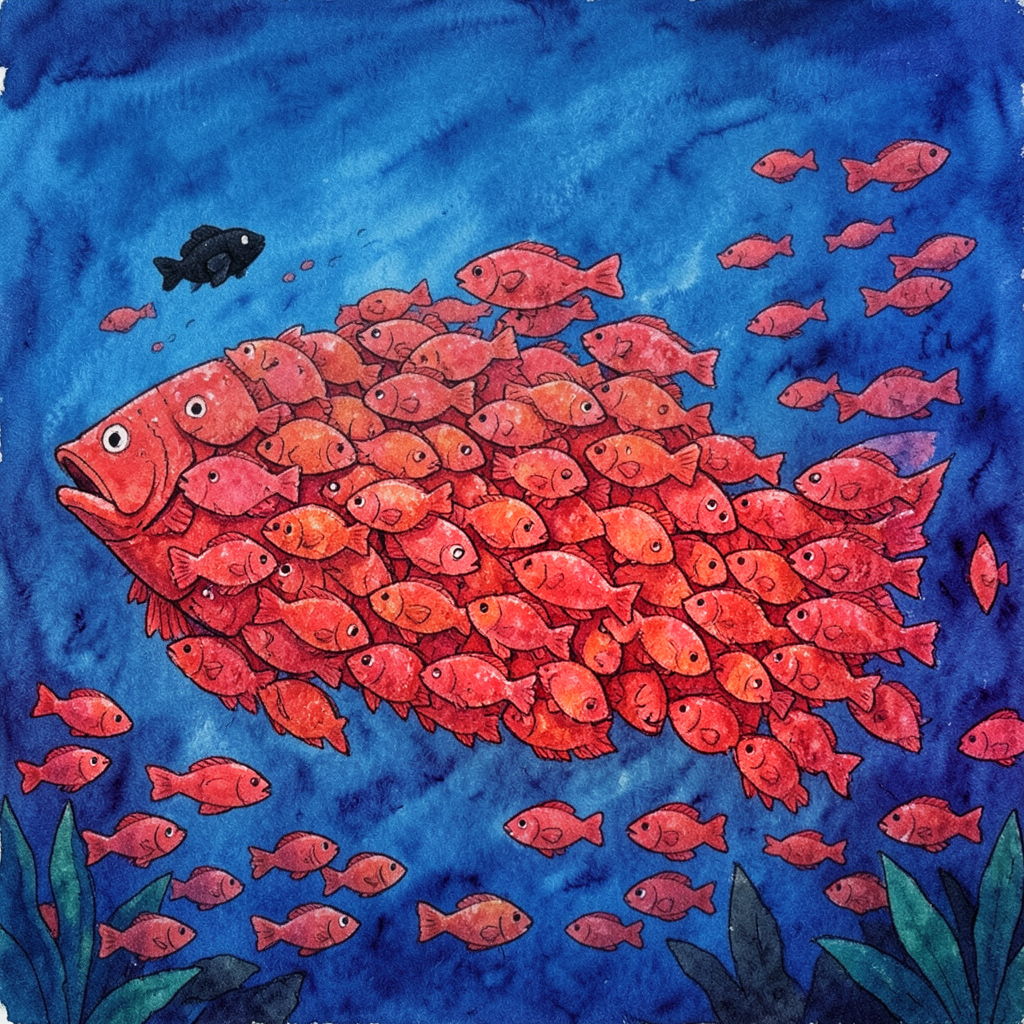
Swimmy, a small black fish, is the sole survivor when a tuna swallows his school of red fish. Swimming alone through the wonders of the deep sea, he eventually finds another school of red fish hiding in fear. Swimmy organizes them to swim together in the shape of a giant fish, with himself as the eye.
Themes
CourageTeamworkCleverness
Best For
- Classroom read-alouds on teamwork, cooperation, or community building
- Children working through feelings of loneliness or being the "different one" in a group
- Ocean and marine life units in preschool or early elementary
- Art projects — the collage illustration style is easy and satisfying for young children to replicate
- Families who enjoy lingering over illustrations and discussing what they see
Why Parents Love This Book
Swimmy has earned its place as a classic of children's literature since 1963 for one simple reason: it does something rare. It takes a genuinely frightening moment — the loss of an entire community to a predator — and transforms it into a story about ingenuity and collective strength without ever talking down to its young readers. Leo Lionni's collage illustrations, made with stamped sponge prints and watercolor washes, capture the luminous, shifting quality of deep-sea light in a way that feels genuinely magical. Swimmy is not rescued by an adult or by luck; he solves his own problem through careful observation of the ocean around him and creative thinking. The solution — swimming together as one giant fish — is elegant and memorable. Children immediately grasp both the logic and the beauty of it. The book respects a child's capacity for grief, wonder, and problem-solving in equal measure, making each rereading feel as fresh as the first.
Reading Tips for Parents
Before reading, pause on each ocean spread and let your child name what they see — the sea anemones, the jellyfish, the lobster — before you read Lionni's lyrical descriptions. This primes vocabulary naturally. When Swimmy loses his family, give the moment space; don't rush past it. A simple "How do you think Swimmy feels right now?" opens rich conversation. When you reach the plan to swim together, cover the page and ask your child if they can think of a way to solve Swimmy's problem before revealing the answer. After finishing, try a simple art project: stamp red fingerprints in the shape of a big fish, with one black thumbprint as the eye. It reinforces the book's central image and makes the concept of teamwork tangible and hands-on.
Awards & Recognition
- Caldecott Honor Book, 1964
- New York Times Best Illustrated Children's Books of the Year, 1963
Educational Value
This book helps children develop skills across multiple areas:
- Social-emotional: Explores grief and resilience — Swimmy experiences real loss and must find the courage to keep going, giving children language and space to discuss their own fears and sad feelings.
- Teamwork and cooperation: The climax makes it concrete that collective action achieves what no individual can, a lesson children can apply immediately on the playground.
- Science and nature: Introduces real deep-sea creatures — jellyfish, sea anemones, eels, lobsters, tuna — encouraging curiosity about marine biology.
- Vocabulary: Rich descriptive language ('medusa-like,' 'invisible,' 'swift, fierce, and very hungry') expands a child's expressive word bank in context.
- Creative problem-solving: Swimmy's solution models lateral thinking — using an apparent weakness (being small) as a strength when combined with others.
- Art appreciation: Lionni's mixed-media collage technique can be discussed and replicated, connecting the story to hands-on visual arts exploration.
Discussion Questions
Use these questions to spark conversation before, during, or after reading:
- Why do you think the little red fish were too scared to come out and swim? Have you ever felt scared to do something?
- Swimmy swims through many amazing things in the ocean before he finds the new school of fish. Which thing he saw would you most want to visit?
- How does Swimmy use what he has learned — and what makes him different — to help the other fish? What is special about Swimmy that makes him the right one to be the eye?
- Do you think the plan would have worked if even one fish swam out of formation? Why does everyone have to work together?
- Can you think of a time you worked with others to do something none of you could do alone?
Content Notes for Parents
The opening scene involves a tuna eating an entire school of fish in a single swift moment, which may feel startling or sad to sensitive children ages 4-5; it is handled quickly and without graphic detail, but Swimmy is left visibly alone. No other content concerns — the rest of the book is wonder-filled and the ending is triumphant.
Frequently Asked Questions
What age is Swimmy best for?
The book is ideal for ages 4 through 7. Preschoolers (4-5) will love the ocean creatures and the visual payoff of the fish-formation ending, though the opening loss may need a brief reassuring conversation. Children ages 6-7 will grasp the deeper themes of strategy, difference, and collective strength and can discuss them with more nuance.
Is the scene where the fish get eaten too scary for young children?
It happens quickly and is not illustrated graphically — Lionni simply shows Swimmy alone after the fact. Most children ages 4 and up handle it well, though sensitive kids may need a moment to process. It is actually a useful entry point for talking about loss and being brave when something sad happens, rather than a reason to avoid the book.
My child loved Swimmy. What similar books should we read next?
Other Leo Lionni books are the natural first step: Frederick (about a different kind of contribution to the community), Inch by Inch (clever problem-solving), and A Color of His Own (being different and finding belonging). For a similar ocean-and-teamwork feel, try The Pout-Pout Fish by Deborah Diesen or Rainbow Fish by Marcus Pfister.
How do I explain the teamwork lesson in a way a 4-year-old will understand?
After the big reveal, try asking: 'Could one little fish scare away the big fish all by itself?' Then: 'Could ALL of them together?' The visual of the giant fish shape does most of the work — children get it intuitively. You can reinforce it by pointing out examples in their own life, like how the whole class has to be quiet for story time to work, or how a sports team needs everyone playing their position.
Is this book appropriate for a classroom setting?
It is one of the most classroom-friendly picture books ever written. The themes of teamwork and using individual differences as a group strength make it a natural fit for back-to-school discussions, anti-bullying conversations, or any unit on community. The art style also supports an accessible and memorable hands-on project using fingerprint stamping or sponge printing.