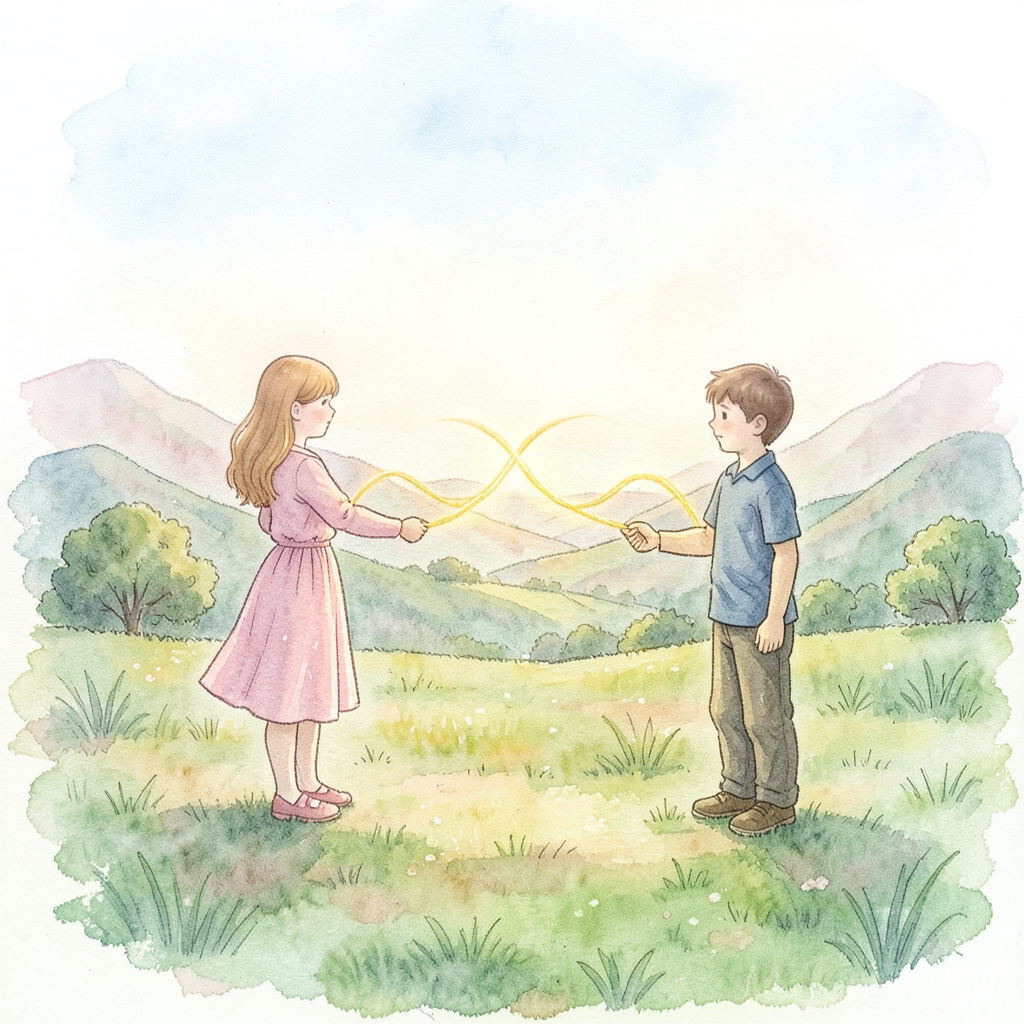
The Invisible String
About This Book
When twins Anthony and Liza worry about their mother being away, she tells them about the invisible string made of love that connects every person to the people who love them, no matter the distance. A comforting story used by counsellors, teachers, and parents the world over to help children understand that love outlasts absence.
Themes
LoveLossComfort
Best For
- Children experiencing separation anxiety at school drop-off or bedtime
- Families navigating a parent's work travel or deployment
- Children who have lost a grandparent or loved one and need a gentle entry point for grief conversations
- Classroom read-alouds at the start of the school year to build community and ease transition anxiety
- Therapy or counseling settings where a child needs a concrete metaphor to understand ongoing love
Why Parents Love This Book
The Invisible String has earned its place as one of the most beloved comfort books for young children precisely because it gives an abstract concept — love across distance — a tangible, imaginable form. When twins Anthony and Liza worry about their mother being away, she introduces the idea of an invisible string made of love connecting every person to the people who care for them, reaching across any distance, even into sleep and dreams. What makes this book endure more than two decades after its 2000 publication is how universally the metaphor applies: a parent at work, a grandparent far away, a loved one who has died. Joanne Lew-Vriethoff's warm, inclusive illustrations show a multicultural world of connections, reinforcing that this kind of love is available to every child. Counselors, grief therapists, teachers, and parents return to it again and again because the central image is one children can carry with them — invisible but unbreakable.
Reading Tips for Parents
Before reading, you can set the stage by asking your child if they have ever missed someone while apart. Read slowly and pause when the mother first introduces the string — let your child look at the illustration and imagine their own string. After the story, you might gently extend the metaphor by naming specific people connected to your child: "You have a string to Grandma, and one to your best friend." Many parents keep a small piece of string nearby as a tangible reminder on hard drop-off mornings at school or daycare. If you are using this book to help a child process grief, be prepared for big emotions to surface; have extra reading time set aside and follow the child's lead on conversation. The book works best read at a calm moment rather than in the middle of a goodbye meltdown.
Awards & Recognition
- New York Times bestseller
- Frequently cited on recommended reading lists by school counselors and grief therapists across the United States and United Kingdom
Educational Value
This book helps children develop skills across multiple areas:
- Social-emotional learning: Builds a concrete mental model for managing separation anxiety and feelings of loneliness by giving children an imaginative tool they can use independently.
- Vocabulary: Introduces words such as invisible, connected, distance, and eternal in a context that makes their meanings clear and memorable.
- Emotional literacy: Helps children name and normalize feelings of worry, longing, and love, supporting the language needed to talk about their inner world.
- Grief support: Gently opens conversations about loss by explaining that love persists even after a person is gone, making it a valuable bridge for discussing death at an age-appropriate level.
- Creative thinking: The string metaphor invites children to visualize abstract relationships, strengthening imaginative and symbolic thinking.
- Family bonding: The shared ritual of naming invisible string connections after reading builds attachment and gives families a shared language for comforting each other.
Discussion Questions
Use these questions to spark conversation before, during, or after reading:
- Why do you think Anthony and Liza were worried when their mom was away? Have you ever felt that way?
- The invisible string is made of love. Can you think of people you have an invisible string to? Who would you name?
- The story says the string reaches even when you are sleeping. How does that make you feel?
- If you could see your invisible strings, what color or shape do you think they would be?
- Is there someone you miss right now? What would you want them to know if the string could carry a message?
Content Notes for Parents
The book briefly touches on death — the mother explains that the invisible string reaches even those who have died — which may prompt questions about loss and what happens after someone passes away. There are no frightening images or events, but parents should be prepared for emotionally deep conversations, particularly if a child has recently experienced a bereavement.
Frequently Asked Questions
What age is The Invisible String best suited for?
The book is written for children aged 4 to 7 and works especially well for preschool and kindergarten-aged children who are beginning to experience meaningful separations from caregivers. Older children up to around age 9 can also benefit, particularly when dealing with grief or a significant family change.
Is this book appropriate for helping a child understand death?
Yes, and it is one of the most widely recommended picture books for exactly that purpose. The mother in the story explains that the invisible string reaches even those who have died, which gives children a gentle, hopeful framework for understanding that love does not end. It does not explain death in detail, so parents will likely need to supplement with further conversation depending on the child's situation.
How do counselors typically use this book?
School counselors and grief therapists often read this book at the start of a session to open dialogue about loss, separation, or anxiety. Some follow the reading with a craft activity where children draw or create their own invisible string to a loved one. The book's metaphor also becomes a shorthand that counselors can reference in later sessions.
Are there any concerns about the content being too sad or scary for young children?
The tone throughout is warm and reassuring rather than sad or frightening. While the topic of death is briefly mentioned, it is framed positively as a continuation of love. Most children in the 4 to 7 age range find the book comforting rather than upsetting, though a child who has recently experienced a loss may have strong emotional reactions that deserve gentle parental support.
What books are similar to The Invisible String?
Families who love this book often also enjoy The Kissing Hand by Audrey Penn, which uses a similar comfort-object metaphor for separation anxiety, and Lifetimes by Bryan Mellonie for a gentle introduction to death and loss. For grief specifically, The Goodbye Book by Todd Parr offers a similarly warm and accessible tone for very young readers.