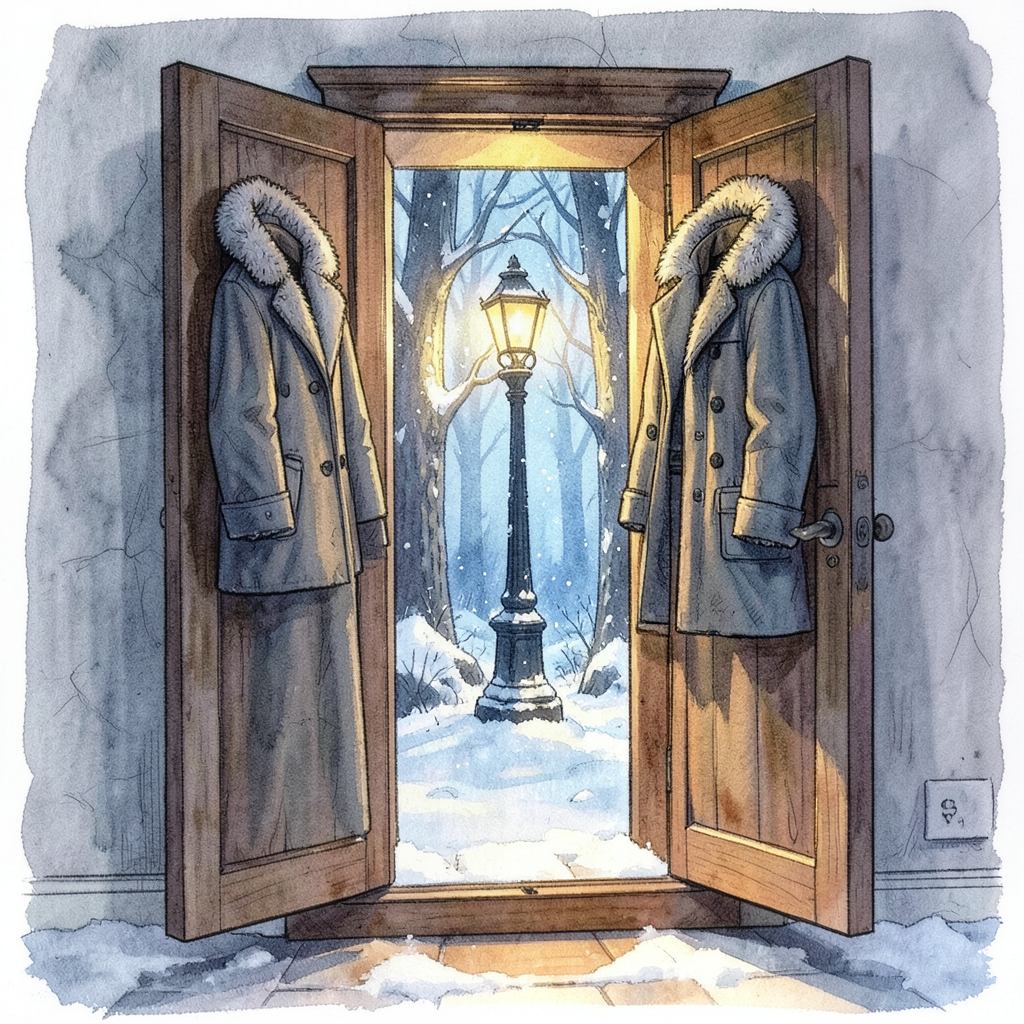
The Lion, the Witch and the Wardrobe
About This Book
Four siblings evacuated to a country house during World War II discover a magical land called Narnia through an old wardrobe. In Narnia, it is always winter and never Christmas, ruled by the evil White Witch. The children join forces with the great lion Aslan to break her spell and save Narnia.
Themes
CourageGood vs. EvilAdventure
Best For
- Family read-alouds where parents and children can discuss themes together chapter by chapter
- Confident independent readers ages 8-10 looking for their first truly immersive fantasy novel
- Children who have watched the 2005 film and are ready to discover the richer original story
- Classroom or homeschool units that combine literature with WWII history
- Children who love animals and magic but are ready for a story with genuine emotional stakes
Why Parents Love This Book
Published in 1950, The Lion, the Witch and the Wardrobe has captivated generations of readers because it does something rare: it takes children completely seriously as moral actors. Peter, Susan, Edmund, and Lucy are not passive observers but full participants in the fate of a world. Edmund's betrayal of his siblings for Turkish Delight is one of literature's most honest portrayals of how temptation works on ordinary people — and his redemption arc is handled with equal honesty. The wardrobe as a portal to another world is one of the most enduring images in all of children's fiction, grounding the magical in the mundane. C.S. Lewis's prose is direct and warm without ever being condescending — he trusted children to wrestle with sacrifice, loyalty, and courage. Pauline Baynes's illustrations give Narnia a timeless look that feels neither dated nor overdone. More than seven decades after its publication, this book still creates the same sharp intake of breath when Lucy first steps through into the snowy forest.
Reading Tips for Parents
This book is ideal for reading aloud as a family even if your child can read it independently — Lewis's narrator occasionally addresses the reader directly, which sparks great spontaneous conversation. Plan to discuss Edmund's choices before they happen so the betrayal doesn't land as simply "bad kid behavior" but opens discussion about peer pressure and temptation. The World War II evacuation context at the opening may be unfamiliar to children; a brief explanation of the Blitz and why city children were sent to the countryside adds meaningful historical weight. Aslan's death and resurrection carry allegorical weight that older children (10+) may ask about directly — be ready to discuss symbolism if your family welcomes that conversation, or simply let the story stand on its own terms. Reading one chapter per night works well, as chapters are naturally episodic.
Awards & Recognition
- New York Times Notable Book
- Included on Time magazine's list of the 100 Best Young-Adult Novels
- #1 on Amazon's All-Time Best Children's Books list (multiple surveys)
Educational Value
This book helps children develop skills across multiple areas:
- Vocabulary: Rich, formal prose introduces words like treacherous, lamenting, tumult, and solemn in vivid context, naturally expanding language without stopping for definitions.
- Social-emotional learning: Edmund's arc from selfishness and resentment to remorse and redemption gives children a nuanced framework for thinking about mistakes, forgiveness, and making things right.
- Historical context: The opening chapters set during the WWII evacuation of London children introduce real historical events that can lead to broader learning about the war.
- Ethical reasoning: The story continually poses moral dilemmas — loyalty versus self-interest, courage versus safety — that are concrete enough for children to engage with seriously.
- Literary analysis: Lewis uses allegory, symbolism, and an intrusive narrator, giving older readers early exposure to literary devices they will study formally in school.
- Geography and world-building: Narnia's internally consistent geography and social structure model how fantasy world-building works, encouraging imaginative and creative thinking.
Discussion Questions
Use these questions to spark conversation before, during, or after reading:
- Why do you think Edmund chose to help the White Witch even after she was unkind to him? Have you ever made a choice you regretted because you wanted something badly?
- The White Witch keeps Narnia in a state of always-winter-never-Christmas. What do you think it would feel like to live there? What would you miss most?
- Aslan gives his life to save Edmund even though Edmund betrayed everyone. What does that tell you about what Aslan believes about second chances?
- Each of the four Pevensie children has a different personality. Which one do you feel most like, and why?
- At the end, the children become kings and queens of Narnia and rule for many years before returning through the wardrobe. They come back as children again. Do you think that was a happy ending or a sad one?
Content Notes for Parents
Aslan is killed by the White Witch in a scene that is emotionally intense and may be upsetting for sensitive younger readers — his death is depicted with some detail and the grief of Susan and Lucy is vivid, though the scene is not graphic. There is battle violence (characters fight and some are turned to stone), a portrayal of a seductive and cruel villain, and mild threat and danger throughout, all of which is age-appropriate for the 8-12 range and handled without gratuitous detail.
Frequently Asked Questions
What age is this book really right for?
The publisher and most librarians recommend ages 8-12, and that holds up well. Confident readers as young as 7 can enjoy it, but the emotional complexity of Edmund's betrayal and Aslan's death tends to land more meaningfully around age 8-9. For very sensitive children, previewing the death scene before reading together gives you a chance to prepare them.
Do I need to read the other Chronicles of Narnia books first, or is this a standalone?
The Lion, the Witch and the Wardrobe is completely standalone and is the best entry point into the series. It was the first Narnia book published and introduces the world from scratch. If your child loves it, there are six more books in the series, though they vary in tone and complexity.
Is there religious content I should be aware of?
Yes — C.S. Lewis was a Christian writer and Aslan's death and resurrection are widely understood as a Christ allegory. Lewis never makes this explicit in the text, and many children read and love the book without registering the allegory at all. For families who want to discuss it, the parallels are clear and can be a rich conversation; for families who prefer to let the story stand on its own, it works entirely as pure fantasy.
My child already saw the movie. Is there still value in reading the book?
Absolutely. Lewis's prose is warmer and funnier than the film, the narrator speaks directly to the reader in a way films cannot replicate, and smaller moments — like Lucy's first tea with Mr. Tumnus — have more texture and charm in the original. Most children who love the film find the book deepens rather than repeats the experience.
Are there any editions with better illustrations worth seeking out?
The original illustrations by Pauline Baynes, who worked directly with C.S. Lewis, are considered definitive and appear in most standard editions. HarperCollins has released editions restoring Baynes's full-color artwork, which is worth seeking out. Some newer editions feature updated illustrations that vary in quality — if illustrations matter to your child, look for editions that specifically credit Pauline Baynes.