The Lorax
About This Book
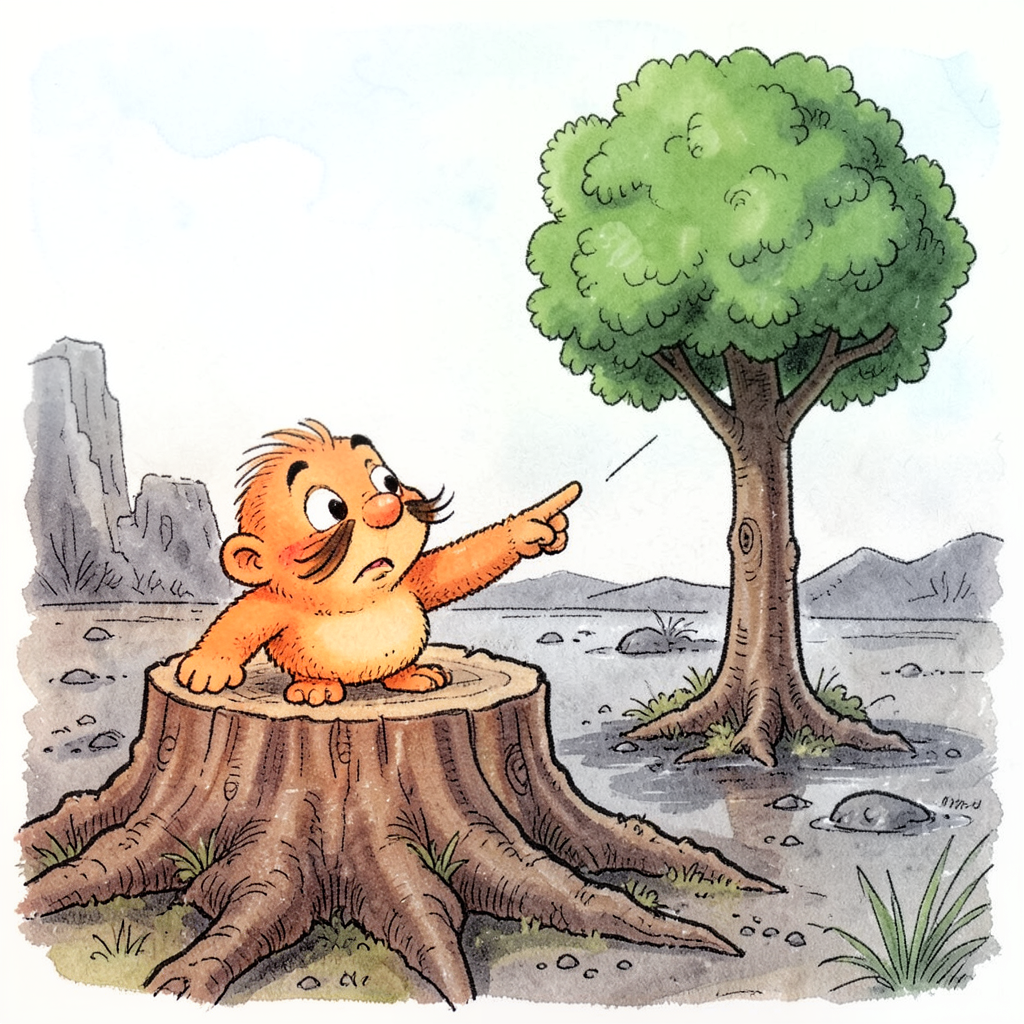
The Once-ler tells the story of how he arrived in a beautiful land of Truffula Trees and Swomee-Swans, and how his greed for profit led him to destroy it all. The Lorax, a small mustachioed creature, spoke for the trees — but no one listened. Now only a single Truffula seed remains.
Themes
EnvironmentResponsibilityConsequences
Best For
- Earth Day or nature-themed reading weeks at school or home
- Families starting conversations about recycling, conservation, or reducing waste
- Children who are beginning to notice environmental problems and want to understand why they exist
- Read-alouds where a strong rhythmic text keeps fidgety listeners engaged
- Paired reading with a hands-on activity like planting seeds or a neighborhood cleanup
Why Parents Love This Book
Published in 1971, The Lorax has outlasted generations of children's books precisely because Dr. Seuss never softens the truth: greed has consequences, and speaking up for what is right matters even when no one listens. The Once-ler's transformation from eager entrepreneur to regretful recluse is told with Seuss's trademark rhythmic verse, making a genuinely heavy story feel accessible rather than preachy. What elevates this book above a simple lesson is its refusal of an easy happy ending. The Truffula Trees are gone. The Brown Bar-ba-loots, Swomee-Swans, and Humming-Fish have all left. Only one seed remains, and the future depends on a child choosing differently. That open-ended responsibility placed squarely in young hands is what makes The Lorax emotionally resonant decades after its first printing. It trusts children to sit with sadness, to feel the weight of loss, and to believe their choices matter — a rare and powerful thing in a picture book.
Reading Tips for Parents
Pause at the moment the Lorax lifts himself away "by the seat of his pants" — this is a good natural break to ask your child how they're feeling before continuing. The ending, with the single seed handed to a child, is an excellent jumping-off point for action: visit a local park, plant a seed together, or discuss one family habit you could change to help the environment. Because the story involves real loss (animals leaving, trees destroyed), validate sadness if it comes up — that emotional response is the book working as intended. For children who become anxious, ground the conversation in what is still fixable. Reading aloud works best here; the rhyme scheme is dense and the payoff builds over the full read.
Awards & Recognition
- New York Times Notable Children's Book
- Frequently listed among the American Library Association's most frequently challenged books, reflecting its cultural impact and lasting relevance
- Named by School Library Journal as one of the Top 100 Picture Books of all time
Educational Value
This book helps children develop skills across multiple areas:
- Vocabulary: Introduces invented but context-rich words (Truffula, Gluppity-Glupp, Schloppity-Schlopp) alongside real environmental terms like smog, pollution, and ecosystem, expanding both imaginative and scientific language.
- Science: Introduces cause-and-effect relationships within ecosystems — when trees disappear, the animals that depend on them also disappear — making it an early introduction to ecology.
- Social-emotional: Develops empathy by showing the perspective of creatures who cannot speak for themselves, and introduces the concept of moral courage through the Lorax's repeated, unsuccessful advocacy.
- Civic responsibility: Encourages children to think of themselves as agents of change; the final scene places the fate of the environment in a child's hands, reinforcing that individual choices have real-world impact.
- Literary analysis: The story-within-a-story framing (the Once-ler narrating his past) gives older readers a natural entry point for discussing narrative perspective and unreliable or remorseful narrators.
- Ethics: Raises age-appropriate questions about balancing economic want against environmental cost, without reducing the dilemma to simple villain-and-hero terms.
Discussion Questions
Use these questions to spark conversation before, during, or after reading:
- Why did the Lorax keep coming back to talk to the Once-ler even when the Once-ler wasn't listening?
- How do you think the Once-ler felt at the end of the story, sitting alone in his house?
- The Lorax says 'I speak for the trees, for the trees have no tongues.' Who or what in your neighborhood might need someone to speak for them?
- If you were given the last Truffula seed, what would you do with it?
- The Once-ler made a lot of money but lost everything beautiful around him. Do you think that was a good trade? Why or why not?
Content Notes for Parents
The book includes sustained environmental loss — animals are driven away, a landscape is completely destroyed — and the tone becomes genuinely melancholy by the end. Sensitive children aged 4-5 may find the sadness of the Lorax's departure and the barren landscape upsetting; parents should be prepared to sit with those feelings and redirect toward the hopeful final image of the seed.
Frequently Asked Questions
What age is The Lorax really appropriate for?
The book is marketed for ages 4-8, but the rhyme and illustrations make it enjoyable as a read-aloud even for 3-year-olds. Deeper thematic discussions about greed, regret, and environmental responsibility land best with children aged 6 and up. Older elementary readers (ages 8-10) can get a second layer of meaning by revisiting it with more life context.
Is the ending too sad for young children?
The ending is melancholy but not despairing. The Lorax leaves, but the Once-ler hands a child the last seed — implying hope and the possibility of repair. Most children handle the sadness well, especially if a parent acknowledges the feeling and points to that final image of possibility. It is worth being present for the first reading rather than leaving a child alone with it.
Can I use this book to talk about climate change with my child?
Yes, and it is one of the most effective tools available for young children precisely because it is concrete and story-driven rather than data-driven. It doesn't use the words 'climate change,' but it illustrates the underlying logic clearly: when we take more than nature can replenish, everything suffers. Follow up with a specific, local example your child can see or touch for best results.
Are there similar books if my child wants more after this one?
Wangari's Trees of Peace by Jeanette Winter is a true story about a woman who replanted forests in Kenya — it pairs beautifully with The Lorax for older readers aged 6-9. The Giving Tree by Shel Silverstein covers related themes of taking and giving with a different emotional register. For a more action-oriented follow-up, The Wartville Wizard by Don Madden is a lighter take on environmental responsibility.
Why was this book banned or challenged in some schools?
The Lorax has appeared on challenged book lists primarily because some communities felt it presented a one-sided anti-industry message that could be considered unfair to the logging or manufacturing industries. The challenges have never resulted in widespread removal. Most educators and librarians consider the book's environmental message age-appropriate and factually grounded rather than ideologically extreme.