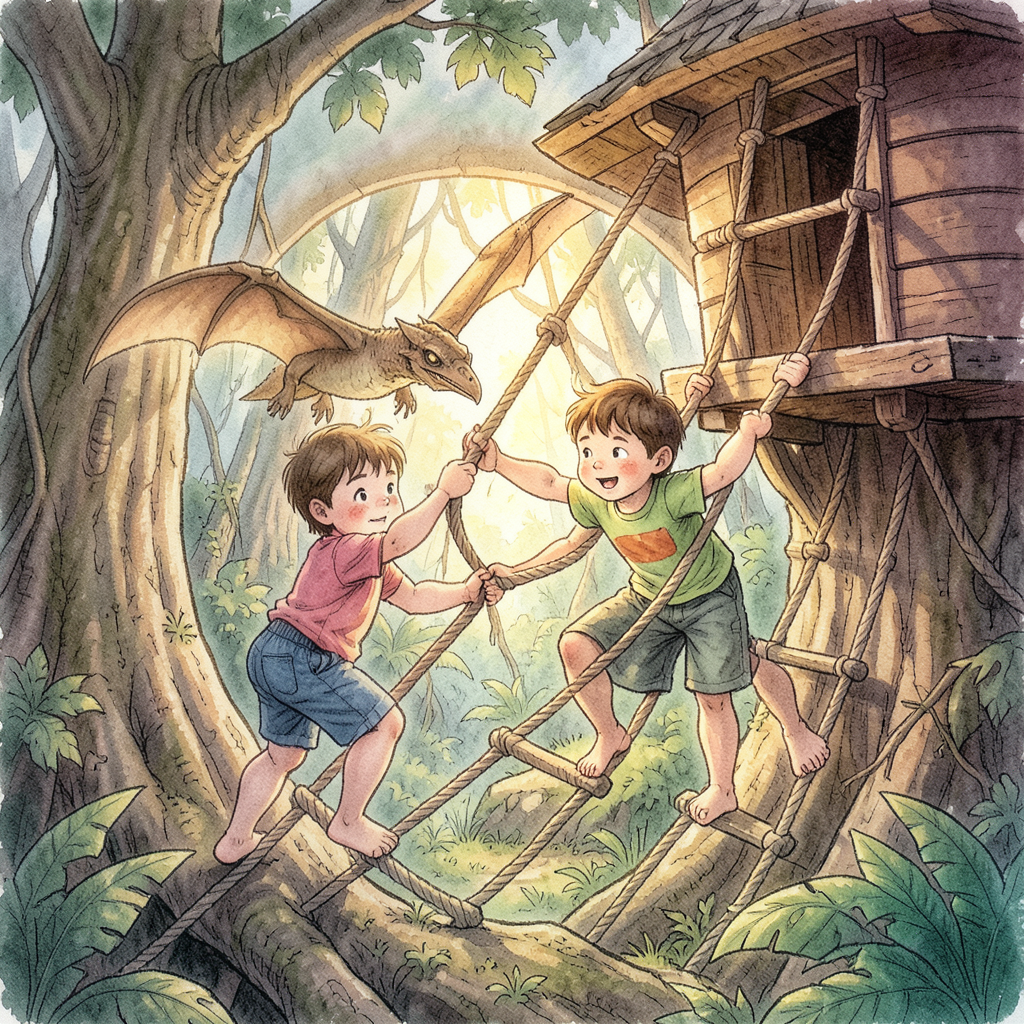
Magic Tree House: Dinosaurs Before Dark
About This Book
Eight-year-old Jack and his sister Annie discover a tree house in the woods filled with books. When Jack opens a book about dinosaurs and wishes he could see them, the tree house spins and lands them in the Cretaceous period. They must find a way back before a Tyrannosaurus rex catches them.
Themes
AdventureLearningCourage
Best For
- Children who have just graduated from picture books and need a confidence-building first chapter book
- Dinosaur enthusiasts who want story alongside facts
- Siblings reading together, since Jack and Annie's dynamic mirrors many brother-sister pairs
- Parents looking for a long series with consistent quality to sustain a new independent reader
- Classroom read-alouds paired with a nonfiction dinosaur unit
Why Parents Love This Book
Dinosaurs Before Dark launched one of the most beloved early reader series in publishing history, and rereading it today reveals exactly why. Mary Pope Osborne never talks down to young readers. Jack, the cautious note-taker, and Annie, the fearless leaper, feel like real siblings — they argue, they worry, and they look out for each other. Their complementary personalities model how different kinds of courage are both valuable. The dinosaur sequences are genuinely thrilling without tipping into nightmare territory: when the Tyrannosaurus rex appears, the tension is real but the pacing is careful. What elevates this above a simple adventure is Jack's notebook habit. He pauses mid-chase to observe and record facts, embedding the idea that curiosity and knowledge are tools, not obstacles. Sal Murdocca's black-and-white illustrations ground the fantasy in a friendly visual style. At under 70 pages and written at a second-grade reading level, the book hands early readers a satisfying, complete adventure they can finish in one sitting and feel genuinely proud of.
Reading Tips for Parents
Before reading, briefly explain that the Cretaceous period is when dinosaurs actually lived — this primes kids to enjoy Jack's fact-checking moments rather than being confused by them. The book is short enough to finish in one or two read-aloud sessions, making it ideal for a bedtime chapter book introduction. Pause when Jack writes in his notebook and invite your child to guess what fact he might be recording — this builds the habit of connecting story events to real-world knowledge. If your child loves the dinosaur section, have a library dinosaur book nearby to flip through together afterward. The series numbers 60-plus books, so finishing this one opens a conversation about which time period or topic they want to explore next, giving reluctant readers immediate motivation to continue.
Awards & Recognition
- New York Times Bestselling Series (Magic Tree House series)
- IRA/CBC Children's Choice selection
Educational Value
This book helps children develop skills across multiple areas:
- Science / Natural History: Jack's notebook entries introduce accurate dinosaur facts — such as the size and behavior of Pteranodons — modeling how observation and reference books work together.
- Reading Skills: Seeing Jack use a book inside the story to trigger the magic reinforces the idea that books are tools for exploration, building a positive association with reading.
- Vocabulary: Words like Cretaceous, Pteranodon, and Tyrannosaurus are introduced in context, giving early readers confidence with scientific terminology.
- Social-Emotional: Jack and Annie's sibling dynamic demonstrates negotiation, trust, and complementary strengths, opening discussion about cooperation and different kinds of bravery.
- Critical Thinking: Jack regularly pauses to compare what he observes with what the books say, modeling the habit of checking information against evidence.
- Series Literacy: Finishing a complete chapter book independently builds stamina and confidence, and the cliffhanger setup encourages children to seek out the next book in a series.
Discussion Questions
Use these questions to spark conversation before, during, or after reading:
- Jack and Annie react very differently when they first see a real dinosaur — Jack wants to take notes and Annie wants to get closer. Which one is more like you, and why?
- The tree house takes Jack and Annie wherever the books inside it point. If you found the tree house, what book would you open first and where would you want to go?
- Jack keeps a notebook and writes down facts even when he is scared. Why do you think knowing facts helps him feel less afraid?
- Annie trusts the Pteranodon right away, but Jack is not so sure. Who do you think made the better choice, and what would you have done?
- At the end, Jack and Annie are back home safely. Do you think they will use the tree house again? What might happen next?
Content Notes for Parents
The Tyrannosaurus rex chase scene creates genuine suspense but is handled with age-appropriate pacing and no graphic violence. There are no mature themes, death, or frightening content beyond mild adventure peril suitable for the target age range.
Frequently Asked Questions
What age is this book actually appropriate for?
The publisher targets ages 6 to 9, and that range holds up in practice. Strong readers aged 5 can follow the story with a little adult support, while the content remains engaging through around age 9. Beyond that, children typically move on to longer chapter book series.
Is there anything scary that might worry a sensitive child?
The T. rex chase is the most intense moment in the book, but Osborne keeps the tension brief and resolves it quickly. Most children who are fine with animated dinosaur movies will handle this comfortably. If your child startles easily at sudden loud noises or monster imagery, preview that chapter first.
Can my 5-year-old read this independently?
This depends heavily on the individual child. The book is written at roughly a second-grade reading level, so a 5-year-old reading above grade level may manage it. For most 5-year-olds it works best as a read-aloud with a parent, which also lets you pause for discussion and enjoy it together.
Are the dinosaur facts in the book accurate?
The core facts Jack records in his notebook — about Pteranodons gliding rather than flapping, for instance — were accurate for the time of publication in 1992. Paleontology has advanced since then, so a few details may be outdated, but nothing is wildly wrong. Use a current library dinosaur book alongside for the most up-to-date information.
We loved this book. What should we read next?
The obvious next step is book two in the series, The Knight at Dawn, which sends Jack and Annie to medieval times. If you want a companion nonfiction book, Osborne's own Magic Tree House Research Guides (now called Fact Trackers) have a Dinosaurs edition written at the same level that pairs perfectly with this story.