Corduroy
About This Book
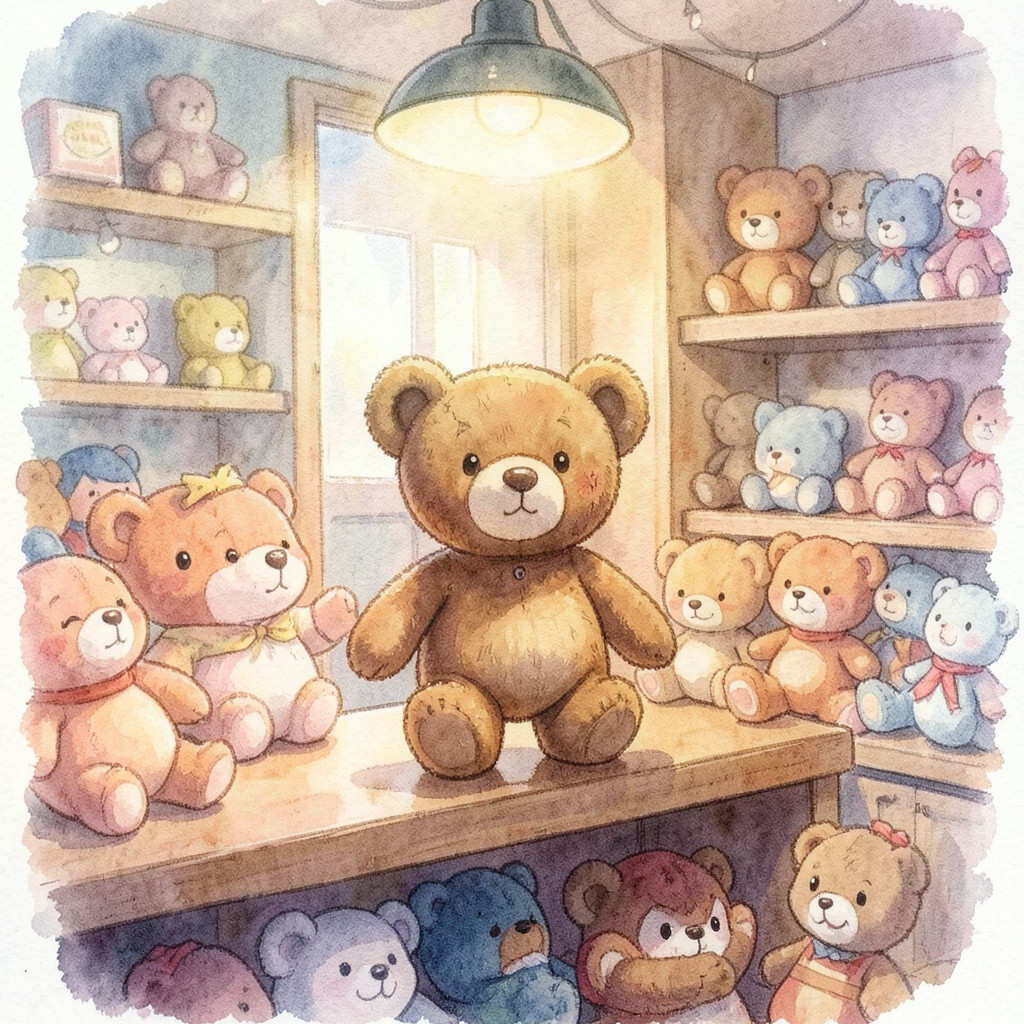
A stuffed bear sitting on a department store shelf is missing a button from his green overalls. After the store closes, he ventures through the store searching for his lost button. The next day, a young girl named Lisa buys him with her own savings and sews on a new button.
Themes
FriendshipBelongingSelf-Acceptance
Best For
- Children who have a beloved stuffed animal or toy companion
- Families going through transitions where a child needs reassurance about belonging and being chosen
- Early readers working on narrative comprehension and story structure
- Conversations about friendship, what it means to care for someone, and self-worth
- Bedtime reading for ages 4-6 — the cozy, resolved ending is ideal for settling down
Why Parents Love This Book
Published in 1968, Corduroy has endured for decades because it captures something every child instinctively understands: the deep desire to be chosen, loved, and brought home. Don Freeman's bear is wonderfully imperfect — missing a button, searching in the wrong places, spending a night alone in a closed department store — and yet he is wholly lovable. What elevates this book above a simple toy story is the relationship at its heart. Lisa, a young Black girl, sees Corduroy not as a bargain or a perfect specimen but as someone worth saving. She uses her own saved coins to buy him, then sits down and sews on a new button herself. That act of deliberate, practical care is deeply moving. The message children absorb is not that you need to be perfect to be loved, but that the right person will love you and actively work to take care of you. Freeman's illustrations are warm and slightly rough-edged, perfectly matching Corduroy's own slightly-worn charm.
Reading Tips for Parents
Read slowly through the department store adventure scenes and let children study the illustrations — Freeman hides visual details on each page that reward looking. When Corduroy mistakes an escalator button for his missing one, pause and let your child correct him; it builds reading comprehension and gives kids a satisfying moment of knowing more than the character. When Lisa sews on the button at the end, ask your child if they have ever fixed something or taken care of something they loved. For children who have a special stuffed animal, this book lands especially deep — consider reading it alongside their own toy. The story is short enough for a single sitting with toddlers but rich enough that 6- and 7-year-olds will get more from a slower, discussion-based read.
Awards & Recognition
- ALA Notable Children's Book
- School Library Journal Best Books of the Year (1968)
- New York Times Outstanding Books list
Educational Value
This book helps children develop skills across multiple areas:
- Social-emotional: Models unconditional acceptance — Lisa chooses Corduroy knowing he is imperfect, showing children that love is not contingent on being flawless.
- Vocabulary: Introduces words like "escalator," "palace," "mattress," and "overalls" in meaningful context, building early literacy through story.
- Problem-solving: Corduroy encounters obstacles (wrong buttons, unfamiliar environments) and keeps trying, demonstrating simple persistence and initiative.
- Empathy: Children are invited to consider how Corduroy feels at multiple points — alone, hopeful, finally at home — building emotional perspective-taking skills.
- Life skills: Lisa's act of saving money and then sewing a button introduces children to the concepts of delayed gratification and practical care for others.
- Narrative comprehension: The clear beginning (problem: missing button), middle (search), and end (resolution: found a home) gives young readers a strong introduction to story structure.
Discussion Questions
Use these questions to spark conversation before, during, or after reading:
- Why do you think Corduroy wanted to find his missing button so much? Do you think the button was the most important thing he was really looking for?
- Lisa saved her own money to buy Corduroy. Have you ever saved up for something you really wanted? How did it feel?
- When Corduroy woke up alone in the store at night, how do you think he felt? What would you do if you were in his situation?
- At the end, Lisa says she has always wanted a friend. Do you think Corduroy feels the same way? How can you tell?
- If you found a toy in a store that was missing something, would you still want it? Why or why not?
Content Notes for Parents
There are no scary, violent, or mature elements in this book. The scene where Corduroy is alone in the dark department store overnight may feel slightly suspenseful for very sensitive children, but it resolves quickly and cheerfully.
Frequently Asked Questions
What age is Corduroy best for?
The book is ideal for ages 3 to 7. Younger children (3-4) will enjoy the warm illustrations and the simple emotional arc of a toy finding a home. Children 5-7 will engage more deeply with the themes of belonging and Lisa's deliberate, caring choice to buy and fix Corduroy. It holds up well for repeated readings as children grow.
Is anything in this book scary or upsetting for young children?
Nothing in this book is disturbing or mature. There is a brief nighttime scene where Corduroy is alone in the closed department store, which some very sensitive children might find mildly tense. It resolves happily and quickly, and for most children it reads as an adventure rather than something frightening.
What is the main message of Corduroy?
The book carries two intertwined messages: that you do not need to be perfect to deserve love, and that real friendship involves actively caring for someone. Lisa does not wait for Corduroy to be fixed before she buys him — she buys him and then fixes him herself. This models a beautiful, practical form of love for young readers.
Are there similar books my child might enjoy after Corduroy?
Children who love Corduroy often enjoy The Velveteen Rabbit by Margery Williams (older children, more emotionally complex), Owen by Kevin Henkes (about a child's attachment to a security object), and A Sick Day for Amos McGee by Philip C. Stead, which similarly centers on quiet, devoted friendship. Don Freeman also wrote a sequel, A Pocket for Corduroy, which is worth reading next.
Is Corduroy still in print and widely available?
Yes. Corduroy has remained continuously in print since 1968 and is one of the most widely available classic picture books. It is sold in board book format for younger children, standard hardcover and paperback, and is commonly found in libraries, bookstores, and online retailers.