Don't Let the Pigeon Drive the Bus!
About This Book
A bus driver asks the reader to watch his bus while he's gone — with one instruction: don't let the pigeon drive it. The pigeon then tries every trick in the book — begging, reasoning, guilt-tripping, and throwing a full-blown tantrum — to get behind the wheel.
Themes
HumorBoundariesInteraction
Best For
- Car and airplane trips where one sibling has a snack the other wants — instant relatable tension
- Classroom read-alouds where a teacher wants to spark a lively discussion about sharing without being preachy
- Children who resist sharing and need to see their own feelings reflected without being scolded
- Beginning readers ready to practice expressive reading using speech bubbles and character voices
- Any child who is already a Pigeon fan and wants more time with their favorite dramatic bird
Why Parents Love This Book
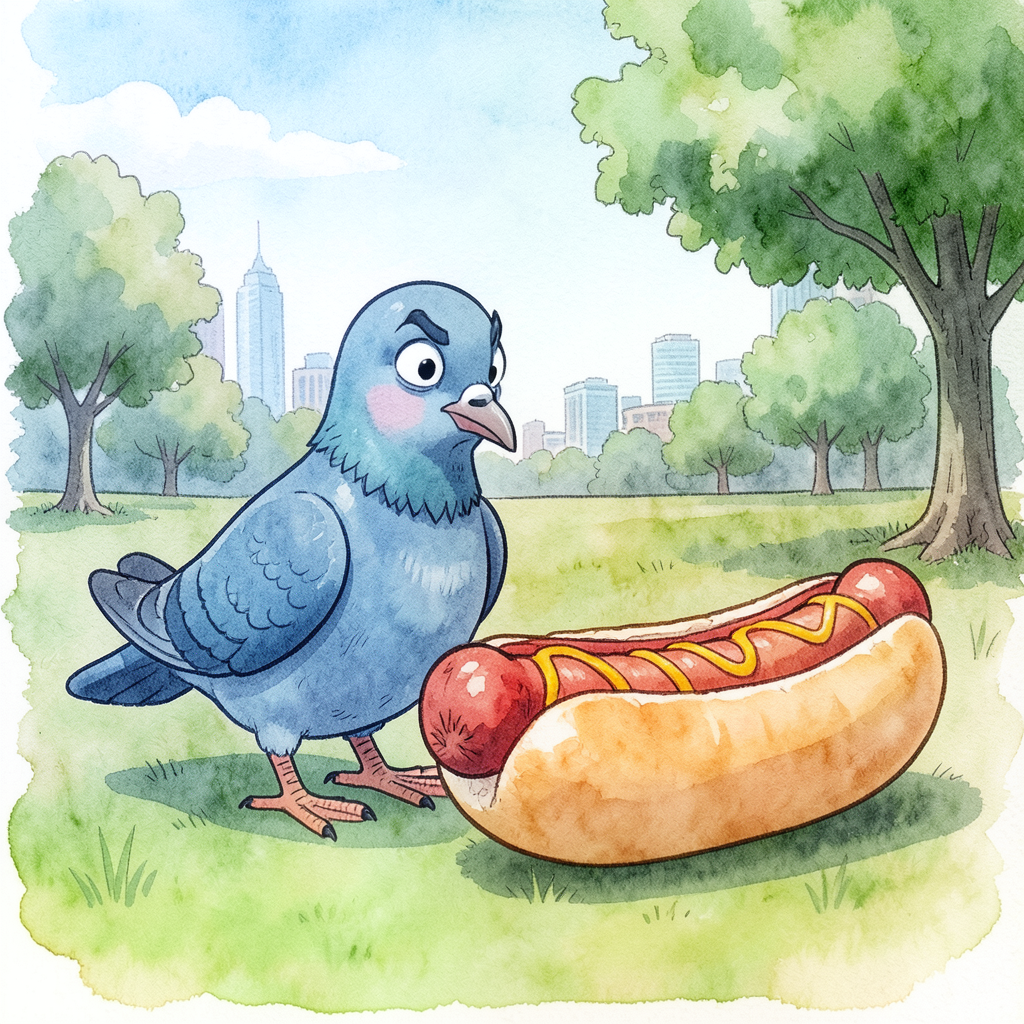
Mo Willems pulls off something genuinely difficult in "The Pigeon Finds a Hot Dog!": he makes selfishness funny without endorsing it, and generosity feel earned rather than forced. When the Pigeon discovers a glorious hot dog and a curious duckling immediately starts asking what it tastes like, the book becomes a masterclass in comic timing. The duckling's innocent, relentless questions ("Is it salty? Is it juicy? What exactly IS a hot dog?") chip away at the Pigeon's defenses through sheer persistence — and watching the Pigeon rationalize keeping the whole thing for himself is both hilarious and uncomfortably recognizable. Children who have ever refused to share a snack will see themselves in the Pigeon without being lectured at. The payoff — the Pigeon voluntarily sharing, motivated partly by curiosity and partly by the duckling's clever maneuvering — lands with warmth rather than moralizing. Willems' spare line art and speech-bubble format make this ideal for beginning readers and read-aloud performers alike. It's a book that rewards re-reading because the duckling's strategy gets funnier every time you see it coming.
Reading Tips for Parents
Before reading, ask your child if they've ever found something really exciting and not wanted to share it — this primes them to connect with the Pigeon without judgment. During the read-aloud, ham up the Pigeon's voices: use an increasingly exasperated, dramatic tone as the duckling's questions pile up, and a small, deflated voice when the Pigeon finally relents. Pause after the duckling asks "What does a hot dog taste like?" and let your child answer before turning the page. This is a great book to read twice in a row — the second time, children often catch the duckling's subtle strategy and delight in spotting it. After reading, the natural conversation starter is: "Was the Pigeon wrong to want to keep it? Was the duckling being sneaky or just curious?"
Awards & Recognition
- New York Times Bestseller (Mo Willems Pigeon series)
- Part of the Pigeon series, which launched with a Caldecott Honor book (Don't Let the Pigeon Drive the Bus!, 2004 Caldecott Honor)
Educational Value
This book helps children develop skills across multiple areas:
- Social-emotional: Explores the tension between wanting something for yourself and the social pressure to share, helping children name and process those conflicting feelings honestly.
- Vocabulary: Introduces expressive, emotionally rich words like 'magnificent,' 'extraordinary,' and the Pigeon's dramatic exclamations that expand descriptive language.
- Critical thinking: The duckling's indirect questioning strategy invites children to analyze how persuasion works and recognize when someone is being clever rather than direct.
- Reading fluency: Speech-bubble format and strong character voices give beginning readers natural cues for expression, pacing, and punctuation — great for practicing read-aloud skills.
- Ethics and fairness: Raises genuine questions about ownership, sharing, and whether a good outcome achieved by a sneaky method is still a good outcome.
Discussion Questions
Use these questions to spark conversation before, during, or after reading:
- Why did the Pigeon not want to share the hot dog? Do you think that was fair?
- How did the duckling get the Pigeon to share without asking directly? Was that a clever plan?
- Have you ever found something really special and not wanted to share it? What did you do?
- At the end, do you think the Pigeon was happy he shared, or do you think he was still a little sad about the hot dog?
- If YOU found a hot dog (or your favorite food), who would you share it with?
Content Notes for Parents
There are no scary, sad, or mature elements in this book. The Pigeon's frustration is played entirely for comedy, and no child is likely to find the content upsetting.
Frequently Asked Questions
What age is this book best for?
The book is ideal for ages 3 to 7. Younger children (3-4) will enjoy the comedy and silliness of the Pigeon's reactions, while older children (5-7) will pick up on the duckling's clever strategy and engage more deeply with the fairness questions the story raises. It also works well as a classroom read-aloud for kindergarten and first grade.
Do I need to read the other Pigeon books first?
Not at all. Each Pigeon book stands completely on its own, and children new to the series will have no trouble jumping in here. That said, if your child loves this one, the other Pigeon books — especially 'Don't Let the Pigeon Drive the Bus!' and 'The Pigeon Wants a Puppy!' — are natural next reads.
Is this book actually about sharing, and will my child feel lectured?
Mo Willems is careful not to moralize, which is a big part of why the book works so well. The Pigeon is not punished, and no adult figure steps in to deliver a lesson. The sharing happens organically through the duckling's curiosity and the Pigeon's own choice, so children receive the message through story rather than instruction. Most kids find it funny, not preachy.
My child is a picky eater and doesn't like hot dogs — will they still connect with the book?
Absolutely. The hot dog is essentially a stand-in for any beloved food or prized possession. Children readily substitute their own favorite thing — a cookie, a toy, a seat on the couch — and the emotional logic of the story holds just as well. You can even invite them to retell the story with their own favorite food in place of the hot dog.
What other books are similar to this one?
If your child loves this book, look for other titles in Mo Willems' Pigeon series, as well as his Elephant and Piggie early reader series, which similarly uses dialogue, big emotions, and humor to explore friendship dynamics. 'Interrupting Chicken' by David Ezra Stein and 'Waiting Is Not Easy!' (also by Willems) hit similar comic notes with relatable child-like behavior.