The Polar Express
About This Book
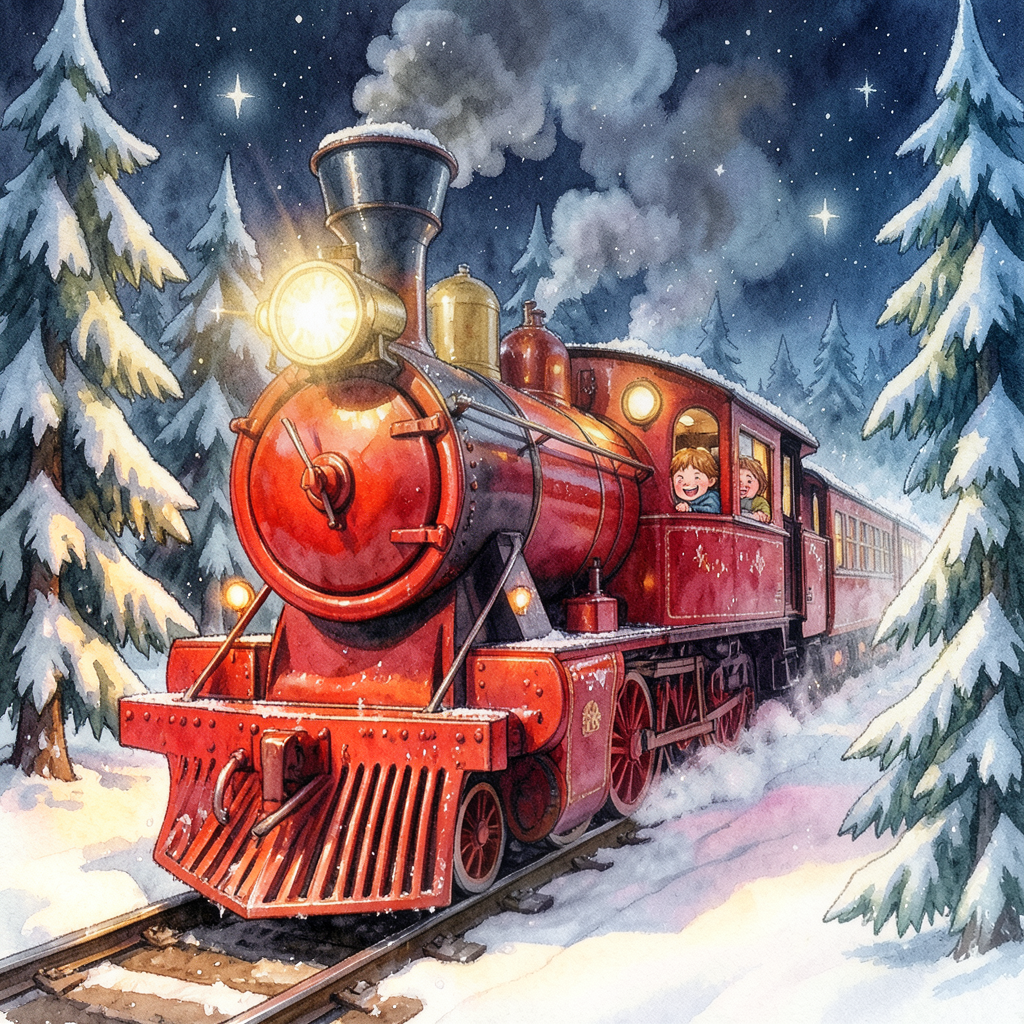
Late on Christmas Eve, a boy boards a mysterious train to the North Pole, where Santa selects him to receive the first gift of Christmas. He chooses a silver bell from Santa's sleigh, but only those who truly believe can hear it ring.
Themes
WonderBeliefChristmas
Best For
- Christmas Eve read-alouds as a family bedtime ritual in December
- Children ages 4-8 who are beginning to grapple with questions about Santa Claus and belief
- Classrooms or libraries building a holiday picture-book collection anchored in literary quality
- Families who appreciate art-focused books and enjoy lingering over detailed illustrations
- Gifting to grandparents to share with grandchildren during the holiday season
Why Parents Love This Book
The Polar Express endures because it captures something most holiday books miss: the bittersweet ache of believing in something you cannot quite prove. Chris Van Allsburg's oil pastel illustrations are luminous and dreamlike, bathing every page in the warm glow of locomotive headlights cutting through a winter night. The story never condescends to children or winks at adults — it holds both audiences with the same quiet sincerity. The silver bell at the heart of the story is a masterstroke: it rings for believers and falls silent for skeptics, giving children a concrete, sensory symbol of faith and wonder. The boy narrator's voice is understated and matter-of-fact, which paradoxically makes the magic feel more real, not less. Decades after its publication, the book still prompts children to cup their hands around imaginary bells and ask whether adults can hear them. That is a rare and lasting gift.
Reading Tips for Parents
Read this one slowly and let the illustrations do half the work. Pause on the full-spread paintings — the forest of dark pines, the vast workshop at the North Pole — and give children time to absorb the detail before turning the page. Lower your voice as the train departs in the night and let silence fall at emotional beats; the book's pacing rewards a theatrical reader. If you have a small bell at home, ring it before or after reading and ask your child whether they can hear it clearly — a simple ritual that brings the story's central question to life. For children who ask whether the events really happened, the narrator's adult reflection at the end ("At one time most of my friends could hear the bell, but as years passed, it fell silent for all of them") is worth reading aloud and then sitting with quietly rather than rushing to explain.
Awards & Recognition
- Caldecott Medal, 1986 (American Library Association, awarded for distinguished illustration in an American picture book)
- New York Times Best Illustrated Children's Book of the Year, 1985
Educational Value
This book helps children develop skills across multiple areas:
- Vocabulary: Introduces rich, evocative words like 'luminous,' 'barren,' and 'conductor' in context, giving children strong mental images to anchor meaning.
- Social-emotional: Explores the experience of wonder and belief as intrinsically valuable, helping children articulate and honor feelings that are hard to put into words.
- Visual literacy: Van Allsburg's dramatic use of light, shadow, and perspective invites children to 'read' images for mood and meaning, building picture-book comprehension skills.
- Narrative structure: The story models a clear journey arc — departure, adventure, climax, return — giving children a framework for understanding and retelling stories.
- Cultural context: Introduces Christmas Eve traditions and the folklore of Santa Claus in a way that is imaginative rather than prescriptive, supporting discussions about family traditions.
- Philosophy for children: The book gently raises questions about faith, growing up, and what we lose and keep as we age — themes that support rich guided conversations.
Discussion Questions
Use these questions to spark conversation before, during, or after reading:
- Why do you think the boy was the one chosen to receive the first gift of Christmas?
- The bell makes a sound that some people can hear and some cannot. What do you think makes the difference?
- Have you ever believed in something really strongly, even when other people did not? How did that feel?
- What would you have asked for if Santa had chosen you to pick the first gift?
- The narrator says that as he grew up, his friends stopped being able to hear the bell. Why do you think that happens to some people?
Content Notes for Parents
There are no frightening, sad, or mature content concerns in this book. Some very young or sensitive children may feel mild unease at the dark, nighttime train journey setting, but the tone throughout remains safe and reassuring.
Frequently Asked Questions
What age is The Polar Express best suited for?
The book is most commonly enjoyed by children ages 4 to 8. Younger children in the 4-5 range will respond most to the illustrations and the train adventure, while children ages 6-8 will begin to engage with the story's deeper themes about belief and growing up. Older children and adults often find it meaningful as well, particularly when reading together across generations.
Is this book appropriate for children who are starting to question whether Santa is real?
Yes, and it handles that question with unusual grace. The Polar Express does not argue for or against Santa's existence; instead it frames belief itself as the gift worth protecting. This makes it a gentle and non-pressuring book for children at any stage of their relationship with Christmas magic. Parents can use the story as a springboard for honest, open-ended conversations without the book forcing a particular answer.
Are the illustrations too dark or scary for young children?
The illustrations are dramatic and atmospheric — lots of deep blues, blacks, and shadowy forests at night — but they are not frightening. The mood is one of wonder and safety rather than threat. Very sensitive children under age 4 may find the large, dark spreads a little intense, but for most children in the target age range the darkness feels exciting rather than scary.
What books are similar to The Polar Express that we might read next?
Chris Van Allsburg's other books are natural next reads, particularly The Mysteries of Harris Burdick and Jumanji, which share his distinctive dreamlike illustration style and sense of mysterious wonder. For more Christmas-themed picture books with literary weight, consider The Snowman by Raymond Briggs or Father Christmas by the same author. For books exploring childhood belief and magic more broadly, Where the Wild Things Are by Maurice Sendak covers similar emotional territory.
Can this book be used in a classroom around the holidays?
Absolutely. The Polar Express works well in a classroom setting for children in kindergarten through second grade. It lends itself to discussions about narrative structure, descriptive language, and the role of illustration in storytelling. Teachers can pair it with a simple bell-ringing activity, a creative writing prompt asking children to describe their own imaginary train journey, or an art activity inspired by Van Allsburg's oil pastel technique.