The Wonderful Wizard of Oz
About This Book
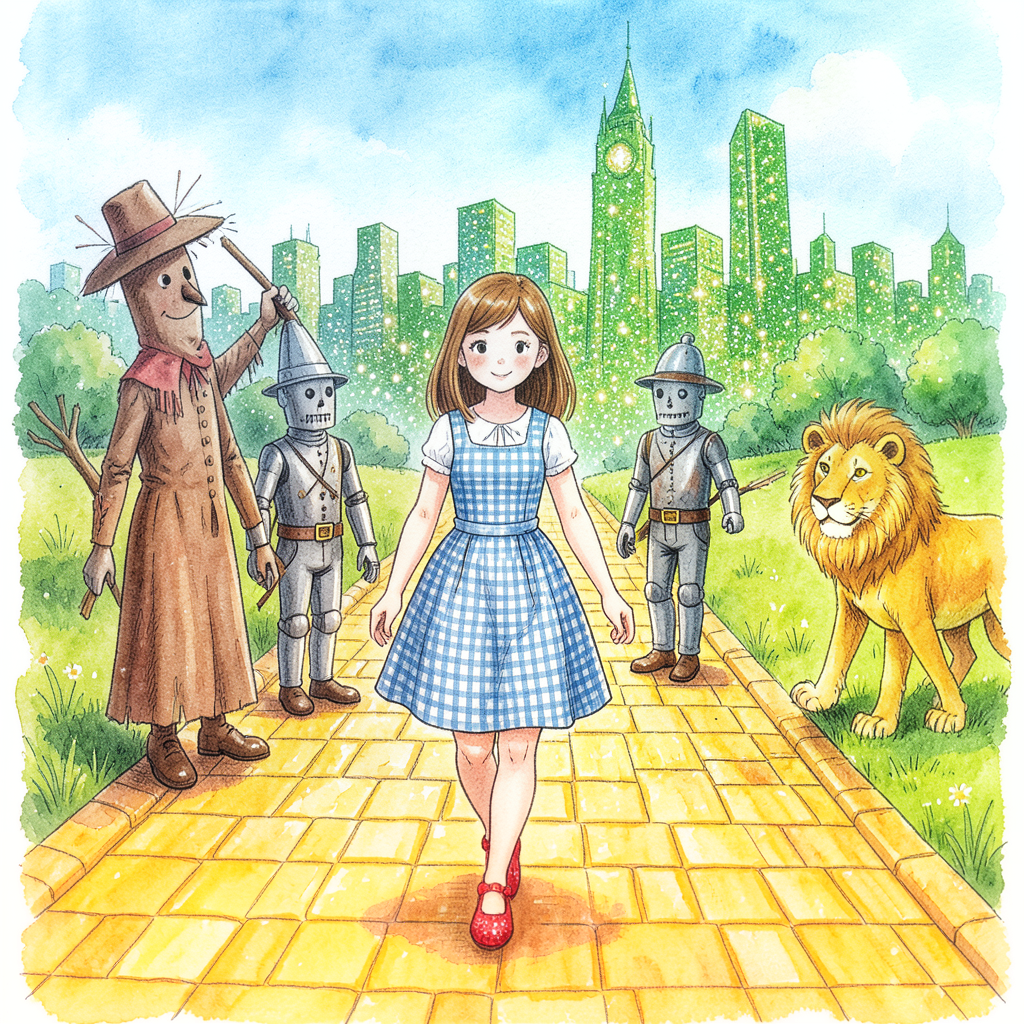
When a tornado carries Dorothy and her dog Toto from Kansas to the magical Land of Oz, she follows the Yellow Brick Road to the Emerald City, meeting a scarecrow wanting a brain, a tin man wanting a heart, and a cowardly lion wanting courage. Together they discover they had what they sought all along.
Themes
CourageFriendshipSelf-Discovery
Best For
- Independent readers ages 8-10 tackling their first classic novel
- Family read-aloud sessions where parents want a story with layered themes adults enjoy too
- Children who have seen the 1939 film and are curious about the original source material
- Classrooms or book clubs exploring friendship, courage, and self-discovery
- Kids who enjoy fantasy world-building and episodic adventure with a clear emotional arc
Why Parents Love This Book
Published in 1900, The Wonderful Wizard of Oz remains one of the most beloved works in American children's literature — and with good reason. L. Frank Baum created a fantasy world that feels genuinely original, rooted not in European fairy-tale tradition but in the wide-open American imagination. Dorothy is a refreshingly capable heroine: practical, kind, and determined, yet never precious about it. What truly elevates the story is how each companion's quest mirrors something readers themselves might be wrestling with. The Scarecrow, Tin Man, and Cowardly Lion are searching for qualities they already demonstrate throughout their journey — a quiet but powerful message that self-belief matters more than external validation. Baum's prose is brisk and visual, making chapters fly by even for reluctant readers. The story's blend of whimsy, genuine peril, and emotional warmth means children are entertained and moved at the same time, which is rarer than it should be.
Reading Tips for Parents
Read a chapter or two per sitting — the episodic structure makes natural stopping points easy to find. Before you begin, briefly tell kids this story was written in 1900, which explains some old-fashioned language and social attitudes; that context actually sparks good conversation. Encourage children to notice each time the Scarecrow, Tin Man, or Lion shows the very quality they claim to lack — it becomes a running game that sharpens reading comprehension. If your child has seen the 1939 film first, be ready for differences: the silver shoes (not ruby), a more straightforward plot, and a tone that is cheerful rather than dreamlike. The original text is in the public domain, so free illustrated editions vary in quality; look for editions with the original W.W. Denslow artwork for the most authentic experience.
Awards & Recognition
- Listed among the American Library Association's most frequently challenged books (demonstrating its cultural staying power since 1900)
- Recognized by the Library of Congress as one of America's most-read books
- The 1939 MGM film adaptation won two Academy Awards, cementing the story's place in cultural history
Educational Value
This book helps children develop skills across multiple areas:
- Vocabulary: The 1900 prose introduces words like 'benevolent,' 'ominous,' 'sagacious,' and 'implored,' giving strong readers a genuine vocabulary stretch in context.
- Social-emotional learning: The companions' journeys illustrate that courage, compassion, and intelligence are built through action and experience, not granted by outside authority.
- Critical thinking: The Wizard's deception invites children to question appearances and think about the difference between confidence and competence.
- Literary history: Reading the original novel alongside knowledge of the 1939 film introduces children to the concept of adaptation and how stories change across media.
- Geography and imagination: Baum's detailed world-building — from the Munchkin Country to the Emerald City — models how authors construct settings that feel internally consistent.
- Character analysis: Tracking how each companion grows across chapters is excellent practice for identifying character development, a key reading comprehension skill.
Discussion Questions
Use these questions to spark conversation before, during, or after reading:
- Dorothy could have asked the Wizard for almost anything. Why do you think she only wanted to go home? What would you have wished for?
- The Scarecrow, Tin Man, and Lion each wanted something they felt they were missing. Can you find moments in the story where they already showed that quality before they reached the Wizard?
- The Wizard turned out to be an ordinary man pretending to be powerful. How did that make you feel? Is it ever okay to pretend to be something you are not?
- Dorothy makes friends with very different kinds of people on her journey. What do you think made their friendship work even though they were so different?
- If a tornado dropped you in a magical land, what is the first thing you would do — and who would you want with you?
Content Notes for Parents
The book contains mild peril including a tornado, threatening witches, and scenes where characters are captured or injured (the Tin Man is dismembered in backstory, the Cowardly Lion is muzzled). These moments are handled with a light touch and should not trouble most readers ages 8 and up, though very sensitive younger readers may find the Wicked Witch scenes unsettling.
Frequently Asked Questions
What age is this book really appropriate for?
The book is best suited for independent readers ages 8 to 12. The vocabulary and chapter length are manageable for confident readers at the lower end of that range, while the thematic depth rewards older readers who can reflect on what the companions' quests really mean. Younger children (5-7) enjoy it as a parent read-aloud, though some peril scenes may need brief reassurance.
Is the book very different from the 1939 movie?
Yes, meaningfully so. Dorothy's magic shoes are silver in the book, not ruby. There is no 'it was all a dream' ending — Oz is presented as a real place. The plot includes several additional episodes not in the film, and the tone is sunnier and more matter-of-fact. Reading the book after the film is a wonderful way to introduce the idea of adaptation and how storytellers make different choices.
Are there any content concerns I should know about?
The book is generally mild. There is fantasy violence — witches, threatening creatures, and a backstory involving the Tin Man being gradually dismembered by an enchanted axe — but Baum treats these moments with a light, almost comic touch. The Wicked Witch is genuinely threatening in a few scenes. Most children 8 and up handle this comfortably, but parents of sensitive readers may want to preview chapters involving the witch's castle.
Which edition should I buy?
Because the text is in the public domain (published 1900), dozens of editions exist at wildly varying quality. Look for an edition that reproduces the original W.W. Denslow illustrations, which Baum himself collaborated on and which are considered inseparable from the story. The Dover Children's Thrift Classics edition and the Signet Classics edition are reliable, affordable choices with accurate text.
What books would you recommend to a child who loved this one?
Children who love the world-building and episodic adventure of Oz often enjoy the sequels Baum wrote (there are thirteen Oz books in total). Beyond Oz, good next reads include 'A Wrinkle in Time' by Madeleine L'Engle for similar themes of courage and self-discovery, 'The Lion, the Witch and the Wardrobe' by C.S. Lewis for portal fantasy, and 'The Secret Garden' by Frances Hodgson Burnett for another early 20th-century classic with a strong child protagonist.