Those Shoes
About This Book
Jeremy desperately wants the cool black high-tops with two white stripes that every other kid at school seems to have. But Grandma says there is no room in their budget for want, only for need. A deeply honest and quietly moving story about desire, disappointment, and the surprising joy of giving something precious away.
Themes
PovertyGenerositySelf-Worth
Best For
- Children who are navigating peer pressure or social comparison at school
- Families looking for an honest, non-preachy way to talk about money and budgets
- Classroom read-alouds centered on empathy, generosity, or community
- Children who enjoy realistic stories about everyday life rather than fantasy
Why Parents Love This Book
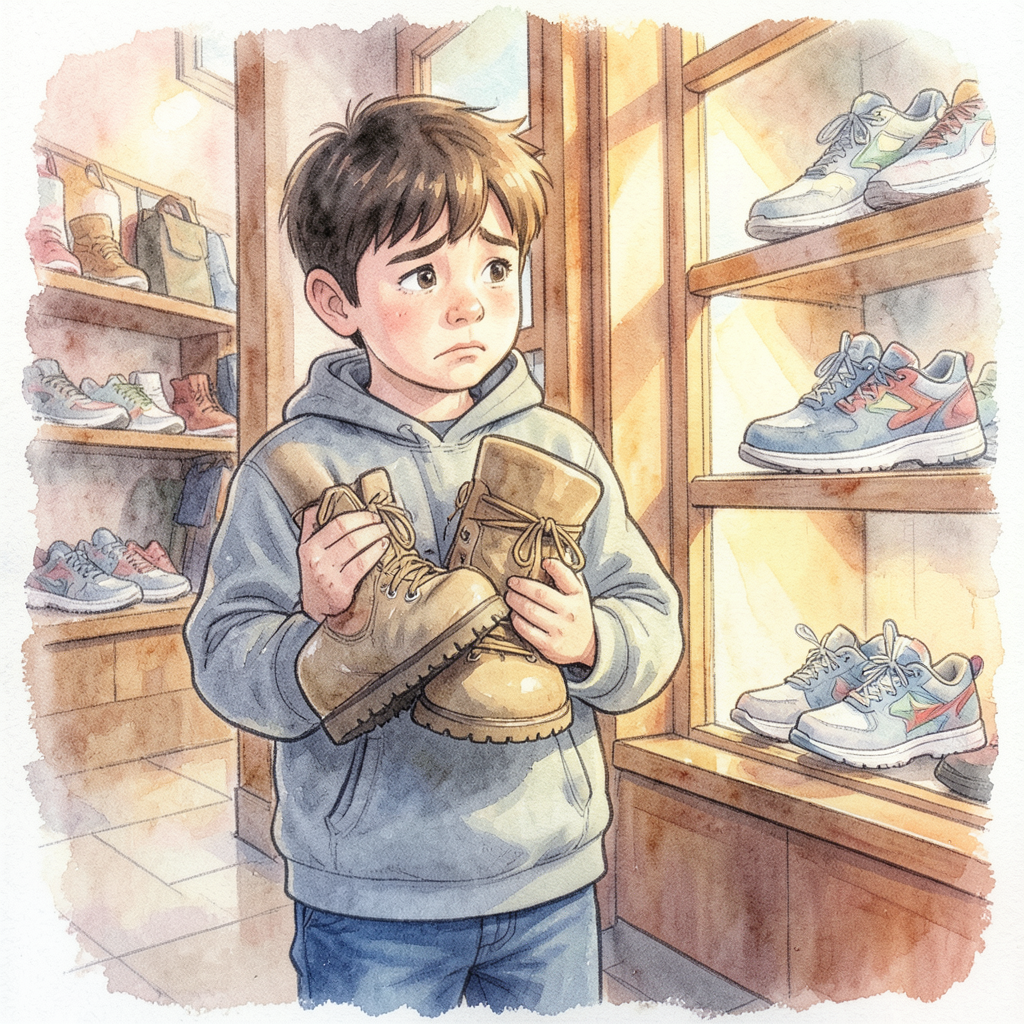
Those Shoes earns its place as a modern classic by treating children's experiences of want and economic reality with complete seriousness and dignity. Maribeth Boelts never softens the sting of Jeremy's disappointment — the longing for those black high-tops with two white stripes feels entirely real because it is real to millions of kids navigating social hierarchies at school. What lifts the story beyond a simple lesson in gratitude is its emotional honesty: Jeremy actually buys the wrong-sized shoes anyway, because desire is that powerful. Noah Z. Jones's expressive illustrations ground the story in a recognizable, working-class neighborhood that rarely appears in picture books. The ending, where Jeremy gives the shoes to a classmate who needs them even more, lands with genuine warmth rather than moralizing. It never tells children how to feel; it simply shows what generosity looks like when it costs something real. That restraint is what makes this book endure and resonate with readers young and old.
Reading Tips for Parents
Before reading, invite your child to think of something they really, really wanted — this opens a genuine conversation rather than a lesson. While reading, pause at the moment Jeremy buys the too-small shoes and ask what they think he should do next; let them sit with the tension. Avoid rushing to praise Jeremy's final decision. Instead, after the book, ask your child how they think Jeremy felt giving the shoes away — acknowledging that doing a good thing can still feel sad is an important truth. If your family has experienced tight budgets, this book can be a natural, non-pressured way to talk about needs versus wants without shame. The story is short enough for a single sitting but rich enough to revisit at different ages as children grow into fuller understanding of what generosity and friendship actually cost.
Awards & Recognition
- ALA Notable Children's Book
- Charlotte Zolotow Award Highly Commended
Educational Value
This book helps children develop skills across multiple areas:
- Social-emotional learning: Explores the complex feelings of envy, disappointment, and generosity in a way children can identify with and process.
- Vocabulary: Introduces words like budget, need, want, and desire in meaningful context that children remember because the story gives them emotional weight.
- Financial literacy: Provides a gentle, age-appropriate entry point into concepts of limited budgets, choices, and spending on wants versus needs.
- Empathy and perspective-taking: Jeremy's act of giving invites children to consider how someone else's circumstances compare to their own.
- Critical thinking: The story resists a tidy moral, encouraging children to hold conflicting feelings and think through consequences of choices.
Discussion Questions
Use these questions to spark conversation before, during, or after reading:
- Why do you think Jeremy wanted those shoes so much? Have you ever wanted something that all your friends had?
- Grandma says there is only room in their budget for need, not want. What is the difference between something you need and something you want?
- Jeremy buys the shoes even though they do not fit. Why do you think he did that? Was it a mistake?
- How do you think Jeremy felt when he gave the shoes to Antonio? Can something feel both sad and good at the same time?
- If you were Jeremy's friend at school, what would you say to him about the shoes?
Content Notes for Parents
The book deals honestly with childhood poverty and social pressure, which may prompt big feelings or questions in children who have experienced similar circumstances. There are no scary, violent, or age-inappropriate elements — all themes are handled with sensitivity and care.
Frequently Asked Questions
What age is Those Shoes best suited for?
The book is ideal for children ages 4 to 8. Younger children in the 4-5 range will connect with the emotional story of wanting something badly, while children aged 6-8 will engage more deeply with the themes of budget constraints and the cost of generosity. It works well as both a read-aloud and an early independent read.
Is this book too heavy or sad for young children?
The story is emotionally honest rather than heavy. Jeremy experiences real disappointment, and the book does not pretend otherwise, but the overall tone is warm and ultimately hopeful. Most children respond to the ending with satisfaction. Parents who are concerned can read through it first, but the vast majority of children aged 4 and up handle it well.
How can I use this book to talk to my child about money without making them feel bad?
The book does the hard work for you by presenting the conversation through Jeremy's experience rather than a lecture. Focus your discussion on Jeremy rather than your own family situation, then let your child lead. If they ask questions about your own budget, answer simply and honestly at a level appropriate to their age — children generally feel more secure with honest, calm answers than with avoidance.
Are there similar books I could read alongside this one?
Those Shoes pairs well with The Hundred Dresses by Eleanor Estes for older readers exploring similar themes of poverty and peer belonging, and with Each Kindness by Jacqueline Woodson for a connected look at how small acts of generosity or unkindness ripple outward. For younger children, Last Stop on Market Street by Matt de la Pena explores gratitude and community in a similarly grounded, unsentimental way.
Does the book have a moral or does it feel preachy?
One of the book's greatest strengths is that it does not preach. Jeremy is never told by an adult that giving is the right thing to do — he arrives at his decision himself, quietly, and the book ends before any grown-up can congratulate him on it. This restraint is what makes the ending feel earned rather than instructional.