Walk Two Moons
About This Book
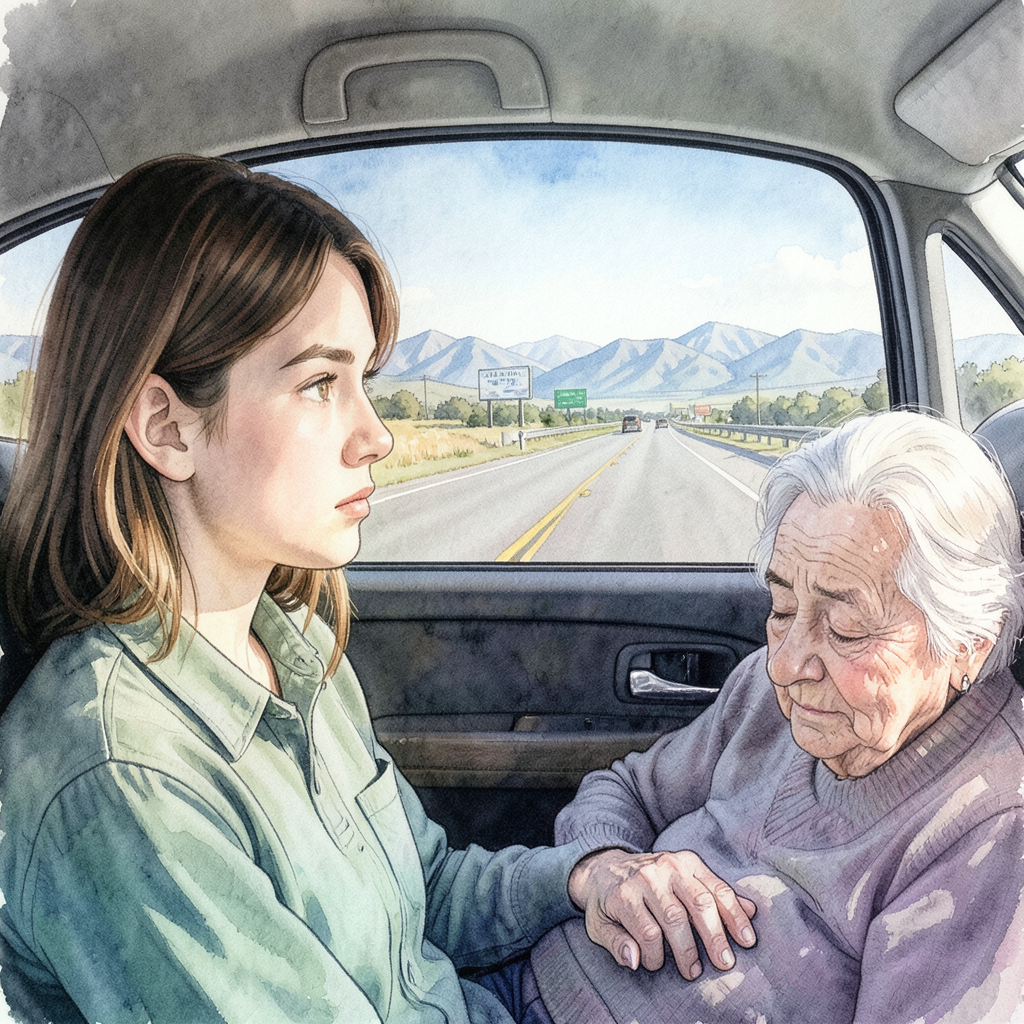
Thirteen-year-old Salamanca Tree Hiddle is travelling across the country with her grandparents to find her mother, who left one day and did not come back. Sharon Creech's Newbery Medal novel winds slowly toward a truth Salamanca is not ready to hear, told with lyrical prose and a story-within-a-story structure that rewards patient readers.
Themes
LossFamilyIdentity
Best For
- Children who are processing a family change, loss, or a parent's absence and may find it easier to approach those feelings through a character's story
- Strong readers aged 10-12 who are ready for emotionally layered, literary fiction
- Read-alouds for families who enjoy discussing books together, especially the twist ending
- Book clubs or classroom settings studying narrative structure and point of view
Why Parents Love This Book
Walk Two Moons is one of those rare middle-grade novels that operates on multiple levels at once, rewarding young readers with a gripping road-trip mystery while quietly delivering an emotional truth about grief that stays with them long after the last page. Sharon Creech builds her story through Salamanca's retelling of her friend Phoebe's tale — a story-within-a-story structure that gradually reveals why Sal is really making this cross-country journey with her grandparents. The prose is lyrical without being inaccessible, and Creech trusts her readers enough to sit with ambiguity and sadness. Salamanca herself is an unforgettable narrator: funny, stubborn, and achingly honest about the loss she cannot yet name. The novel's pacing mirrors Sal's own emotional journey — slow, winding, and culminating in a revelation that feels both inevitable and devastating. For children who have experienced change, loss, or the confusion of a family coming apart, this book offers the rare gift of feeling genuinely seen.
Reading Tips for Parents
This is an emotionally substantial book, so consider reading it alongside your child rather than independently. The story-within-a-story structure (Sal narrates Phoebe's story while her own story unfolds in the background) can confuse some readers at first — it helps to pause early on and ask "who is telling this part of the story right now?" The ending involves a death that is revealed gradually; children who have experienced loss in their own families may need extra time to process it. That said, the book handles grief with remarkable honesty and warmth, making it an excellent conversation-starter. Plan to talk after the final chapters. The novel works beautifully as a read-aloud for ages 9 and up, even though many children read it independently at 10-12.
Awards & Recognition
- Newbery Medal, 1995
- ALA Notable Children's Book
Educational Value
This book helps children develop skills across multiple areas:
- Literary analysis: The nested narrative structure — a story within a story — teaches readers to track multiple timelines and narrators, a sophisticated skill that prepares them for complex adult literature.
- Social-emotional learning: The novel models how grief can be displaced onto other people's stories and how acceptance of loss is a gradual, nonlinear process.
- Vocabulary: Creech's lyrical prose introduces rich descriptive language and figurative expressions; the title phrase itself invites discussion of idioms and their meanings.
- Geography and culture: Sal's road trip traces a route across the American Midwest and Northwest, naturally prompting map-reading and awareness of regional landscapes.
- Critical thinking: Readers are invited to question their assumptions about characters — especially Sal's mother and Phoebe's mother — mirroring the novel's central theme about empathy and perspective.
- Character study: Tracking how Sal's understanding of her father, her grandparents, and herself shifts over the course of the journey builds deep skills in character analysis.
Discussion Questions
Use these questions to spark conversation before, during, or after reading:
- Why do you think Sal tells Phoebe's story instead of her own story directly? What does that tell us about how she is feeling?
- The title comes from the saying 'Don't judge a man until you've walked two moons in his moccasins.' Who in the story does Sal come to understand better by the end, and how does her view of them change?
- Sal's grandparents insist on making the trip even though it is difficult. Why do you think it matters so much to them — and to Sal — to go in person?
- Have you ever had to accept something that was really hard to believe or understand? How did that feel, and what helped you?
- Phoebe keeps expecting her mother to come back with a perfectly logical explanation. Why do you think she holds on to that hope? Can you understand her feelings?
Content Notes for Parents
The novel deals centrally with parental abandonment and death, including the death of a parent and an unborn sibling, revealed gradually but with emotional weight. Parents should be aware that the ending is sad and may be distressing for children who have experienced family loss or separation.
Frequently Asked Questions
What age is Walk Two Moons best suited for?
Most children read it independently between ages 10 and 13. The reading level is accessible to proficient readers around age 9-10, but the emotional content — parental loss, grief, and a sad ending — tends to resonate most with children who are a little older and have some life experience to draw on. It works well as a read-aloud for ages 9 and up with a parent present to guide conversation.
Is the ending too sad for kids?
The ending is genuinely sad and involves the death of a parent. Creech handles it with care and honesty rather than graphic detail, and the sadness is balanced by warmth and a sense of Sal beginning to heal. Many children find it emotionally cathartic rather than distressing, but if your child is currently processing a loss in their own life, be ready to pause and talk. It is worth reading through the ending together.
The story-within-a-story structure sounds confusing. Will my child be able to follow it?
It can be disorienting at first. Sal narrates the story of her friend Phoebe while her own road-trip story unfolds in parallel. A quick early conversation — 'right now Sal is telling us about Phoebe; her own journey is happening separately' — is usually all it takes to click things into place. By the midpoint of the book most readers are fully oriented and appreciate how cleverly the two stories mirror each other.
What books are similar to Walk Two Moons that my child might enjoy next?
Sharon Creech's other novels, particularly The Wanderer and Chasing Redbird, share the same lyrical voice and themes of family and identity. Bridge to Terabithia by Katherine Paterson and The One and Only Ivan by Katherine Applegate also explore loss with honesty and emotional depth. For readers drawn to road-trip and journey stories, Esperanza Rising by Pam Munoz Ryan is a natural next read.
Is this book appropriate for a school book report or class assignment?
Yes, it is a perennial middle-school classroom favorite precisely because it rewards close analysis. The nested narrative structure, the use of foreshadowing, the title's thematic meaning, and the character arc all give students rich material to write about. Teachers typically assign it in grades 5 through 7. If your child is reading it for class, asking them to track the two storylines in a simple two-column chart as they read can help enormously.