All Are Welcome
About This Book
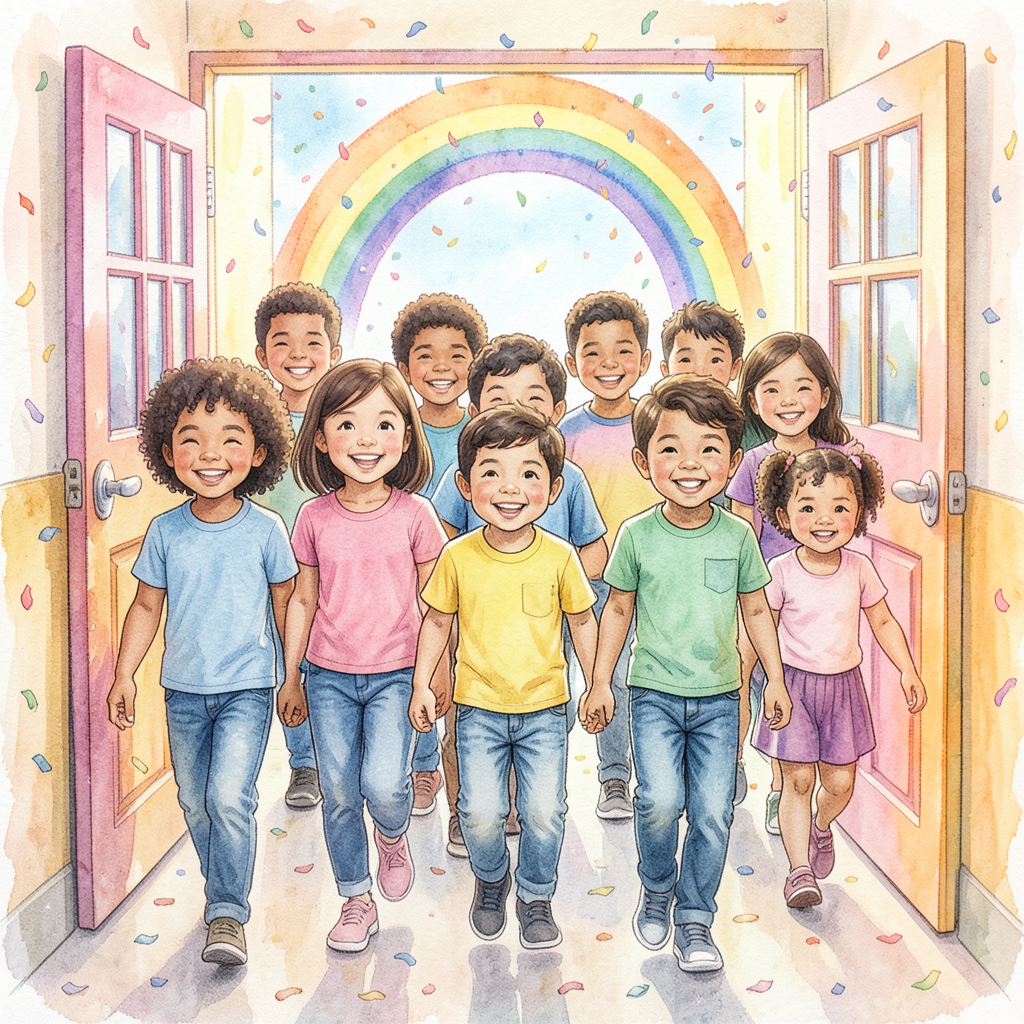
Follow a group of children through a day at their school where diversity is celebrated. Kids of all backgrounds, abilities, and family structures learn, play, and grow together. From morning greetings to afternoon pickup, the rhyming text emphasizes that everyone belongs.
Themes
DiversityBelongingCommunity
Best For
- Children who are anxious or nervous about starting kindergarten or a new school
- Classroom and library read-alouds on themes of community and belonging
- Families who want to open conversations about diversity without a heavy-handed lesson
- Children who enjoy books with rhyming text and rich, detailed illustrations to explore
- Back-to-school gift giving for preschool and early elementary children
Why Parents Love This Book
Alexandra Penfold and illustrator Suzanne Kaufman created something rare: a book about inclusivity that shows rather than lectures. "All Are Welcome" follows a single school day, and that structural choice is what makes it work so well. Children see themselves in the morning rush to get to school, in the lunchroom chaos, in the afternoon pickup — and woven through every familiar moment is a cast of kids who look genuinely different from one another. Headscarves, wheelchairs, two moms, two dads, single parents, children of every skin tone — all appear without comment or fanfare, simply as part of the day. Kaufman's bright, folk-art-inflected illustrations are warm and energetic without being overwhelming. The rhyming text has a gentle, chant-like rhythm that children naturally want to repeat. It is the kind of book that slips belonging into a child's bones without them realizing it, which is exactly how it should work. After five-plus years in print, it remains one of the most-requested classroom read-alouds on the subject for good reason.
Reading Tips for Parents
Read this one slowly and let your child study each spread — Suzanne Kaufman hides a lot of the book's diversity in the background details, and children love spotting new things on each pass. Before reading, tell your child you are going to follow kids through their whole school day together. After reading, ask your child which part of the day they recognized from their own school or daycare experience. For children starting a new school or anxious about kindergarten, this book pairs well with a conversation about what "belonging" feels like. The rhyming text is predictable enough that children will quickly start finishing lines with you, which builds confidence for early readers. If your child asks about any family structure or identity they notice in the illustrations, keep answers matter-of-fact and brief — the book models that tone well.
Awards & Recognition
- New York Times Bestseller
- Amazon Best Book of the Month (September 2018)
Educational Value
This book helps children develop skills across multiple areas:
- Social-emotional: Builds a concrete sense of belonging and community by showing diversity as a normal, joyful part of everyday school life rather than something unusual.
- Vocabulary: Introduces accessible language around identity and community — words like 'welcome,' 'together,' and 'celebrate' in meaningful context.
- Early literacy: The consistent rhyme scheme and repeating refrain support phonological awareness and help beginning readers anticipate and join in with text.
- Visual literacy: Kaufman's detailed illustrations reward close looking and teach children to find information in pictures, not just words.
- Social studies: Exposes children to a range of family structures, cultural dress, and physical abilities in an age-appropriate, normalizing way.
- Emotional intelligence: Opens natural conversations about empathy, fairness, and what it feels like to be included or excluded.
Discussion Questions
Use these questions to spark conversation before, during, or after reading:
- What is your favorite part of the school day shown in this book, and does it remind you of something from your own school?
- The book shows children who look very different from each other. Can you find someone in the pictures who is different from you and someone who is a little like you?
- What does it mean to feel like you belong somewhere? Can you think of a place where you feel like you really belong?
- If you could add one more child to this school, what would they be like? Where would they be from or what would make them special?
- Why do you think the author keeps repeating the words 'all are welcome here'? What is she trying to make us feel?
Content Notes for Parents
There are no scary, sad, or mature elements in this book. It is a straightforwardly warm and affirming story — some families may want to be ready for questions prompted by the diverse family structures depicted, such as same-sex parents, but the book treats all families with equal brevity and warmth.
Frequently Asked Questions
What age is 'All Are Welcome' best for?
The book is written for children ages 4 to 7. The rhyming text and school-day structure make it especially well-suited for preschoolers and kindergarteners who are navigating their first classroom experiences. Strong picture-book readers in first or second grade will still enjoy it, particularly if reading independently.
Is this book appropriate for a child who is starting school for the first time?
Yes — it is one of the strongest choices for that moment. The book follows a full school day from arrival to pickup, which helps children mentally rehearse what a school day looks and feels like. The consistent message that everyone belongs can be quietly reassuring for an anxious child without making a big deal of the anxiety itself.
Does the book include same-sex parents or other family structures that might prompt questions?
Yes. The illustrations depict a variety of family structures, including same-sex parents, as part of the diverse crowd of adults at pickup. These are shown briefly and without any special emphasis — the same warmth is given to every family. Parents who want to prepare can simply note before reading that families come in lots of different forms, or wait and answer questions as they come up naturally.
Are there similar books you would recommend alongside this one?
Families who love 'All Are Welcome' often reach for 'The Name Jar' by Yangsook Choi for a deeper look at cultural identity, 'Each Kindness' by Jacqueline Woodson for a more emotionally complex take on belonging, or 'Red: A Crayon's Story' by Michael Hall for gentle conversations about being yourself. All are appropriate for the same age range.
Is this book good for classroom use?
It is one of the most widely used picture books in early elementary classrooms for exactly this purpose. The repeating refrain works well for choral reading, the illustrations support discussion, and the themes align with social-emotional learning frameworks used in many schools. Many teachers use it at the start of the school year to set a tone of inclusion.