The Day You Begin
About This Book
There will be times when you walk into a room and no one there is quite like you. Jacqueline Woodson's stunning, poetic text invites children who have ever felt like outsiders to find the courage to begin — to share themselves, however tentatively, and discover that your story is never just yours alone. Rafael López's luminous illustrations make every spread a celebration.
Themes
BelongingCourageDiversity
Best For
- Children starting a new school year, new school, or new activity and feeling anxious about fitting in
- Classroom read-alouds launching conversations about diversity, belonging, and empathy
- Children from immigrant, bilingual, or culturally mixed families who may experience feeling between worlds
- Bedtime reading when a child has had a hard social day and needs reassurance
- Parents looking for a picture book that addresses difference without being preachy or oversimplified
Why Parents Love This Book
The Day You Begin earns its place as an enduring classroom and bedside staple through the rare combination of Jacqueline Woodson's lyrical, almost chant-like prose and Rafael López's luminous, color-saturated illustrations. Rather than preaching inclusion as an abstract virtue, Woodson grounds it in painfully specific moments every child recognizes: returning from a summer with stories no one else shares, eating a lunch that smells different from everyone else's, speaking a language that draws stares. These small, tender humiliations are treated with deep respect — never minimized, never dramatized. The book's pivotal shift is its message that vulnerability itself is the bridge. When Angelina finally speaks her "strange and beautiful" story aloud, the walls between her and the other children dissolve. That emotional architecture — showing loneliness honestly before offering hope — is what makes this book land differently from generic diversity titles. López's warm palette wraps every child in light, making the art feel like a visual embrace. It stays with children long after the read.
Reading Tips for Parents
Read this one slowly, pausing on each López illustration before turning the page — the visual storytelling carries as much weight as Woodson's words. Before you read, ask your child to think of a time they felt different from the people around them; it primes the emotional connection without spoiling the story. After finishing, focus on the moment when Angelina decides to speak up and ask what gave her that courage. For children who are entering a new school, joining a new activity, or are part of a minority cultural or linguistic group, consider reading it the night before the big day rather than the morning of — it gives the message time to settle. The text is poetic rather than plotty, so younger listeners (ages 4-5) may need a second read-through before the themes click.
Awards & Recognition
- New York Times Bestseller
- Coretta Scott King Illustrator Honor (Rafael López, 2020)
- Charlotte Zolotow Award, Highly Commended (2020)
Educational Value
This book helps children develop skills across multiple areas:
- Social-emotional learning: Builds vocabulary for naming feelings of loneliness, difference, and courage — and shows children that vulnerability can become a source of connection rather than shame.
- Language arts: Woodson's poetic, rhythmic prose models expressive sentence structure and figurative language, supporting early literacy and read-aloud comprehension.
- Vocabulary: Introduces words like tentatively, luminous, and peculiar naturally in context, expanding expressive language for ages 4-7.
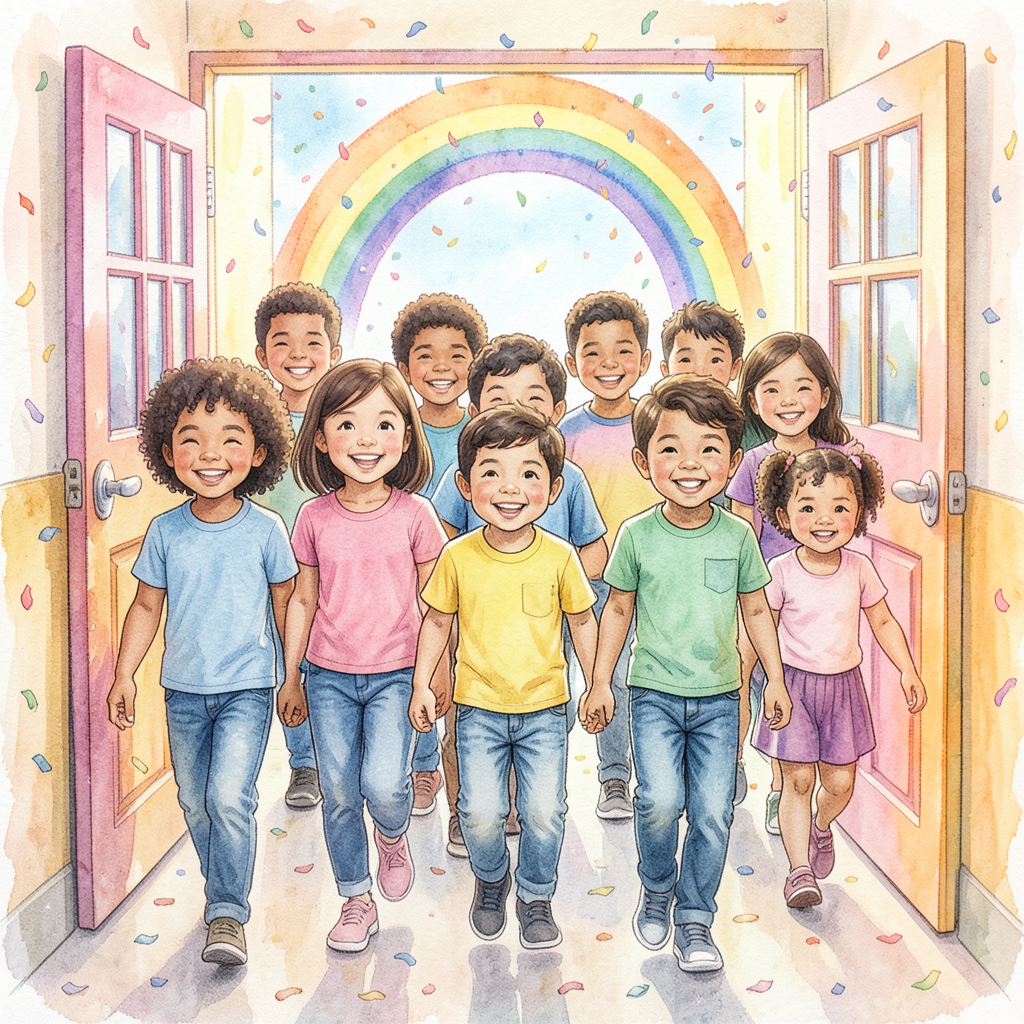
- Cultural awareness: Depicts children from varied ethnic, linguistic, and cultural backgrounds without tokenizing, fostering genuine curiosity about different life experiences.
- Narrative sequencing: The story's clear emotional arc — isolation, a turning point, connection — helps children identify story structure and cause-and-effect in character development.
- Identity development: Encourages children to see their unique background as an asset worth sharing, supporting healthy self-concept formation.
Discussion Questions
Use these questions to spark conversation before, during, or after reading:
- Why did Angelina feel nervous when she walked into the classroom? Have you ever felt that way walking into a new place?
- What was something about Angelina's summer that was different from the other children's summers? How did that make her feel at first?
- What finally made Angelina decide to share her story? What do you think that felt like?
- The book says your story is never just yours alone. What do you think that means?
- If you could tell a new student at your school one thing to help them feel welcome, what would you say?
Content Notes for Parents
There are no scary, violent, or mature elements in this book. The story does portray the quiet ache of feeling like an outsider, which may prompt some children to open up about their own experiences of loneliness or exclusion — parents should be prepared for those conversations.
Frequently Asked Questions
What age is this book best suited for?
The publisher and most librarians recommend ages 4 through 8. The poetic language and emotional nuance land best around ages 5-7, when children have enough social experience to recognize the feelings Woodson describes. Younger fours can enjoy it for the art and the warmth of the read-aloud, while children up to age 9 or 10 still connect deeply with the themes.
Is this book appropriate for children who have not experienced feeling like an outsider?
Absolutely. Children who generally feel secure and included benefit enormously from this book because it builds empathy and helps them recognize when classmates might be feeling invisible. It opens conversations about how small acts — a smile, an invitation to share a story — can matter enormously to someone new.
Are there any content concerns parents should be aware of?
None. The book deals honestly with feelings of loneliness and difference, but does so gently. There is no conflict, no antagonist, no scary imagery. The emotional honesty may prompt children to talk about times they felt left out, which is a healthy outcome.
What books are similar to this one if my child loves it?
Try Each Kindness by Jacqueline Woodson for an older take on inclusion with a more complex emotional ending, or Alma and How She Got Her Name by Juana Martinez-Neal for another celebration of unique identity. The Name Jar by Yangsook Choi also pairs well, exploring what it means to hold onto your cultural identity in a new place.
Can I use this book in a classroom setting?
It is one of the most widely used picture books in K-3 classrooms precisely because it works so well for community-building at the start of the school year. Teachers often pair it with a sharing activity where students bring in an object or story from their summer or home life, directly mirroring Angelina's journey in the book.