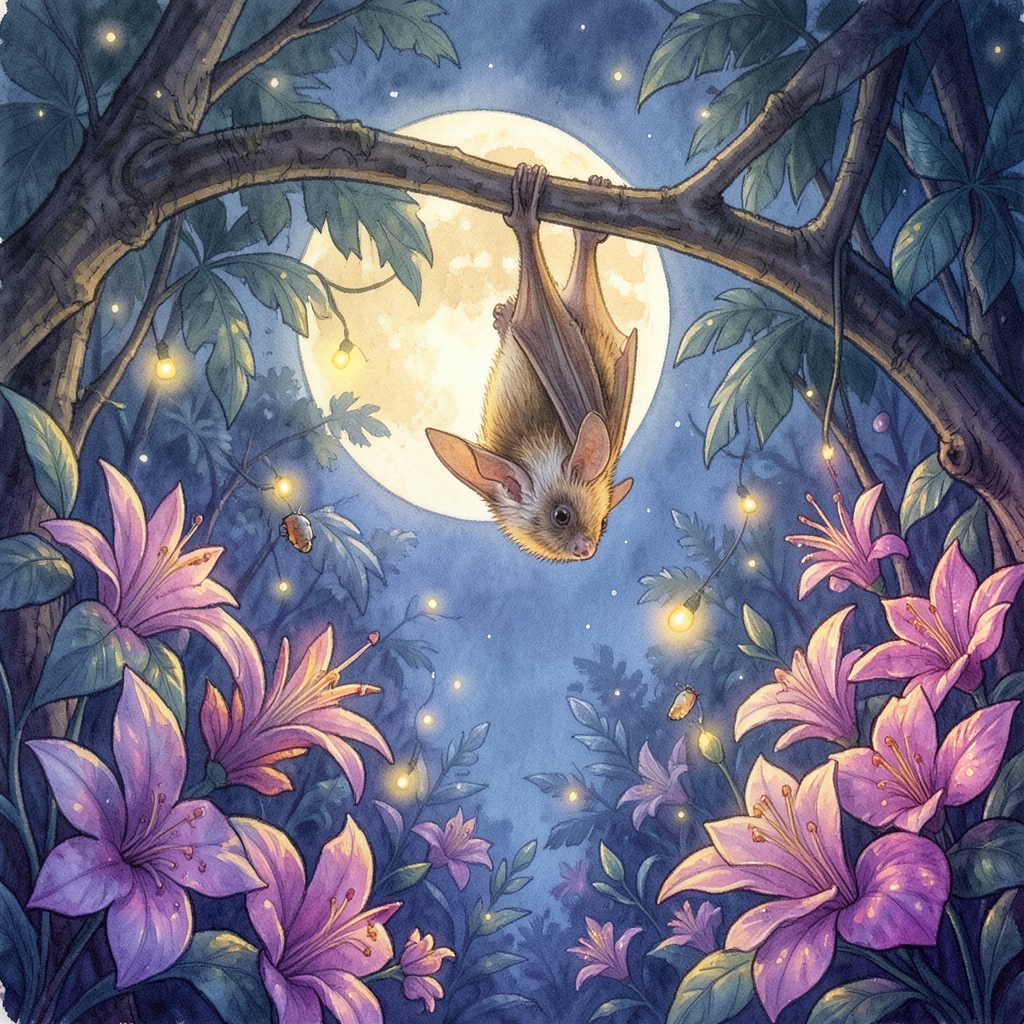
Stellaluna
About This Book
A baby fruit bat named Stellaluna is separated from her mother and raised by a family of birds. She tries to fit in by eating bugs and sleeping in the nest, but eventually reunites with her bat family and realizes that friends can be different and still care deeply for one another.
Themes
IdentityFriendshipDiversity
Best For
- Children who are navigating a new environment such as starting school, moving, or joining a new group
- Families looking for a gentle entry point into conversations about friendship across difference
- Nature-curious kids who love animals — especially paired with a library visit for bat nonfiction
- Read-aloud sessions where a longer, illustrated story with emotional depth is needed
- Children who have experienced feeling like they don't quite belong and need to see that reflected and resolved
Why Parents Love This Book
Stellaluna has enchanted readers since 1993 with its tender, beautifully illustrated story of a baby fruit bat who tumbles out of her world and into the nest of a bird family. What makes this book genuinely special is how it treats difference without reducing it to a lesson. Stellaluna doesn't just learn to "be herself" — she spends most of the book genuinely trying to belong somewhere new, eating bugs she hates and clinging upright to a branch because that is what her bird friends do. Janell Cannon's lush, photorealistic illustrations give the forest a warm, immersive glow that makes every page feel like a discovery. The reunion between Stellaluna and her mother is quietly emotional, and the final exchange between the bat and her bird friends — wondering how two creatures so different can feel so close — lands with real philosophical weight. This is a book that earns its place as a perennial read-aloud because it respects the intelligence of young children.
Reading Tips for Parents
Before reading, spend a moment looking at the cover together and asking your child what they notice about the creature — many young children have never thought about bats. Cannon's illustrations are detailed, so slow down on each spread and let your child point out what Stellaluna is doing differently from the birds. When Stellaluna forces herself to sleep right-side up or eat insects, ask your child how they think that feels — this opens natural conversation about times they've had to adapt to rules they didn't understand. The reunion scene is a good pause point: cover the text and ask what your child thinks Stellaluna is feeling. At the end, the book poses a genuine question about friendship across difference — don't rush past it. For ages 4-5, focus on story and feelings. With 6-7 year olds, you can extend into basic bat facts; the book's backmatter includes a short nonfiction section about fruit bats worth reading aloud.
Awards & Recognition
- New York Times Bestseller
- Publishers Weekly Best Book of the Year (1993)
- American Booksellers Association Pick of the Lists
Educational Value
This book helps children develop skills across multiple areas:
- Social-emotional learning: Explores belonging, empathy, and adapting to new environments — ideal for conversations about fitting in and accepting others.
- Vocabulary: Rich language including 'roosting,' 'clutched,' 'camouflage,' and 'collision' naturally expands a young reader's word bank in context.
- Science and nature: Introduces fruit bats — their nocturnal habits, echolocation, diet, and flight — with a factual backmatter section that bridges story and nonfiction.
- Identity development: Stellaluna's journey of losing and reclaiming her sense of self supports discussions about knowing who you are even when pressured to be someone else.
- Friendship and diversity: Models how genuine friendships can exist across difference, a foundational concept for early social development.
- Narrative comprehension: The clear story arc — separation, adaptation, reunion, reflection — helps children practice sequencing and identifying character feelings across a longer picture book.
Discussion Questions
Use these questions to spark conversation before, during, or after reading:
- Why do you think Stellaluna tried so hard to act like a bird, even when it was hard for her?
- How do you think Stellaluna felt when she finally found her mother again? Have you ever been separated from someone you love and then found them?
- The bird friends try to follow Stellaluna's bat ways at night and it is scary for them. Can you think of a time you tried something new that felt strange or hard?
- At the end, Pip, Flitter, and Zazu ask how they and Stellaluna can feel so alike when they are so different. What do you think makes two friends feel close even when they are different?
- If you could ask Stellaluna one question, what would it be?
Content Notes for Parents
Stellaluna is separated from her mother early in the story when an owl attacks — this is brief and not graphically depicted, but sensitive children may find the moment startling and the theme of being lost from a parent emotionally intense. No other content concerns; the overall tone is warm and reassuring, ending with reunion and friendship.
Frequently Asked Questions
What age is Stellaluna best suited for?
The book is ideal for ages 4 through 7. The story is simple enough for a four-year-old to follow emotionally, but the themes of identity and belonging, along with the detailed illustrations and richer vocabulary, give it staying power well into first and second grade. Many families read it repeatedly across those years and find new things to discuss each time.
Is the owl attack scene too scary for young children?
For most children aged 4 and up it is not frightening — the illustration does not depict violence, and the scene passes quickly. However, children who are sensitive to themes of being lost or separated from a parent may need some extra reassurance before and after. It helps to remind your child early that Stellaluna does find her mother again so they can relax into the story.
Does this book have any educational content about real bats?
Yes. Janell Cannon included a short nonfiction section at the back of the book with factual information about fruit bats, including their diet, behavior, and role in ecosystems. This makes Stellaluna a great bridge book between fiction and nonfiction for children beginning to explore science topics.
What books would we enjoy if we loved Stellaluna?
Families who love Stellaluna often connect with 'Owl Babies' by Martin Waddell for the separation-and-reunion theme, 'Enemy Pie' by Derek Munson for friendship across difference, and 'The Bad Guys' series for a more playful take on misunderstood animals. For more Janell Cannon, her book 'Verdi' follows a young python resisting growing up and has a similarly lush illustrative style.
Is this a good book for a child who is starting school or a new situation?
It is one of the best choices for exactly that moment. Stellaluna's experience of arriving somewhere unfamiliar, trying to follow rules she doesn't understand, and slowly finding her footing while still being loved maps directly onto the kindergarten or new-school experience. Children often find it deeply comforting without the book ever making the analogy explicit.