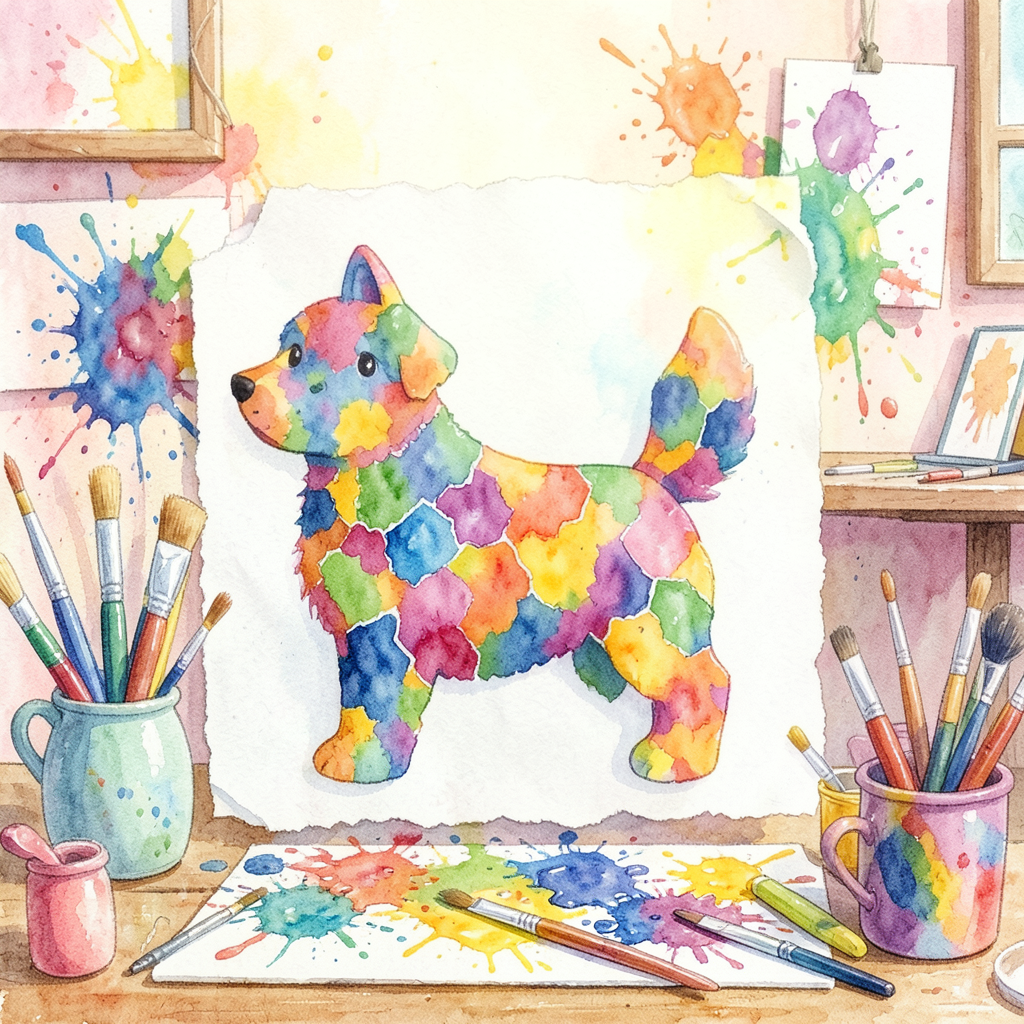
Beautiful Oops!
About This Book
A tear becomes the mouth of a monster. A paint spill becomes an elephant. A bent page becomes a duck's bill. Barney Saltzberg's interactive book of flaps, holes, tears, and folds shows children that mistakes are not the end of a drawing — they are the beginning of something better. A joyful manifesto for creative resilience.
Themes
CreativityMistakesArt
Best For
- Children who get frustrated or upset when their artwork does not turn out as planned
- Art time, craft sessions, or as a classroom read-aloud before a free-draw activity
- Kids who are reluctant artists or who say they cannot draw
- Parents or teachers looking for a concrete, hands-on way to introduce the concept of a growth mindset
- Gift for a child starting school who may be navigating new pressures around getting things right
Why Parents Love This Book
Beautiful Oops! by Barney Saltzberg is one of those rare books that functions as both a story and a hands-on experience. Through interactive flaps, folds, holes, and torn edges, Saltzberg demonstrates that every mistake — a smudge, a spill, a crumple — holds the seed of something wonderful. A paint blob becomes an elephant's body. A torn corner becomes a duck's bill. The physical interactivity makes the message land in a way that words alone cannot: children feel the transformation happening in their own hands. What makes this book endure is how precisely it addresses a real anxiety many young children experience around art and drawing. The fear of ruining something is replaced, page by page, with the delight of discovery. It is not preachy about creativity — it shows it. The bright, playful illustrations and minimal text keep even the youngest readers engaged, while the underlying message speaks equally to parents and educators who want to nurture a growth mindset in the children they love.
Reading Tips for Parents
Read this book at a table, not just on a couch, so your child can reach in and interact with each flap and fold alongside you. Slow down at each page and ask your child what they see before you flip or reveal anything — let them guess what the mistake might become. After reading, set out paper and art supplies and intentionally make a "mistake" together: spill a little paint, tear a corner, crumple a page, then ask your child what creature or object it looks like. This transforms the book from a reading experience into a making experience. For children who tend to cry or give up when their drawings go wrong, keep this book accessible on a low shelf so they can return to it independently as a reminder that the oops is part of the art.
Awards & Recognition
- New York Times Bestseller
- Amazon Best Book of the Year (2011)
Educational Value
This book helps children develop skills across multiple areas:
- Creativity: Demonstrates divergent thinking by showing children how to reframe accidents as starting points rather than endpoints.
- Social-emotional: Builds resilience and reduces perfectionism by normalizing mistakes as a natural and even exciting part of the creative process.
- Visual art: Introduces basic concepts of negative space, color, and shape transformation through hands-on interactive pages.
- Fine motor: The book's flaps, folds, and tactile elements encourage children to interact physically, supporting fine motor exploration.
- Language arts: The minimal, well-chosen text models how a few precise words can carry a big idea, a useful lesson for early writers.
- Growth mindset: Reinforces the understanding that effort and experimentation — not innate talent — drive creative discovery.
Discussion Questions
Use these questions to spark conversation before, during, or after reading:
- What was your favorite mistake in the book — what did it turn into?
- Has something like this ever happened to you? Did you ever accidentally make something that turned out cool?
- If you spilled paint right now, what animal or creature could it become?
- Why do you think some kids feel bad when they make a mistake while drawing? What would you tell them after reading this book?
- Can you think of other kinds of mistakes — not just art mistakes — that might actually turn into something good?
Content Notes for Parents
There are no scary, sad, or mature elements in this book. It is entirely gentle and encouraging in tone, making it appropriate for the full 4-7 age range and even suitable for younger toddlers with adult guidance.
Frequently Asked Questions
What age is Beautiful Oops! actually best for?
The book is marketed for ages 4-7, but its interactive format makes it engaging for children as young as 2-3 with adult guidance. Older children up to age 9 or 10 who struggle with perfectionism in art or schoolwork also respond strongly to the message. The concepts are simple enough for preschoolers but meaningful enough for early elementary kids.
Is this a board book or a standard picture book?
Beautiful Oops! is a hardcover interactive picture book with built-in flaps, folds, die-cut holes, and textured elements on its pages. It is sturdier than a typical picture book but not a board book. Younger toddlers should use it with adult supervision, as the interactive elements could tear with rough handling.
How can I use this book to help a child who cries when they make mistakes?
Read it during a calm moment rather than immediately after a frustrating incident. After reading, try an intentional mistake-making art session — splatter some paint, tear a piece of paper — and work alongside your child to turn the oops into something. Making mistakes on purpose in a low-stakes way helps children experience that mistakes are not catastrophic. Returning to the book regularly reinforces the message over time.
Are there similar books you would recommend alongside it?
The Dot by Peter H. Reynolds is a natural companion — it also centers on a reluctant young artist who discovers confidence through a simple mark on a page. Ish, also by Reynolds, extends the theme further. For children who love the interactive physical format of Beautiful Oops!, any book in the Hervé Tullet Press Here series offers a similar hands-on reading experience.
Does this book work in a classroom setting?
It works exceptionally well as a classroom read-aloud, particularly at the start of an art unit or at the beginning of the school year when children are adjusting to new expectations. Teachers often follow the reading with a class activity where students deliberately create an oops on paper and then transform it into a drawing, which both reinforces the book's message and produces a memorable piece of artwork to take home.