The Dot
About This Book
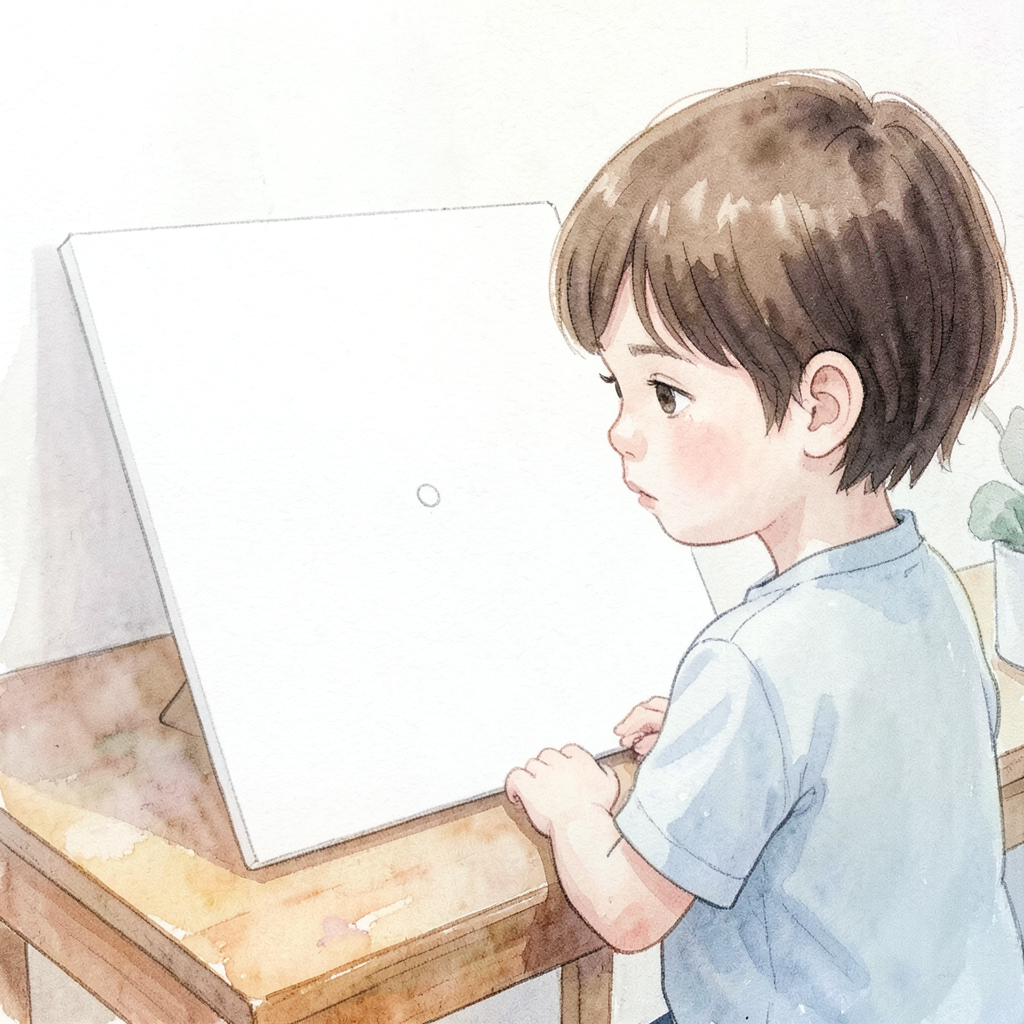
Vashti insists she can't draw, so her teacher tells her to just make a mark and see where it takes her. Vashti jabs the paper with a single dot. Her teacher frames it. Inspired, Vashti begins experimenting with dots of every color and size, discovering her own artistic voice.
Themes
CreativitySelf-ConfidenceEncouragement
Best For
- Children who say 'I can't' before trying something new
- Classroom read-alouds at the start of an art unit or creative project
- Kids ages 4-7 who are beginning to compare their abilities to others
- A confidence-building bedtime read during a period of frustration or transition
- Gift for teachers who want a book that models the impact of encouragement
Why Parents Love This Book
The Dot is one of those rare picture books that lands differently depending on who is reading it. For children convinced they have no artistic talent, Vashti's story is a revelation: you do not need to be good at something to begin it. Peter H. Reynolds builds the whole book around a single act of stubborn frustration — a hard jab of a pencil onto paper — and then shows how one caring teacher transforms that grudging mark into a launching pad. The artwork mirrors the story beautifully, starting spare and moving toward explosion of color and confidence. What makes the book endure is its final twist: Vashti passes the gift forward to another struggling child, showing that confidence, once found, multiplies. Reynolds never moralizes. The message arrives through story rather than lecture, which is exactly why children accept it so readily. This is a book about art, but equally about the courage it takes to start anything at all.
Reading Tips for Parents
Read slowly and pause at the moment Vashti's teacher frames the dot — let children sit with that image. Ask your child before turning the page what they think will happen next, since the story's emotional pivot depends on surprise. After reading, set out paper and invite your child to "make their mark" without any expectation of outcome. If your child resists art activities or says "I can't draw," this book is most powerful read in that exact moment of frustration rather than in advance. For a second read, invite your child to notice how the colors in the illustrations change as Vashti's confidence grows. The book is short enough to finish in one sitting and rich enough to support multiple readings across several days.
Awards & Recognition
- Massachusetts Book Award
- Christopher Award (2004)
- Listed on multiple "best picture books" and reading lists by the American Library Association
Educational Value
This book helps children develop skills across multiple areas:
- Social-emotional: Builds understanding of how encouragement from a trusted adult can unlock a child's belief in themselves.
- Creativity: Demonstrates that starting small — a single mark — is a valid and powerful entry point into creative work.
- Visual literacy: Reynolds's shifting color palette across the illustrations rewards close looking and helps children connect visual cues to emotional states.
- Vocabulary: Introduces words like 'swirled,' 'dotted,' and 'framed' in natural context, supporting descriptive language for art and process.
- Character development: Vashti's arc from resistant to inspired to generous models growth mindset and the value of persistence.
- Social skills: The ending, where Vashti mentors a younger child, opens conversations about kindness, mentorship, and paying encouragement forward.
Discussion Questions
Use these questions to spark conversation before, during, or after reading:
- Why do you think Vashti said she couldn't draw at the beginning? Have you ever felt that way about something?
- What did Vashti's teacher do that helped her? How did it make Vashti feel?
- If you could make a dot in any color and any size, what would yours look like?
- Why do you think Vashti decided to help the little boy at the end of the story?
- Do you think the dot Vashti made at the start was really art? Why or why not?
Content Notes for Parents
There are no scary, sad, or mature elements in this book. The only mild tension is Vashti's initial frustration and self-doubt, which is age-appropriate and quickly resolved.
Frequently Asked Questions
What age is The Dot best suited for?
The book is written for children ages 4-7, and that is where it has the most direct impact. Younger children around age 4 enjoy the bright illustrations and simple story, while children ages 5-7 are more likely to connect emotionally with Vashti's self-doubt and the satisfaction of her transformation. Many teachers also read it successfully to children up to age 9 or 10 when introducing a creative project.
Is this book appropriate for a child who is particularly sensitive or prone to frustration?
Yes, and in fact it is especially well suited for them. The book validates the feeling of 'I can't do this' rather than dismissing it, which helps sensitive children feel seen. The resolution is gentle and earned rather than sudden, making it feel believable rather than dismissive of real struggle. There is nothing in the book that would upset a sensitive child.
How can I use this book beyond just reading it?
The most natural extension is to hand your child a blank paper and ask them to make their mark — a dot, a line, anything — immediately after reading. From there you can explore dot art with paint, stickers, or stamps. The book pairs well with discussions about International Dot Day, a global event held each September inspired by this book, where children and classrooms share their own dot creations.
Are there other books by Peter H. Reynolds that are similar?
Yes. Reynolds wrote several companion books in a similar spirit, including Ish, which explores a child who learns to embrace 'ish' versions of his drawings rather than perfect ones, and Sky Color, which follows Marisol trying to paint a mural without the color blue. All three books share the same gentle watercolor style and focus on creative courage. They work well read together or in sequence.
Does this book work for children who are not interested in art?
Very much so. While the setting is an art class, the book's real subject is the fear of not being good enough and the courage it takes to try anyway. Parents report using it successfully before sports tryouts, music lessons, and the first day of school. The art context is relatable enough to be concrete without limiting the book's emotional reach.