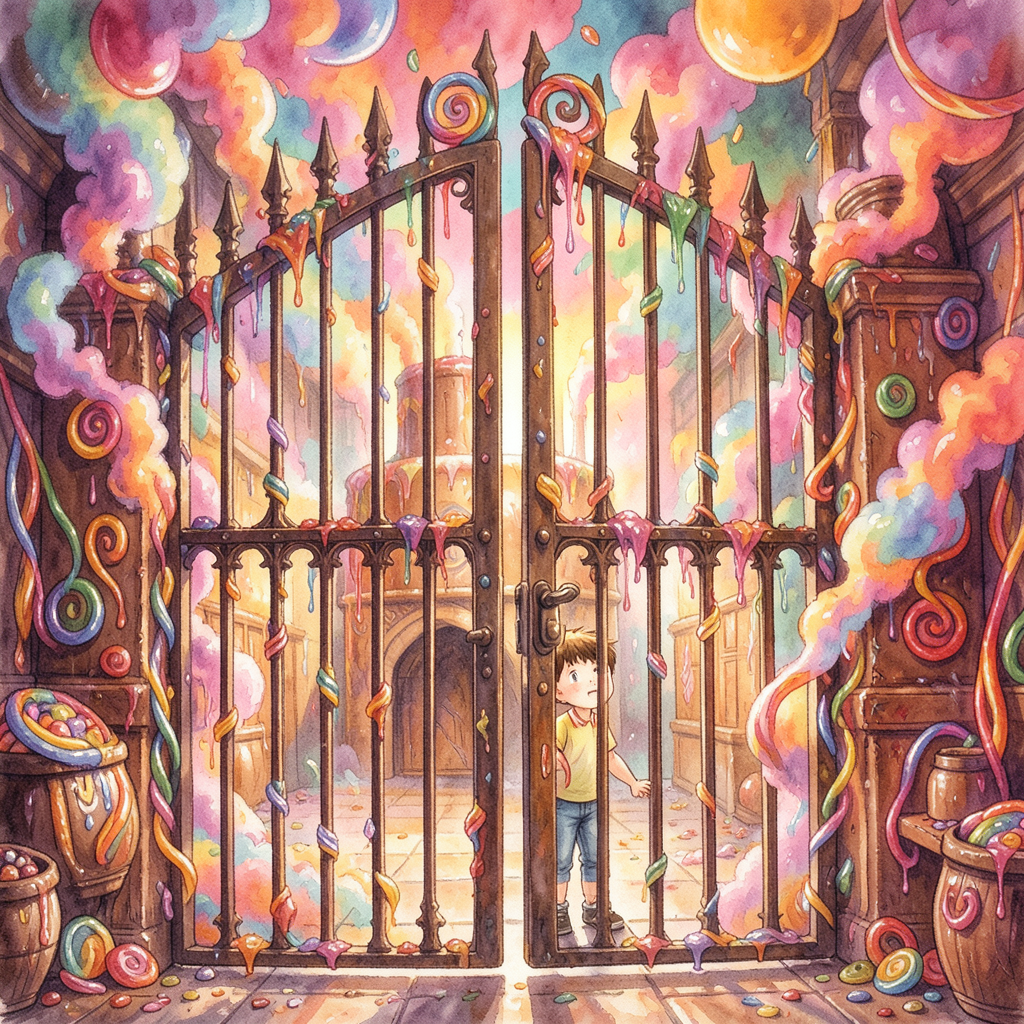
Charlie and the Chocolate Factory
About This Book
Poor but kind-hearted Charlie Bucket finds one of five golden tickets hidden in Wonka chocolate bars, winning a tour of Willy Wonka's mysterious factory. While the other children's greed and bad behavior lead to their comical downfalls, Charlie's goodness earns him the greatest prize of all.
Themes
KindnessImaginationConsequences
Best For
- Family read-aloud sessions where parents can perform the Oompa-Loompa songs and Wonka's eccentric voice
- Children who love fantasy settings but are ready for longer chapters and a more complex cast
- Starting a conversation about fairness, luck, and character without it feeling like a lesson
- Young readers who have already enjoyed other Roald Dahl books (James and the Giant Peach, Matilda) and are ready for more
- Rainy-day reading marathons — the short chapters make it easy to say 'just one more'
Why Parents Love This Book
Roald Dahl's Charlie and the Chocolate Factory has captivated readers since 1964 for a reason that goes beyond its dazzling fantasy setting: it tells the truth about character in a way children instinctively recognize. Charlie Bucket is genuinely poor — his family barely eats — yet he remains patient, grateful, and honest while the four other Golden Ticket winners are defined entirely by their worst impulses. Dahl never moralizes. Instead, each child's flaw plays out with dark, slapstick precision: Augustus Gloop's gluttony, Violet Beauregarde's obsessive competitiveness, Veruca Salt's entitlement, Mike Teavee's fixation on screens. The Oompa-Loompas deliver verdict-songs that are funny and pointed in equal measure. Quentin Blake's illustrations give Wonka and the factory an anarchic energy that perfectly matches Dahl's prose. The result is a book that rewards children who read carefully and parents who read aloud, with layers of wit that land differently at every age.
Reading Tips for Parents
This book rewards being read aloud in voices — Wonka's grandeur, Grandpa Joe's warmth, and the Oompa-Loompas' sing-song moralizing are all distinct and fun to perform. Plan to pause after each child is eliminated and ask your child what they think will happen next; the plot is structured to make prediction easy and satisfying. Some children as young as six or seven can follow along as a read-aloud, though the chapter length suits independent readers aged eight and up. The satire of television and consumerism is worth a brief conversation: Dahl's Mike Teavee (obsessed with TV) was written in 1964 but feels current enough to prompt a natural discussion about screen habits. Keep a dictionary handy — Dahl's vocabulary is deliberately rich and unusual, and looking words up together is part of the pleasure.
Awards & Recognition
- Adapted into two major films (1971 and 2005), reflecting its status as a perennial bestseller since publication in 1964
- Ranked among the BBC's 100 Best Books of the 20th Century (2003 Big Read poll)
- Listed on Time magazine's list of the 100 best children's books
Educational Value
This book helps children develop skills across multiple areas:
- Vocabulary: Dahl's invented words (Whipple-Scrumptious Fudgemallow Delight) alongside genuine rich vocabulary (luminous, translucent, staggered) give children an appetite for unusual language.
- Social-emotional: The five children model distinct character flaws — gluttony, vanity, greed, entitlement, passivity — making it easy to discuss how our habits shape outcomes without lecturing.
- Cause and effect: Each elimination follows a clear if-then logic, building comprehension of narrative consequence and helping readers anticipate what comes next.
- Satire and media literacy: Mike Teavee's storyline opens conversation about how much time we spend watching screens versus experiencing life firsthand.
- Empathy and gratitude: Charlie's contentment despite poverty encourages children to reflect on what they value and why material wealth is not the story's definition of richness.
Discussion Questions
Use these questions to spark conversation before, during, or after reading:
- Why do you think Charlie wins in the end — is it just luck, or something more? What does the story suggest?
- Each of the other four children has one big flaw that causes their downfall. Do you think that's fair, or are the punishments too extreme? Why?
- Willy Wonka is very secretive about his factory and strange in his behavior. Would you trust him if you met him? What makes you feel that way?
- If you found a Golden Ticket, who would you bring with you on the tour, and why?
- The Bucket family is very poor, but Charlie never complains or acts jealous of other children. How do you think he manages that? Is it easy or hard?
Content Notes for Parents
The four children who break rules meet exaggerated, cartoonish fates (being stretched, turned violet, dropped down a chute, shrunk) that are played for dark comedy rather than genuine menace; sensitive children around age seven may find these scenes more alarming than funny, so a brief heads-up can help. There are no mature or frightening themes beyond mild peril and Dahl's characteristic edge.
Frequently Asked Questions
What age is this book really appropriate for?
Most children read it independently between ages 8 and 11. As a read-aloud with a parent, children as young as 6 or 7 can enjoy it, especially if you pause to explain vocabulary. The humor lands best once a child has some grasp of irony and satire, usually around age 8.
Are the punishments that happen to the children too scary or violent?
The fates are firmly in cartoon territory — no child is permanently harmed, and Wonka reassures the reader each time. That said, Dahl's tone is deliberately unsettling, and a handful of sensitive younger readers may find the scenes involving Augustus Gloop (sucked into a pipe) or Veruca Salt (falling down a garbage chute) briefly alarming. Reading together the first time lets you gauge your child's reaction.
Is this the same as the movie? Should we read the book or watch the film first?
The book came first and differs from both film adaptations in meaningful ways — particularly the ending and Wonka's character. Most readers who know the book feel it has a warmer, more satisfying resolution. Reading first, then comparing to one of the films, makes for a great discussion about how stories change across formats.
What books would you recommend after this one?
Roald Dahl's own Matilda and James and the Giant Peach are natural follow-ons. For a similar blend of fantasy and moral wit, try E.B. White's Charlotte's Web or C.S. Lewis's The Lion, the Witch and the Wardrobe. Readers who enjoy the competition-and-consequences structure might also like Louis Sachar's Holes.
Is there a version with illustrations throughout, or just the cover?
Most current editions include Quentin Blake's line illustrations throughout the text — Blake has been the definitive Dahl illustrator since the 1980s. When buying or borrowing, check that the edition credits Blake; some older or international editions used different illustrators and feel quite different in tone.