The Phantom Tollbooth
About This Book
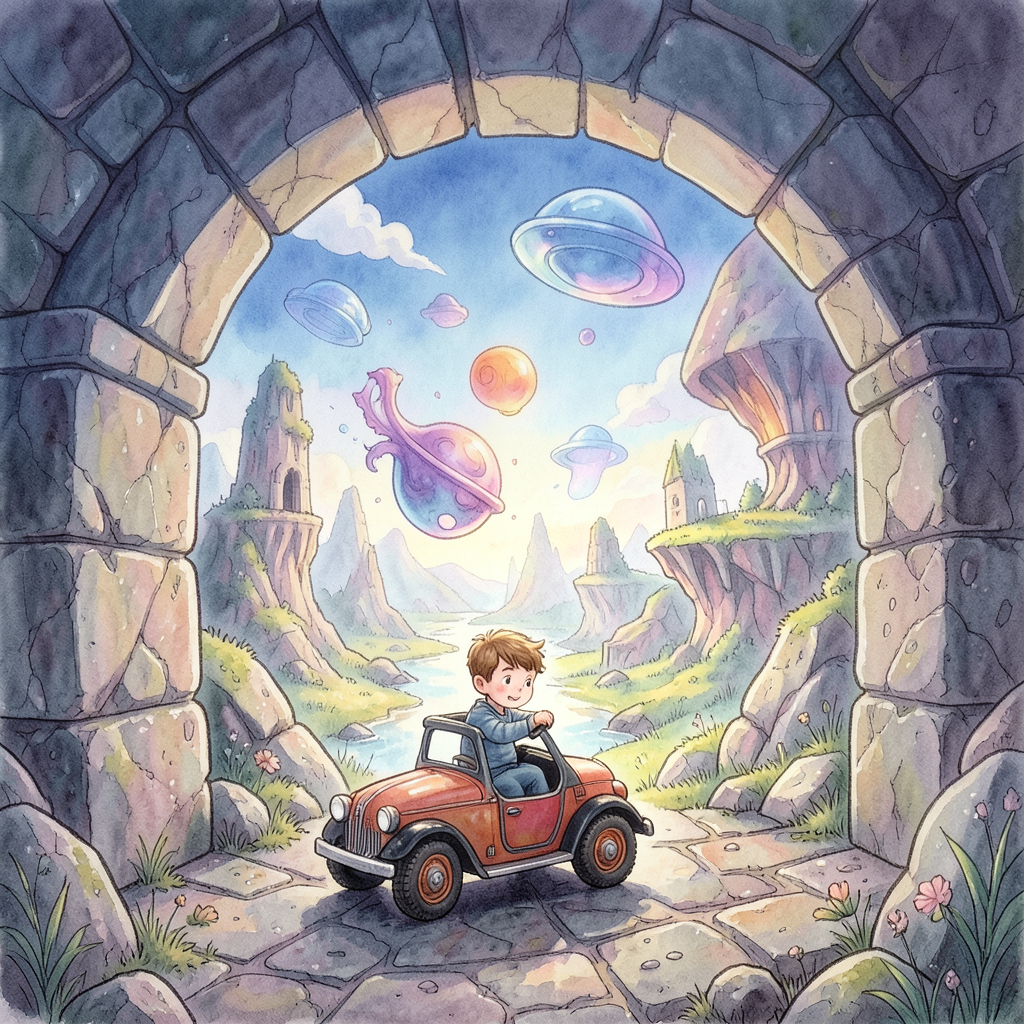
Bored Milo drives a toy car through a mysterious tollbooth and enters a fantastical world where he must rescue the princesses Rhyme and Reason. Along the way, he visits Dictionopolis and Digitopolis, befriends a watchdog named Tock, and discovers that learning and curiosity are life's greatest adventures.
Themes
ImaginationLearningAdventure
Best For
- Kids who love wordplay, riddles, and language jokes and are ready for a book that rewards paying close attention
- Children who claim to be bored or say school is pointless — Milo's transformation often resonates personally
- Family read-alouds where parents and children can unpack the puns together in real time
- Classroom use in grades 4-6 to launch units on figurative language, allegory, or creative writing
- Confident readers ages 9-12 who have finished The Chronicles of Narnia or A Wrinkle in Time and want something equally inventive but funnier
Why Parents Love This Book
The Phantom Tollbooth is one of those rare books that gets sharper and funnier the more you think about it. Norton Juster builds an entire world out of wordplay and logic puzzles — Dictionopolis runs on words, Digitopolis runs on numbers, and the two kingdoms are at war because neither side can agree on what matters more. That premise alone is brilliant, but what elevates it is Milo himself: a genuinely bored kid who discovers that the world is endlessly interesting once you pay attention to it. The book never lectures; it simply puts Milo in one absurd, delightful situation after another and lets the lessons arrive organically. Jules Feiffer's scratchy, energetic illustrations match the prose's wit perfectly. More than sixty years after its publication, children still encounter the Whether Man, the Soundkeeper, and the Mathemagician and come away changed — more curious, more playful with language, and more willing to find meaning in everyday things.
Reading Tips for Parents
Read this aloud together even if your child is a confident independent reader — much of the humor lives in Juster's puns and the timing of his sentences, which land better when heard. Pause at moments like the "whether" versus "weather" mix-up or the Doldrums to ask your child what they noticed. Keep a notebook nearby: the book invents memorable terms ("the Doldrums," "jumping to conclusions") that work well as family shorthand. If your child gets bogged down in the wordplay-heavy middle chapters, reassure them that the plot picks up speed; many kids who struggled at first name it a favorite by the end. The book pairs naturally with dictionary browsing — after reading, let your child pick a strange word to look up and share at dinner.
Awards & Recognition
- New York Times Outstanding Book of the Year (1961)
- The book has appeared on numerous "best children's books" lists and is widely considered a modern classic, though it did not win the Newbery or Caldecott Medal
Educational Value
This book helps children develop skills across multiple areas:
- Vocabulary: The entire plot is built on wordplay, puns, and deliberate misuse of idioms — children absorb dozens of new words and, more importantly, learn to think about what words actually mean.
- Math: Digitopolis introduces number concepts including infinity, fractions, and the idea that math underlies music and pattern — making abstract ideas feel concrete and imaginative.
- Critical thinking: Nearly every scene requires Milo (and the reader) to spot the logical flaw in an argument, a skill that transfers directly to reading comprehension and everyday reasoning.
- Social-emotional learning: Milo's arc from boredom and apathy to genuine engagement models how curiosity is a choice — a powerful message for children who resist school or structured learning.
- Literature and language arts: The book is itself a lesson in figurative language, demonstrating metaphor, idiom, and allegory in action rather than definition.
- Geography and world-building: Navigating the Lands Beyond requires following a map and understanding how different regions have different rules — good preparation for reading fantasy literature more broadly.
Discussion Questions
Use these questions to spark conversation before, during, or after reading:
- Milo starts the book completely bored — nothing seems interesting or worthwhile. Can you think of a time you felt that way? What changed it for you?
- The kingdoms of Dictionopolis and Digitopolis are at war because one believes words are more important and the other believes numbers are. Which side would you argue for, and why?
- Tock the watchdog says that wasting time is the worst thing you can do. Do you agree? Are there times when doing nothing is actually okay?
- Rhyme and Reason have been banished from the kingdom. What do you think the story is saying about what happens to a place when rhyme and reason disappear?
- If you could visit one place Milo travels through — Dictionopolis, Digitopolis, the Mountains of Ignorance, or somewhere else — which would you choose and what would you do there?
Content Notes for Parents
There are no scary, violent, or mature elements that would concern most parents — the villains (demons in the Mountains of Ignorance) are presented humorously rather than menacingly. Younger or more sensitive readers may occasionally find the dense wordplay frustrating rather than frightening, but nothing in the book requires a content warning.
Frequently Asked Questions
What age is The Phantom Tollbooth really right for?
Most children enjoy it most between ages 9 and 12 as an independent read. The vocabulary and layered wordplay can challenge younger readers, though many 7- and 8-year-olds love it as a read-aloud with a parent who can help unpack the jokes. Some highly verbal 8-year-olds read it independently without trouble.
Is it too hard for my child to read on their own?
The reading level is roughly grades 5-6, but the bigger challenge is conceptual rather than mechanical — understanding why a pun is funny or why an idiom taken literally is absurd requires a certain maturity of language play. If your child enjoys joke books, riddles, or pun humor, they are usually ready. If they find wordplay tedious, a parent read-aloud can smooth the way.
Are there any scary or upsetting parts?
Not meaningfully so. The demons in the Mountains of Ignorance near the end could sound alarming by name, but they are handled with the same comic tone as the rest of the book. There is no violence, death, or emotionally heavy content — this is fundamentally a cheerful, optimistic book.
What books are similar that my child might also like?
Children who love The Phantom Tollbooth often go on to enjoy A Wrinkle in Time by Madeleine L'Engle (for the adventurous world-hopping), the Discworld novels for older readers (for the satirical humor), or The Neverending Story by Michael Ende (for the meta, imaginative tone). Alice's Adventures in Wonderland is a clear ancestor and worth reading alongside it.
Does it hold up for kids today, or does it feel dated?
The cultural references are minimal enough that the book feels remarkably fresh — Milo's boredom and disconnection are if anything more recognizable to screen-age children than to readers in 1961. The humor depends entirely on language rather than pop culture, which makes it nearly timeless. Most children who give it a chance find it feels very current.