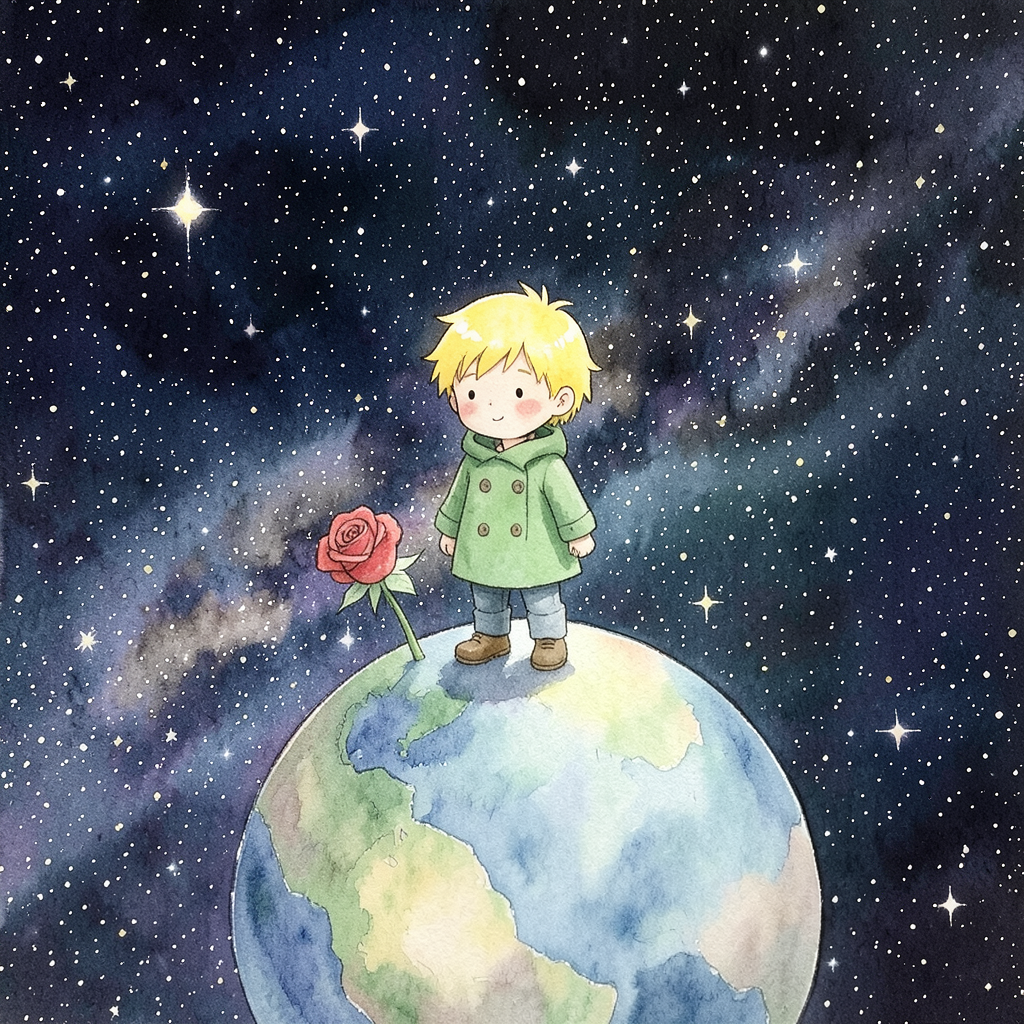
The Little Prince
About This Book
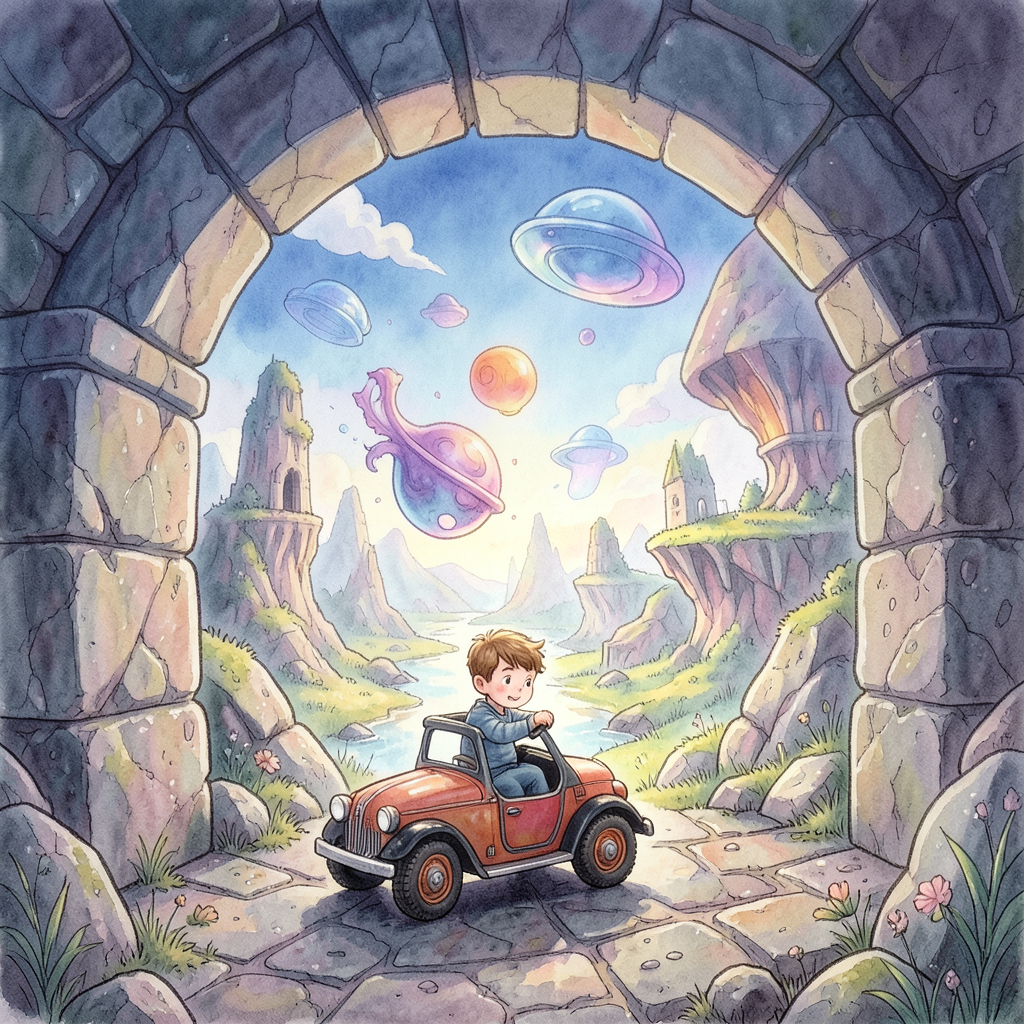
A pilot stranded in the Sahara meets a small boy who claims to come from a tiny asteroid. The Little Prince shares his encounters with various grown-ups on other planets and his love for a vain rose back home. Through their conversations, the pilot rediscovers what matters most in life.
Themes
LoveImaginationGrowing Up
Best For
- Children around age 10-12 who are beginning to notice the gap between how adults behave and what they say matters
- Family read-alouds where parents and children can discuss the story's deeper meanings together
- Children who have experienced loss and need a gentle, literary way to process feelings about love and absence
- Readers who enjoyed The Phantom Tollbooth or Tuck Everlasting and are ready for a story that works equally as fable and as adventure
- A classroom or book club setting where discussion can draw out the satire and philosophy across multiple sessions
Why Parents Love This Book
Few books have endured the way Antoine de Saint-Exupery's 1943 masterpiece has, and for good reason. The Little Prince works on two levels simultaneously: for children, it is a gently surreal adventure story about a boy who travels between asteroid worlds and meets a series of peculiar grown-ups — a king with no subjects, a businessman who counts stars he thinks he owns, a lamplighter who lights and extinguishes his lamp every minute. For the adults reading alongside them, it is a quietly devastating meditation on what adults forget as they grow up. Saint-Exupery's own sparse, luminous illustrations are inseparable from the text — the drawing of a boa constrictor digesting an elephant, mistaken by every adult for a hat, sets the philosophical stakes in the very first pages. The fox's lesson about taming — about love as the patient act of building unique bonds — is one of the most beautiful passages in all of children's literature. It is a book that changes slightly every time you read it, because you change.
Reading Tips for Parents
Read this one aloud together even if your child is capable of reading it independently — the prose rhythms and pauses reward being spoken. Plan to read a chapter or two at a time rather than all at once; the episodic structure of the prince's planet visits makes natural stopping points. After the fox's speech about taming, pause and ask your child what it means to them before moving on. The ending is genuinely sad and may prompt tears or questions about death — be ready for that conversation and let your child set the pace. Younger readers in the 8-10 range may grasp the adventure and humor but miss the deeper satire; a re-read at 11-12 often unlocks a whole new layer. Keep Saint-Exupery's own illustrations visible as you read — they are part of the text, not decoration.
Awards & Recognition
- Inducted into the American Library Association's list of notable books of the 20th century
- One of the best-selling books in publishing history, with over 200 million copies sold worldwide — frequently cited as the most-translated French-language novel ever written
Educational Value
This book helps children develop skills across multiple areas:
- Vocabulary: Rich, precise language including words like 'conceited,' 'ephemeral,' and 'tame' used meaningfully in context — ideal for expanding vocabulary through story rather than drills.
- Social-emotional learning: The themes of love, responsibility, and loss give children a framework for discussing attachment, grief, and what makes relationships meaningful.
- Critical thinking: The satirical portraits of the king, businessman, geographer, and others invite children to identify and critique adult priorities and self-deception.
- Philosophy for children: The book introduces genuine philosophical questions — What is real? What has value? What does it mean to truly see someone? — in an accessible, story-driven form.
- Literary analysis: The layered narrative (a story within a story, an unreliable adult narrator) gives older readers in this range early practice with complex narrative structure.
- Art appreciation: Saint-Exupery's own watercolor illustrations, integral to the text, open conversations about how images and words work together to create meaning.
Discussion Questions
Use these questions to spark conversation before, during, or after reading:
- Why do you think every grown-up the Little Prince meets on other planets only cares about one thing? What do you think their one thing says about them?
- The fox tells the prince that 'you become responsible, forever, for what you have tamed.' What does that mean to you? Can you think of something or someone you feel responsible for in that way?
- Why do you think the pilot draws a box with a sheep inside it, instead of the sheep itself — and why does the Little Prince accept that?
- The Little Prince loves his rose even though there are thousands of identical roses on Earth. The fox explains why. Do you agree with the fox's explanation? Can you think of an example from your own life?
- How do you think the story would be different if it were told from the Little Prince's point of view instead of the pilot's?
Content Notes for Parents
The ending involves the Little Prince's death, depicted obliquely but unmistakably, and may be upsetting for sensitive readers or children who have recently experienced loss — it is worth previewing before reading together. There are no violent, frightening, or age-inappropriate elements otherwise; the tone throughout is gentle and wistful.
Frequently Asked Questions
Is The Little Prince really a children's book? My child is 9 — is it too hard?
It is both a children's book and an adult book, which is part of what makes it extraordinary. A 9-year-old will enjoy the episodic planet adventures, the humor of the eccentric grown-ups, and the friendship between the prince and the pilot. The deeper philosophical layers about love, loss, and adult self-deception are there to be discovered on later readings. Reading it aloud together is the best approach at this age.
My child is sensitive. How sad is the ending?
The ending is genuinely sad — the Little Prince chooses to return to his asteroid and his rose, and the means by which he does so involves a snake bite that is clearly meant to represent death, though Saint-Exupery treats it with great delicacy. The pilot is left uncertain and grieving. It is not graphic or frightening, but it will likely prompt an emotional response and questions about death. It can be a beautiful opening for that conversation.
What books are similar to The Little Prince that my child might enjoy?
Children who love The Little Prince often connect with The Phantom Tollbooth by Norton Juster, which shares its episodic structure and satirical wit. Tuck Everlasting by Natalie Babbitt covers similar ground on mortality and what we choose to love. For something lighter and equally illustrated, The Wonderful Wizard of Oz has a comparable spirit of a child navigating a world of strange adults.
My 8-year-old wants to read it independently. Is the reading level appropriate?
The vocabulary and sentence structure are accessible for a strong independent reader at 8, and the chapters are short and episodic. However, some of the meaning — particularly the satire of the businessmen and king, and the fox's philosophy of taming — will land more fully with a guiding conversation. Even if your child reads it alone, plan to discuss it together afterward.
Is there anything in the book I should be aware of before giving it to my child?
The main content note is the ending, which depicts the death of the main character in an understated but clear way. There is also a mention of the pilot's plane crashing in the Sahara and his being stranded without water, though this is handled with no drama or graphic detail. The book contains no frightening imagery, no violence, and no age-inappropriate content beyond the themes of love and loss.