The Little Engine That Could
About This Book
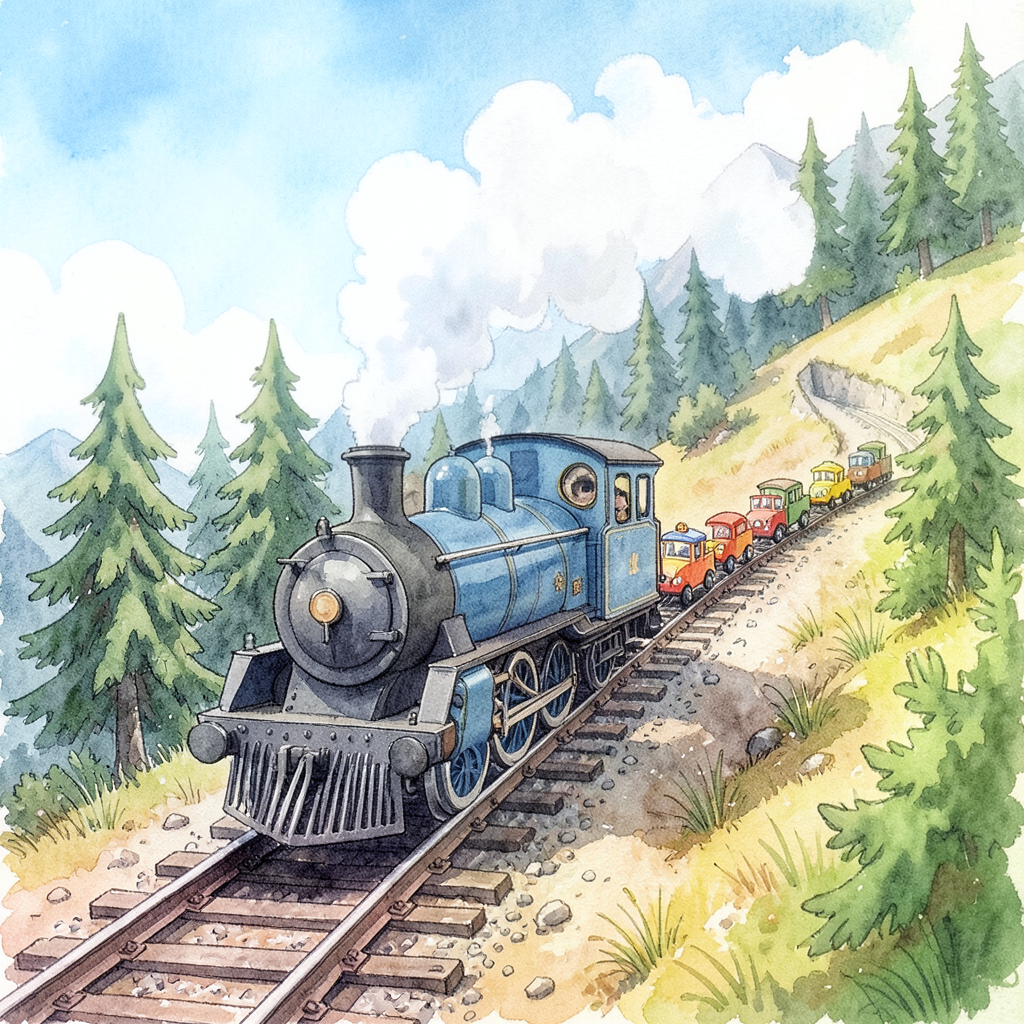
When a train carrying toys and food for children on the other side of the mountain breaks down, several large engines refuse to help. A small blue engine agrees to try, pulling the heavy load up the mountain while repeating 'I think I can, I think I can.'
Themes
PerseveranceDeterminationKindness
Best For
- Children who are facing a new challenge — starting school, learning to ride a bike, or tackling a hard skill — and need encouragement to keep trying.
- Bedtime read-alouds where the gentle, rhythmic repetition helps children wind down while absorbing an uplifting message.
- Classroom or group settings where a teacher wants to introduce a unit on perseverance, growth mindset, or helping others.
- Young readers who are just beginning to follow along with text, as the predictable refrain makes it an accessible early participation book.
Why Parents Love This Book
First published in 1930, "The Little Engine That Could" has earned its place as one of the most enduring picture books in American children's literature — and for good reason. At its heart, this is a story about a small, unassuming engine who chooses to try when everyone bigger and more powerful has already said no. The rhythmic repetition of "I think I can, I think I can" builds genuine tension as the little blue engine labors up the mountain, then releases into the satisfying triumph of "I thought I could, I thought I could" on the other side. That simple shift in tense is a masterclass in storytelling for young children. Beyond the catchy refrain, the book models something rare and important: perseverance in the service of others. The little engine isn't climbing the mountain for herself — she's doing it so that children on the other side won't go without toys and food. That blend of personal courage and communal care gives this story a moral depth that keeps it resonant across generations.
Reading Tips for Parents
The repeating phrase "I think I can" is your biggest asset here — pause before each repetition and invite your child to say it with you. This turns a read-aloud into a participatory experience and helps the message land in a personal, embodied way. When you finish, connect the story to your child's own life: ask about a time they found something hard but kept going. The contrast between the big engines that refuse and the small engine that tries opens a natural conversation about pride versus humility, and about choosing to help others even when it's difficult. For younger children (ages 4-5), focus on the emotional journey; for ages 6-7, you can explore why the bigger engines said no and what that tells us about their character.
Awards & Recognition
- New York Public Library's "100 Great Children's Books" list (100th anniversary selection)
- Frequently cited on School Library Journal and American Library Association recommended reading lists for early childhood
- Perennial bestseller status — continuously in print since 1930, one of the best-selling children's books of all time
Educational Value
This book helps children develop skills across multiple areas:
- Social-emotional: Models a growth mindset — the idea that effort and belief in oneself can overcome obstacles — in a concrete, memorable way.
- Language arts: The rhythmic, repetitive text builds phonemic awareness and supports early readers in predicting and joining in with the story.
- Vocabulary: Introduces words like determined, refused, and loaded in a rich narrative context that aids comprehension.
- Character education: Explores contrasting character traits — pride, indifference, and generosity — through the different engines' choices.
- Sequencing: The story's clear beginning (breakdown), middle (the journey up), and end (arrival) helps children practice retelling events in order.
- Social studies: Gently introduces the concept of community interdependence — that people (and engines) rely on each other to meet their needs.
Discussion Questions
Use these questions to spark conversation before, during, or after reading:
- Why did the big engines refuse to help? Do you think they had good reasons?
- How do you think the little engine felt when she started climbing the mountain? What about when she reached the top?
- Have you ever had to try really hard at something? What did you tell yourself to keep going?
- Why was it important that the toys and food get over the mountain? Who was counting on the little engine?
- If you were an engine, what would you carry over the mountain and why?
Content Notes for Parents
There are no scary, violent, or mature elements in this book. Some children may feel briefly anxious when the toys and food seem stranded and help is repeatedly refused, but the story resolves happily and that mild tension is age-appropriate and purposeful.
Frequently Asked Questions
What age is this book best suited for?
The book is most often recommended for children ages 3 to 7. Toddlers (3-4) enjoy the rhythm and repetition, while children in the 5-7 range can engage more deeply with the themes of perseverance and helping others. It works well as a read-aloud at any point in that range.
Is 'Watty Piper' the real author?
Watty Piper is a pen name used by the publishing house Platt and Munk. The story's true origin is debated — it draws on earlier versions of the tale published in the early twentieth century. The 1930 Platt and Munk edition illustrated by Lois Lenski (and later George and Doris Hauman) is the version most families know today.
Are there any content concerns I should know about before reading this to my child?
None to speak of. The story is gentle and entirely age-appropriate. There is a brief moment of disappointment when the larger engines refuse to help, but it resolves quickly and is actually useful for discussing empathy and the choice to help others.
How can I use this book to support my child's confidence?
The phrase 'I think I can' is immediately transferable to real life. After reading, try using it playfully when your child encounters something difficult — tying shoes, finishing vegetables, practicing letters. Over time, many children begin repeating it to themselves independently, which is exactly the kind of self-talk that supports a growth mindset.
What books would you recommend if my child loves this one?
Try 'The Most Magnificent Thing' by Ashley Spires for a modern picture book about perseverance through frustration, or 'Rosie Revere, Engineer' by Andrea Beaty for a story about a child inventor who learns to embrace failure. 'Flight School' by Lita Judge is another warm choice about believing in yourself despite the odds.