Enemy Pie
About This Book
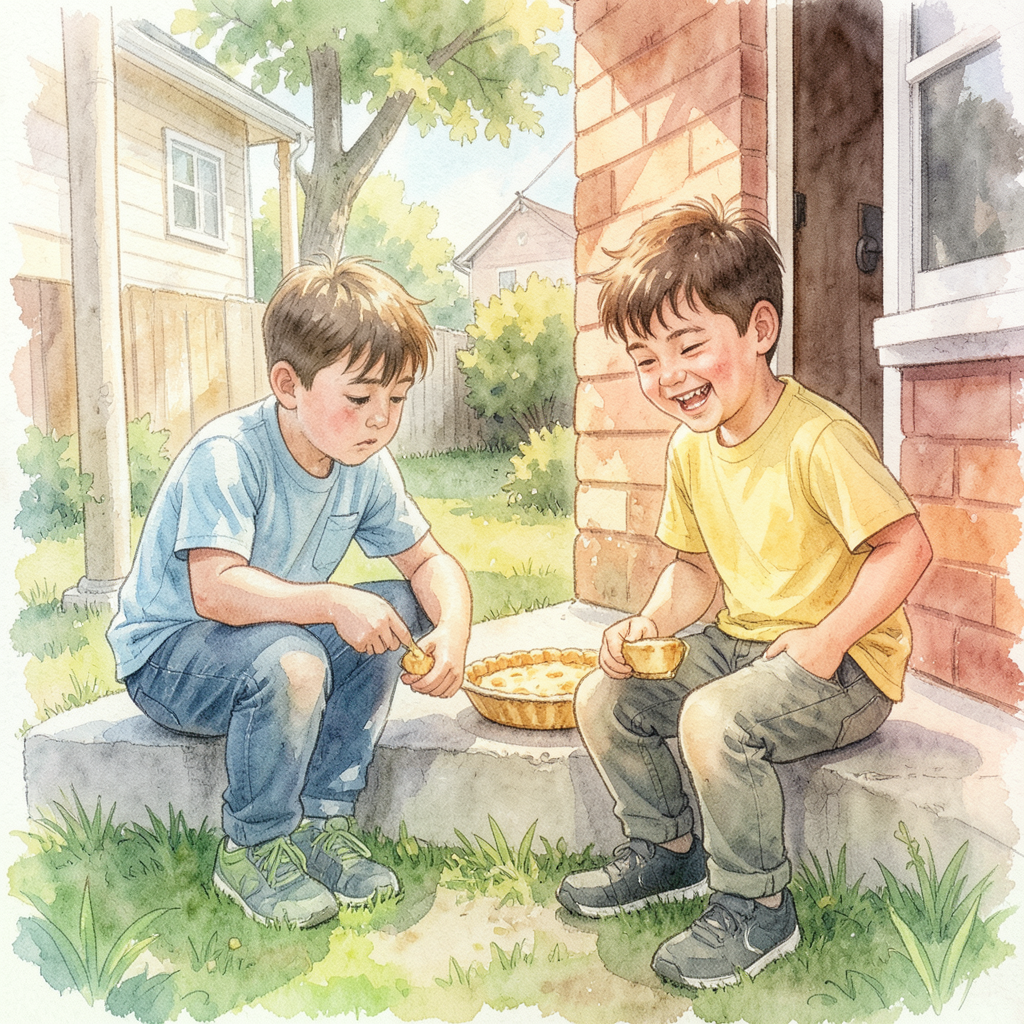
When Jeremy Ross moves in down the street, he immediately becomes Enemy Number One. But Dad has a solution: Enemy Pie — a special recipe that gets rid of enemies forever. The only catch is you have to spend a whole day with your enemy first. A funny, big-hearted story about the surprising way enemies can become friends.
Themes
FriendshipConflict ResolutionGrowing Up
Best For
- Children starting a new school year or class where social dynamics are shifting
- Families dealing with a new neighbor, classmate, or sibling situation that has created friction
- Parents looking for a non-preachy way to start conversations about kindness and giving people a chance
- Classroom read-alouds on themes of friendship, community, or conflict resolution
- Children ages 4-7 who enjoy humor and stories where kids solve problems alongside a helpful parent
Why Parents Love This Book
Enemy Pie has earned its place as a modern classic for good reason. Derek Munson captures the very specific frustration of childhood rivalry — the kind where someone new shows up and disrupts the social order — with humor and absolute authenticity. The narrator's indignation about Jeremy Ross feels completely real, and so does his gradual, reluctant realization that his "enemy" is actually pretty fun to hang out with. What elevates this book above a simple lesson story is the dad's clever "recipe": instead of lecturing his son about kindness, he gives him a mission. The child has to do the hard work of spending a whole day with his enemy — and discovers the friendship himself. Tara Calahan King's warm, expressive illustrations add a lighthearted energy that keeps the story moving. It never feels preachy, which is precisely why children respond to it so genuinely. This is a book kids want to read more than once.
Reading Tips for Parents
Before reading, ask your child if they have ever felt like someone was their enemy — this primes them to invest emotionally. While reading, let them sit with the narrator's frustration rather than rushing past it; that discomfort is the point. Pause at the moment the narrator realizes he has had fun with Jeremy and ask, "Wait, what just happened?" This is the book's emotional payoff and worth slowing down for. After reading, you might talk about a time when you, as a parent, were surprised by someone you did not expect to like. Kids find it reassuring when adults admit this happens to them too. The book also opens a natural conversation about what it means to give someone a chance before deciding how you feel about them.
Awards & Recognition
- Chronicle Books bestseller since its 2000 publication
- Frequently included on recommended reading lists by the American Library Association and school reading programs across the United States
Educational Value
This book helps children develop skills across multiple areas:
- Social-emotional: Builds empathy and perspective-taking by showing how first impressions can be wrong and how friendships form through shared experience.
- Conflict resolution: Models a non-confrontational, curiosity-based approach to resolving social tension rather than avoidance or retaliation.
- Vocabulary: Introduces words and concepts like "enemy," "recipe," and "truce" in a rich, story-driven context that makes them memorable.
- Critical thinking: Encourages children to question snap judgments and think about why they form opinions about people.
- Family relationships: Highlights the role of a supportive, creative parent who guides without lecturing — useful for parent-child conversations about asking for help.
- Narrative comprehension: The story's clear cause-and-effect arc (problem, plan, unexpected outcome) strengthens children's understanding of story structure.
Discussion Questions
Use these questions to spark conversation before, during, or after reading:
- Why did the narrator decide Jeremy Ross was his enemy so quickly? Do you think that was fair?
- Dad never actually explains what is in Enemy Pie. What do you think the real secret ingredient might be?
- How did the narrator feel at the beginning of the day with Jeremy compared to the end? What changed?
- Have you ever ended up liking someone you were not sure about at first? What happened?
- If you had to spend a whole day with someone you did not get along with, what would you want to do together?
Content Notes for Parents
No content concerns. This book is warm, funny, and entirely age-appropriate for its target range. There are no scary, sad, or mature elements.
Frequently Asked Questions
What age is Enemy Pie best for?
The book is aimed at children ages 4 to 7, and that range is accurate. Preschoolers on the older end (around 5) will enjoy the humor, while kids in kindergarten through first grade tend to connect most deeply because they are navigating real social dynamics at school. It can also work as a nostalgic read-aloud for slightly older children around age 8.
Is this book too preachy about being kind?
No, and that is one of its greatest strengths. The lesson emerges naturally from the story rather than being stated outright. The narrator never has a moment where he announces he was wrong — the friendship just happens, and readers draw their own conclusions. Children tend to respond much better to this approach than to stories that spell out the moral directly.
Can I use this book to help my child with a real conflict they are having?
Yes, and it works particularly well for that purpose. The story gives children a frame — the idea of "spending a day" with someone — that you can reference in real conversations. You might say, 'Remember Enemy Pie? What if you just tried one thing together?' It avoids making the child feel lectured because you are pointing back to a character, not at them.
Are there any content concerns I should know about?
None at all. The book is completely free of scary, violent, or mature content. The rivalry between the boys is entirely benign, and the resolution is gentle and funny. It is suitable even for sensitive younger readers.
What books would you recommend alongside Enemy Pie?
If your child loves Enemy Pie, try The Recess Queen by Alexis O'Neill for another story about surprising playground friendships, or Each Kindness by Jacqueline Woodson for a more reflective look at missed opportunities to connect. For something lighter with a similar humor, Have You Filled a Bucket Today? by Carol McCloud pairs well as a read-aloud set.