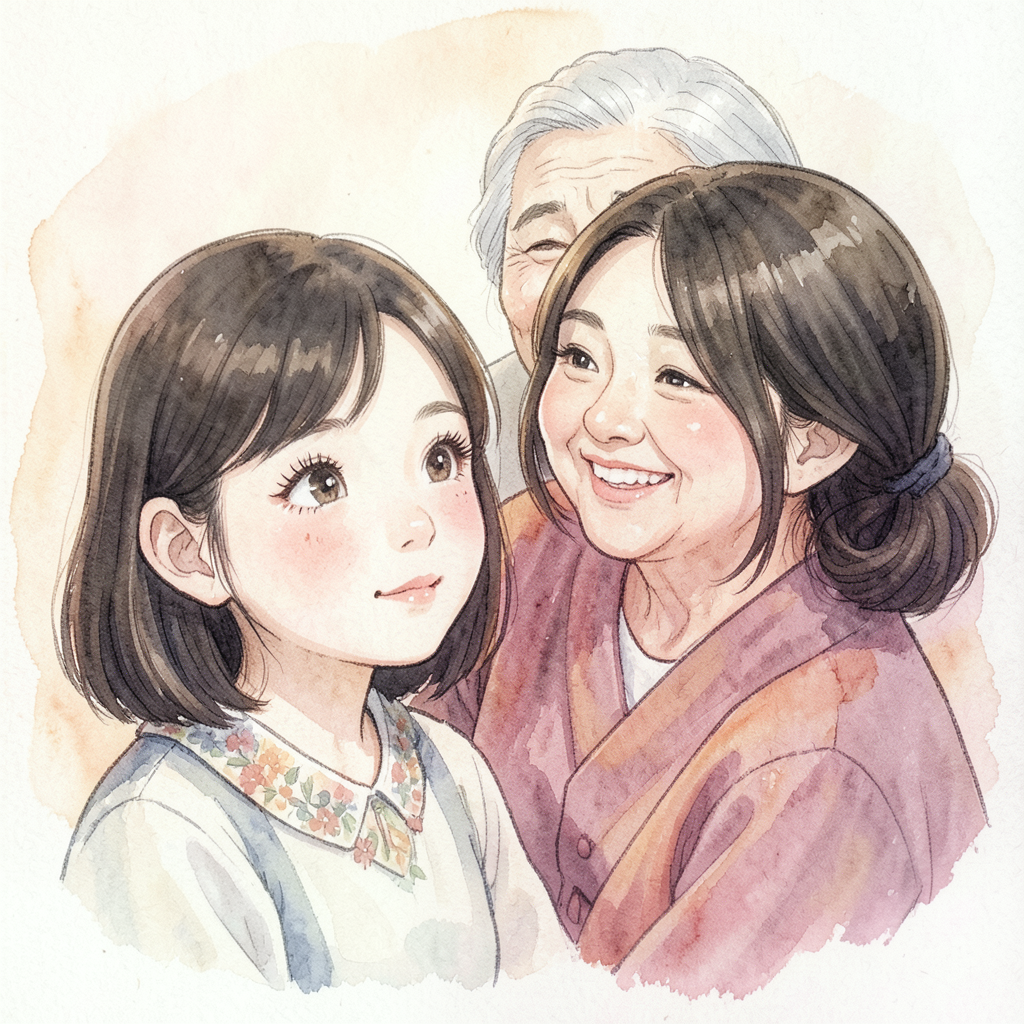
Eyes That Kiss in the Corners
About This Book
A young girl notices her eyes are different from her classmates' but realises her eyes are just like her mother's, her grandmother's, and her little sister's — eyes that kiss in the corners, that hold oceans and mountains and infinite skies. A lyrical, empowering celebration of Asian identity and the beauty passed down through generations.
Themes
IdentitySelf-LoveAsian American Experience
Best For
- Children who are beginning to notice and ask questions about how they look compared to peers
- Families with Asian heritage looking for affirming representation in their home library
- Classroom read-alouds during identity, family, or cultural heritage units
- Grandparent-grandchild reading sessions, especially where a grandparent is a key figure in the child's sense of family
Why Parents Love This Book
Eyes That Kiss in the Corners is a rare picture book that transforms a moment of self-doubt into an act of joyful self-recognition. When the young narrator notices her eyes look different from her classmates, Joanna Ho does not reach for a lesson about tolerance or acceptance from others — instead she turns the gaze inward and upward, toward family. The girl sees her eyes reflected in her mother, her grandmother (Amah), and her baby sister, and through that reflection discovers a lineage of strength and beauty. The language is genuinely lyrical — "eyes that kiss in the corners, that hold ancient mountains, that dance with the stars" — and illustrator Dung Ho's luminous, golden-toned artwork makes every page feel like a keepsake. It is a book about identity that never lectures, a book about beauty that never diminishes anyone else's. Children of Asian heritage will feel seen in a way that is still too rare in picture books, and all children will absorb the idea that the features that connect us to our families are something to treasure.
Reading Tips for Parents
Read slowly and pause on Dung Ho's illustrations — the warm golds and flowing shapes carry as much meaning as the words. On a first read, let your child simply absorb the story. On a second read, invite them to look closely at the family members' faces and spot the shared features. If your family shares visible inherited traits — eyes, hair, skin tone, freckles — this is a natural moment to name them together: "Do you see that in our family too?" For families with Asian heritage, consider pairing the book with a conversation about where your family comes from and who passed those features down. For families outside the Asian American experience, use it to spark curiosity and empathy about other children's home lives and identities. The word "Amah" (grandmother in several Asian languages) is a gentle vocabulary moment worth noting.
Awards & Recognition
- New York Times Bestseller
- Goodreads Choice Award Nominee for Picture Books (2021)
Educational Value
This book helps children develop skills across multiple areas:
- Social-emotional: Builds a positive sense of self and identity by modeling how family connection can be a source of pride and belonging.
- Vocabulary: Introduces rich, poetic language — words like 'infinite', 'crinkle', and 'Amah' — that expands descriptive vocabulary.
- Cultural awareness: Offers an authentic window into the Asian American experience and introduces children to the idea that beauty takes many forms across cultures.
- Family and heritage: Encourages children to think about intergenerational connection and the physical and emotional traits passed down through families.
- Language arts: The lyrical, repetitive structure supports early reading comprehension and makes the text ideal for read-aloud fluency practice.
- Art appreciation: Dung Ho's illustrations invite close looking and discussion about how color, light, and composition can convey emotion.
Discussion Questions
Use these questions to spark conversation before, during, or after reading:
- At the beginning of the story, how does the girl feel about her eyes? What changes by the end?
- The girl sees her eyes in her mama, her Amah, and her little sister. Which family member do you look like? What do you share?
- The book says her eyes hold 'oceans and mountains and infinite skies.' Why do you think the author chose those images? What would you say your eyes hold?
- Why do you think the girl feels proud at the end of the story? What made her feel that way?
- If you were going to write a poem about something you love about yourself or your family, what would you choose?
Content Notes for Parents
There are no scary, sad, or mature elements in this book. The one mild emotional beat — the girl noticing her eyes look different from classmates — is brief and quickly reframed in a positive, empowering direction.
Frequently Asked Questions
What age is this book best for?
The publisher targets ages 4 to 8, and that range feels right. Preschoolers will enjoy the rhythm and the warm family imagery. Children in kindergarten through second grade are at exactly the age when they begin comparing themselves to peers, which makes the book's message land with particular resonance. Older children up to about 9 or 10 can still connect with it, especially in a classroom discussion context.
Is this book only for Asian American families?
Not at all. While children of Asian heritage will feel a direct, meaningful recognition in this book, the core themes — finding beauty in inherited features, seeing yourself in your family, and building pride in your identity — speak to every child. It also serves as an important window book for children outside the Asian American experience, helping them build empathy and curiosity about peers whose backgrounds differ from their own.
Is there anything in the book that might be upsetting for sensitive children?
The book opens with a brief moment where the girl notices her eyes look different from her classmates, which some sensitive children might find relatable in a tender way. However, there is nothing frightening or distressing — the emotional arc moves quickly and firmly toward pride and joy. It is a gentle, affirming book throughout.
What does 'Amah' mean?
'Amah' is a term for grandmother used in several Asian languages and cultures, including Mandarin, Cantonese, and Taiwanese contexts. It appears naturally in the story and is not defined within the text, so it makes a lovely and easy vocabulary conversation point — just explain it to your child as you read.
Are there similar books you would recommend alongside this one?
Yes. 'The Name Jar' by Yangsook Choi explores a Korean American child's identity with similar warmth. 'I Am Enough' by Grace Byers covers self-acceptance in lyrical form. For a focus on intergenerational family connection, 'Grandfather's Journey' by Allen Say is a beautiful complement, though it is better suited for slightly older readers around ages 6 to 10.