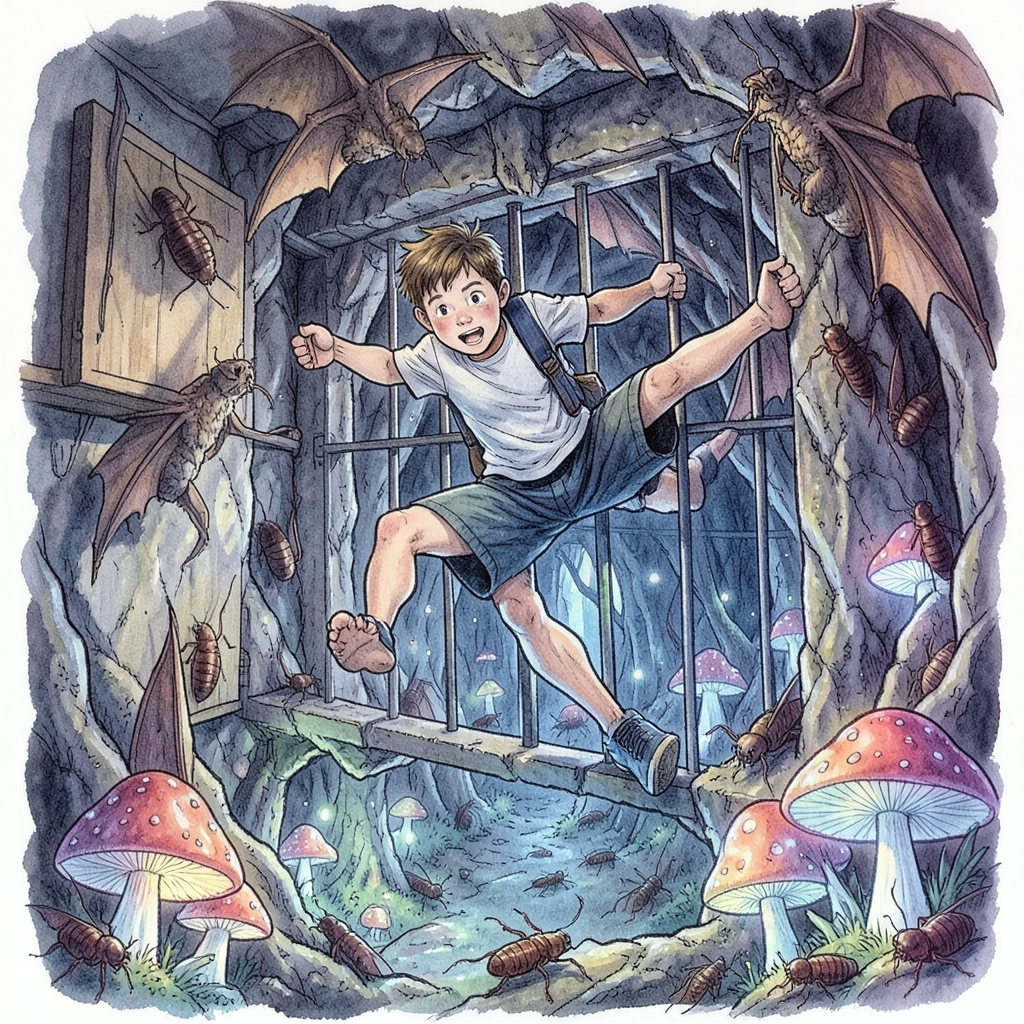
Gregor the Overlander
About This Book
When eleven-year-old Gregor falls through a grate in the laundry room of his New York apartment building, he lands in the Underland — a dark realm of giant bats, cockroaches, rats, and spiders, and a human civilisation that has been expecting him. Suzanne Collins' Underland Chronicles precedes The Hunger Games but carries the same propulsive storytelling and moral complexity.
Themes
AdventureFantasyProphecy
Best For
- Kids aged 9-11 who have finished the Percy Jackson or Harry Potter early books and are hungry for another propulsive fantasy series
- Reluctant readers who need fast pacing and short, hook-ending chapters to stay engaged
- Families who enjoy reading aloud together and want a story with enough moral complexity to spark dinner-table conversation
- Young Hunger Games fans who want to explore Suzanne Collins' earlier work
- Children processing anxiety about a parent who is absent, ill, or going through a hard time — Gregor's search for his father resonates deeply
Why Parents Love This Book
Gregor the Overlander is the book that proves Suzanne Collins was always destined to write stories that grip young readers by the collar and refuse to let go. Long before The Hunger Games made her a household name, Collins built the Underland — a subterranean world of colossal rats, luminescent bats, and a human civilization that has been secretly awaiting a prophecy's fulfillment. What makes this first book in the Underland Chronicles so enduring is its balance of pulse-pounding adventure with genuine emotional weight. Gregor is not a chosen hero who wants the glory — he is a worried older brother searching for his missing father. That grounded motivation keeps the fantastical stakes feel personal and real. The world-building is inventive without being overwhelming, and Collins introduces moral complexity — the "monsters" are not purely monstrous — in a way that feels organic rather than didactic. For readers ready to graduate from chapter books to something meatier, this is a nearly perfect on-ramp to epic fantasy.
Reading Tips for Parents
Read the opening chapter aloud together before handing the book over independently — the transition from a gritty New York apartment to the underground realm happens fast, and sharing that first plunge makes the world feel more vivid. Gregor's family situation (absent father, overwhelmed mother, very young siblings) may prompt real conversations about family responsibility, so be ready to pause and chat. The book moves quickly, so reluctant readers often surprise themselves by finishing it in a weekend. Consider pairing it with a map-drawing activity: the Underland's geography is described richly enough that kids enjoy sketching it out. Each chapter ends on a hook, making it an excellent bedtime read-aloud for ages 8 and up — plan to read "just one more" often.
Awards & Recognition
- New York Times Bestseller (Underland Chronicles series)
- Publishers Weekly Best Children's Book of 2003
Educational Value
This book helps children develop skills across multiple areas:
- Vocabulary: Introduces rich fantasy and descriptive language — words like 'prophecy,' 'Underlander,' and 'luminescent' — in context, building reading comprehension organically.
- Social-emotional learning: Explores sibling responsibility, grief over a missing parent, and the weight of expectations placed on a child, encouraging empathy and self-reflection.
- Critical thinking: The moral ambiguity of 'enemy' creatures challenges readers to question first impressions and think critically about how societies define allies and enemies.
- Geography and world-building: The detailed underground setting invites map-making and spatial reasoning as readers track Gregor's journey through the Underland.
- Literary analysis: A strong example of the hero's journey structure, making it useful for discussions of narrative arc, character motivation, and prophecy as a storytelling device.
- Cultural comparison: The Underland's human civilization prompts comparisons with surface-world society, encouraging thinking about how environment shapes culture and values.
Discussion Questions
Use these questions to spark conversation before, during, or after reading:
- Why do you think Gregor decides to stay in the Underland rather than find the fastest way back home? What does that tell you about who he is?
- The humans of the Underland have very different lives from Gregor's life in New York. What is one thing about their world you would like, and one thing you would not?
- The giant bats and cockroaches seem scary at first, but some of them turn out to be allies. Have you ever misjudged someone because of how they looked or seemed at first?
- Gregor is asked to fulfill a prophecy he never asked to be part of. If a prophecy said YOU were the only one who could solve a big problem, how would you feel about it?
- Collins wrote this book before The Hunger Games. Can you spot any similarities in the way she tells the story — the pacing, the danger, the characters?
Content Notes for Parents
The story includes battle scenes, dangerous creatures, and the emotional weight of a missing parent and a father who may be suffering — sensitive readers around age 8 may find some scenes tense or upsetting. There is no graphic violence, but the stakes are real and the threat of death is present, which is part of what makes the book compelling for its target age range.
Frequently Asked Questions
What age is this book really right for?
The sweet spot is ages 9 to 11, though confident readers as young as 8 handle it well. The emotional themes — a missing father, family stress, and the burden of prophecy — resonate most with kids in the 9-12 range. Younger or more sensitive readers may find some of the peril intense, so a quick read-aloud preview of the early chapters is a good gauge.
Is this too scary for my child?
It depends on your child. Giant bugs and rats feature prominently, and battle scenes carry real danger, but Collins keeps the violence age-appropriate — more tense than graphic. If your child enjoyed Percy Jackson without issue, they will almost certainly be fine here. If they startle easily at creature-based horror, you may want to read together rather than solo.
Do I need to read the whole series, or does this book stand alone?
Gregor the Overlander works as a standalone with a satisfying arc — Gregor's central mission is resolved by the final page. However, the world and characters are rich enough that most kids immediately want the next book. The Underland Chronicles runs five books total, so commitment is manageable compared to longer fantasy series.
Is this related to The Hunger Games?
Same author, very different story. Gregor the Overlander came first (published in 2003) and is aimed at a younger audience than The Hunger Games. It shares Collins' signature fast pacing and moral seriousness, but the tone is lighter, the violence is less intense, and it is a fantasy adventure rather than a dystopian thriller. It is a great bridge for younger kids before they are ready for The Hunger Games.
What books would you recommend alongside this one?
Fans of Gregor the Overlander tend to love the Percy Jackson series (Rick Riordan) for its fast-moving mythology, the Redwall series (Brian Jacques) for richly imagined animal societies, and The City of Ember (Jeanne DuPrau) for its underground-civilization premise. Once your child finishes the full Underland Chronicles, The Hunger Games is a natural next step for older readers.