Little Owl's Night
About This Book
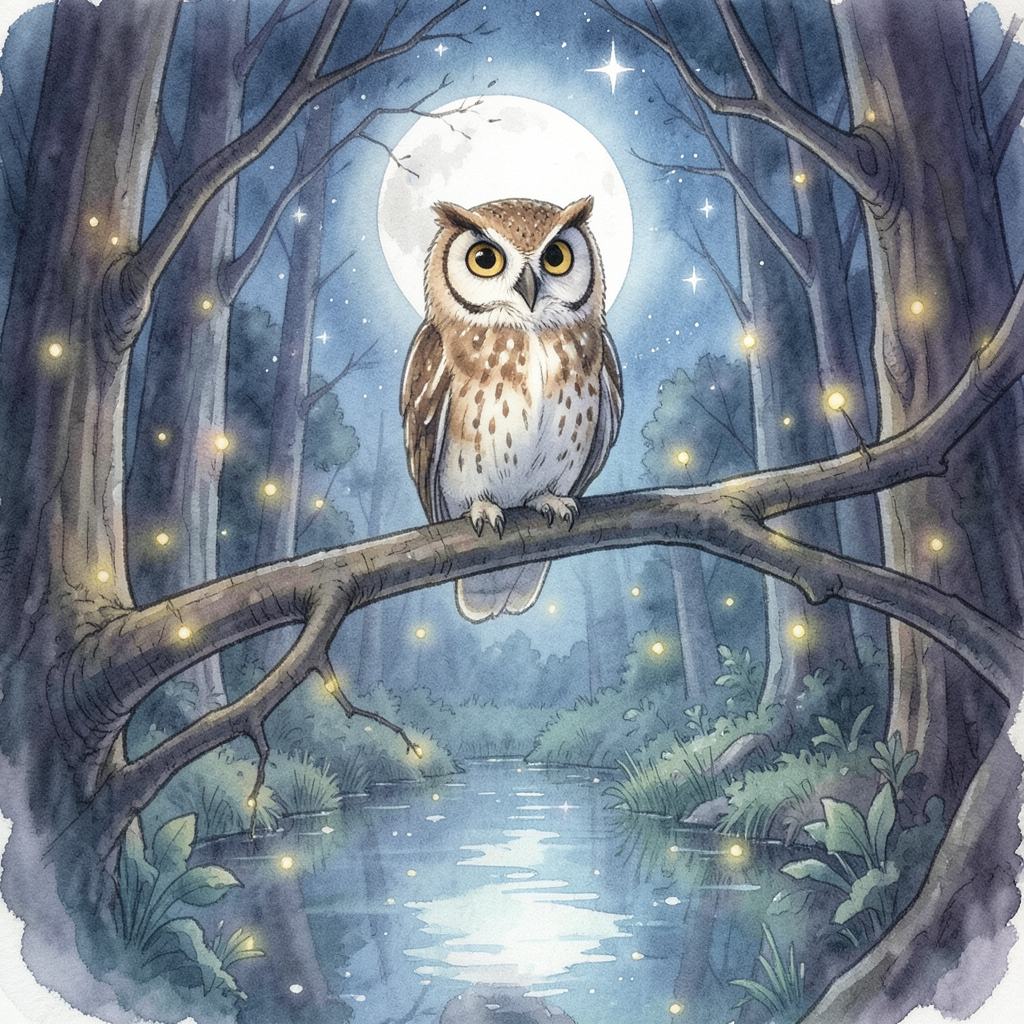
As night falls over the forest, Little Owl wakes up and discovers all the wonder the dark hours hold — the moths and deer and frogs and hedgehogs, and a sky brilliant with stars. Divya Srinivasan's jewel-toned illustrations turn bedtime into something magical, and the gentle ending sends small readers peacefully to sleep.
Themes
BedtimeNatureNight
Best For
- Children who are anxious or fearful about the dark
- Families looking for a calming, consistent bedtime read-aloud
- Nature-loving toddlers and preschoolers who enjoy animals
- Gift-giving for babies and toddlers ages one through three
- Classroom or library storytime on nocturnal animals or nighttime themes
Why Parents Love This Book
Little Owl's Night stands out among bedtime books because it flips the script in the most charming way: instead of a child resisting sleep, we follow a young owl who is just waking up to embrace the night. Divya Srinivasan's jewel-toned illustrations — deep purples, warm golds, and glowing greens — transform the dark forest into a place of extraordinary beauty rather than fear. Little Owl encounters moths, deer, frogs, hedgehogs, and a star-scattered sky, making each page a quiet discovery. The cumulative effect is that nighttime feels safe, alive, and wonder-filled. The gentle, rhythmic text mirrors the unhurried pace of the forest after dark, making it naturally soothing to read aloud. By the time Little Owl's mama tucks him in as dawn approaches, small children find themselves ready to do the same. It is a rare bedtime book that makes the journey to sleep feel like a gift rather than an ending.
Reading Tips for Parents
Read this book slowly — the illustrations reward lingering. Pause on each spread and invite your child to find the animals tucked into the forest scenes before you read the text. Dim the room lights slightly if you can, which deepens the book's cozy nocturnal mood and signals that sleep is coming. The ending, where Little Owl goes to sleep as the sun rises, is a perfect bridge to your own child's bedtime. You can say, "Just like Little Owl, now it is your turn to rest." For toddlers who resist bedtime, this book works especially well because it never lectures about sleep — it simply makes the transition feel natural and peaceful. Keep it in your regular rotation from ages one through four.
Awards & Recognition
- New York Times Best Illustrated Children's Books of 2011
- Amazon Best Books of the Year selection
Educational Value
This book helps children develop skills across multiple areas:
- Vocabulary: Introduces nature words like hedgehog, moth, and nocturnal through gentle context rather than direct instruction.
- Science: Builds early awareness of nocturnal animals and the idea that the natural world is active and alive after dark.
- Social-emotional: Reframes nighttime as safe and wonder-filled, helping children develop a positive association with darkness and bedtime.
- Pre-literacy: The rhythmic, cumulative sentence structure supports phonological awareness and helps toddlers anticipate and follow along with the narrative.
- Art appreciation: Srinivasan's detailed, jewel-toned illustrations model careful observation and invite children to look closely at every page.
- Sequencing: The passage from dusk to dawn gives young children a concrete, story-based introduction to the concept of time moving through a night.
Discussion Questions
Use these questions to spark conversation before, during, or after reading:
- What animals did Little Owl see during the night? Can you remember any of them?
- How do you think Little Owl felt waking up when it was dark outside? Would you feel the same way?
- If you were awake in the forest at night like Little Owl, what do you think you would hear?
- Why does Little Owl go to sleep at the end of the story when you are going to sleep now?
- What is your favorite thing about nighttime?
Content Notes for Parents
There are no scary, sad, or mature elements in this book. The dark forest setting is rendered as cozy and magical rather than threatening, making it well suited for even the most sensitive young readers.
Frequently Asked Questions
What age is Little Owl's Night best for?
The book is ideal for children ages one through four. Babies will respond to the soothing rhythm and rich colors, while toddlers and preschoolers can engage with the animal spotting and simple story. Many families find it works beautifully as a bedtime staple throughout the early years.
Will this book scare children who are afraid of the dark?
No — it is one of the most effective books for gently countering fear of the dark. The nighttime forest is depicted as warm, glowing, and full of friendly creatures rather than anything menacing. Parents of darkness-anxious children frequently recommend it precisely for this reason.
Is this a board book or a picture book?
Little Owl's Night is available as a picture book (published 2011) and was later released as a board book edition, making it accessible for the very youngest children. The board book format is especially practical for babies and toddlers who handle books roughly.
What books are similar to Little Owl's Night?
If your child loves this book, try Goodnight Moon by Margaret Wise Brown for a similarly quiet, object-by-object nighttime journey, or Stellaluna by Janell Cannon for another story featuring a young nocturnal creature. Divya Srinivasan's follow-up, Little Owl's Day, is also a natural next read.
Can this book be used to teach children about nocturnal animals?
Yes, and it does so effortlessly. The story introduces owls, moths, deer, frogs, hedgehogs, and fireflies in a way that feels like discovery rather than a lesson. After reading, many children are curious to learn more, making it a natural springboard for simple conversations or library books about animals that are awake at night.