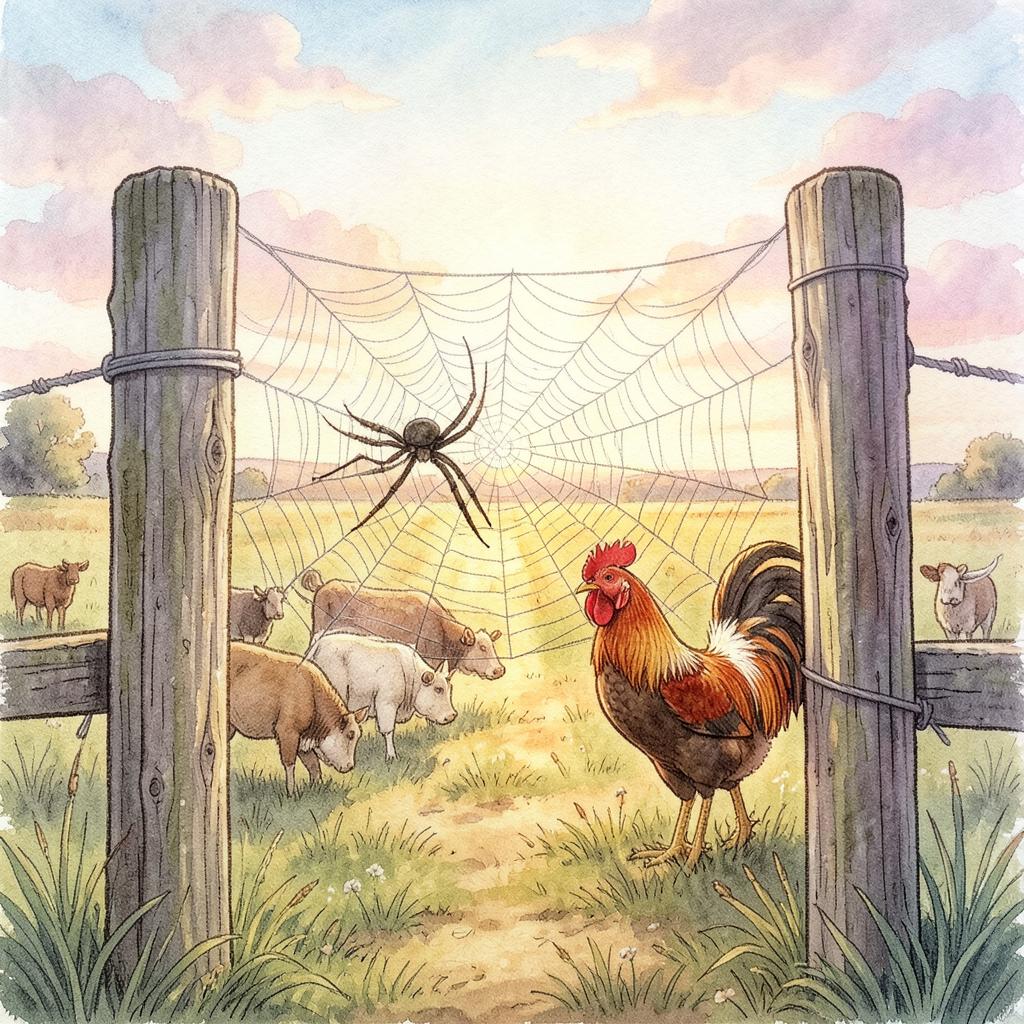
The Very Busy Spider
About This Book
A spider spins her web on a fence post while various farm animals try to distract her. The horse invites her for a ride, the cow asks her to eat grass, the sheep suggests rolling in the hay. But the very busy spider keeps spinning until her web is complete — and catches a fly just in time.
Themes
PersistenceNatureFocus
Best For
- Babies and young toddlers who enjoy sensory, touchable books
- Bedtime reading, thanks to the calm, repetitive rhythm and quiet resolution
- Introducing farm animals and their sounds in a story context
- Children who benefit from repeated read-alouds and predictable text patterns
- Parents looking for a gentle, screen-free way to talk about focus and finishing what you start
Why Parents Love This Book
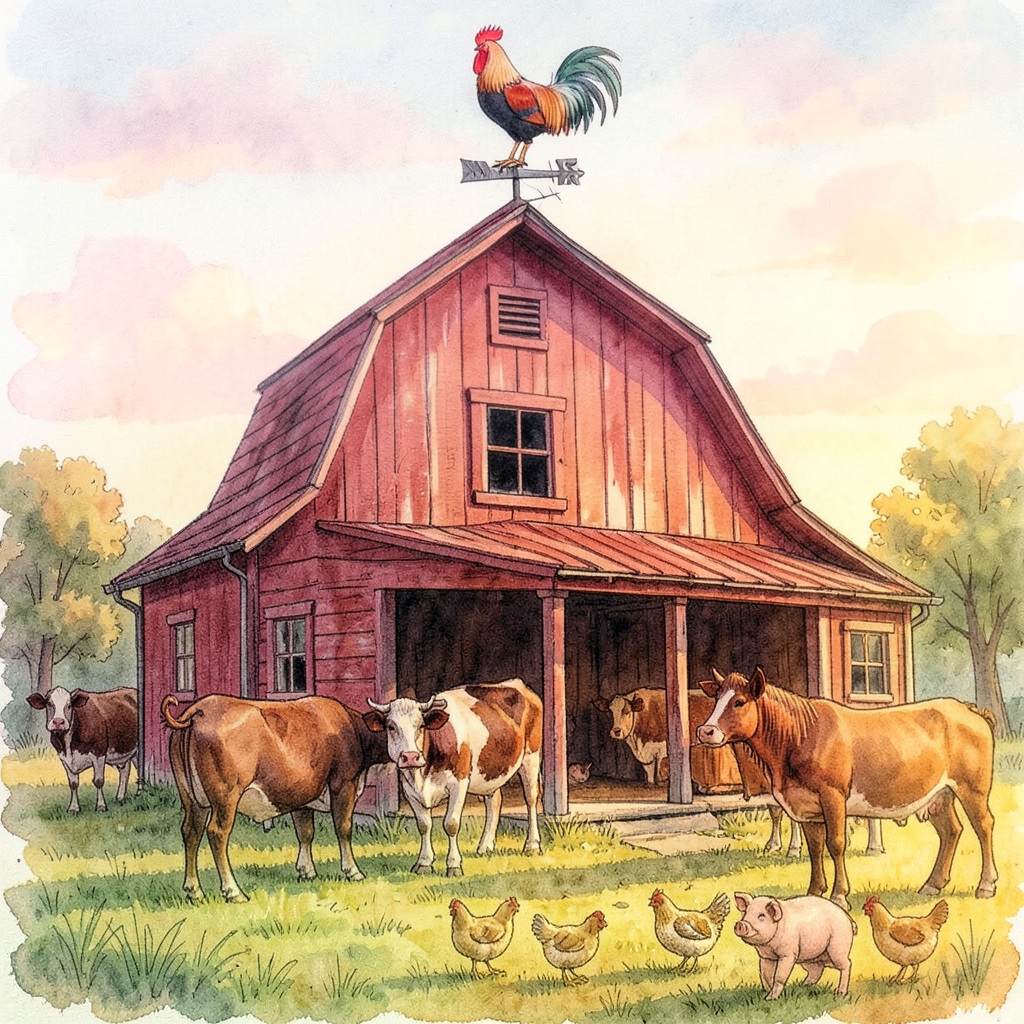
Eric Carle's The Very Busy Spider has captivated young readers since 1984, and it's easy to see why it endures. The story follows a spider who arrives at a farm fence post and begins spinning her web, quietly ignoring each farm animal's invitation to play or eat or rest. Horse, cow, sheep, goat, pig, dog, cat, duck, rooster — one by one they call out, and one by one the spider simply keeps working. There is something deeply satisfying about this structure for young children: the repetition is comforting and predictable, the farm animals are familiar and friendly, and the spider's quiet determination feels genuinely heroic without any drama. Carle's signature tissue-paper collage illustrations are warm and vivid. A standout feature is the raised, textured web that children can trace with their fingertips across each page spread — an invitation to touch that makes the book especially magical for babies and toddlers. By the end, when the web is finally complete and the fly is caught, the payoff is earned and completely satisfying.
Reading Tips for Parents
Run your child's finger along the raised spider web before you begin reading — that tactile detail immediately draws them in and helps build fine motor awareness. As you read, slow down for each animal's invitation and pause before turning the page, giving your child a chance to anticipate what comes next. After a few readings, most toddlers can chime in with "The spider didn't answer. She was very busy spinning her web." Encourage them to join in. Point to each new animal and name it together; the variety of farm animals makes this book a natural vocabulary builder. At the end, talk about what the spider made and why she worked so hard. For bedtime use, the book's gentle, repetitive rhythm and quiet resolution make it an ideal wind-down story.
Awards & Recognition
- New York Times Best Seller
- School Library Journal Best Book of the Year (1984)
Educational Value
This book helps children develop skills across multiple areas:
- Vocabulary: Introduces the names of many farm animals — horse, cow, sheep, goat, pig, dog, cat, duck, rooster — in a memorable, repeated context.
- Fine Motor / Sensory: The embossed, raised web on each page invites children to trace the growing pattern with their fingers, building tactile awareness.
- Sequencing: The story follows a clear beginning-to-end structure with a satisfying resolution, helping toddlers understand narrative order and cause-and-effect.
- Social-Emotional: The spider models healthy focus and persistence — staying on task despite distractions — a concept parents can gently reference in everyday life.
- Science / Nature: Introduces the basic idea of how spiders spin webs and what webs are used for, sparking early curiosity about the natural world.
- Language / Literacy: The repeated sentence pattern 'The spider didn't answer. She was very busy spinning her web.' supports early language development and predictive reading skills.
Discussion Questions
Use these questions to spark conversation before, during, or after reading:
- Why do you think the spider didn't stop to play with any of the animals? Have you ever been so busy with something that you didn't want to stop?
- Which farm animal was your favorite? What did that animal want the spider to do?
- What did the spider make by the end of the story? Why was it useful?
- If you were the spider, which animal's invitation would have been hardest to say no to?
- Can you remember all the animals that visited the spider? Let's see how many we can name together.
Content Notes for Parents
No content concerns. The story ends with the spider catching a fly in her web, which is a natural and non-graphic depiction of how spiders feed — appropriate for the age group and unlikely to distress young children.
Frequently Asked Questions
What age is The Very Busy Spider best for?
The book is ideal for children from about 6 months through age 4. Babies enjoy the raised, textured web and bright collage illustrations, while toddlers and preschoolers love the repetitive text and farm animal parade. Many children still enjoy it as early readers because they can 'read along' with the predictable pattern.
Is there anything in the book that might upset sensitive children?
No. The story is gentle throughout. The only moment that some parents think to flag is the very end, when the spider catches a fly in her web — but this is depicted simply and matter-of-factly, without any distressing imagery. For most children it registers as a satisfying conclusion rather than anything upsetting.
What makes this different from Eric Carle's other books, like The Very Hungry Caterpillar?
Both books share Carle's signature collage art and a satisfying, repetitive structure. The Very Busy Spider distinguishes itself with its tactile, raised web that children can physically trace — a feature The Very Hungry Caterpillar does not have. Thematically, this book emphasizes focus and persistence rather than transformation and growth, so the two complement each other well.
Are there similar books you'd recommend alongside this one?
If your child loves this book, try Carle's The Very Quiet Cricket, which has a similar farm setting and a surprise sound element at the end. For other books about persistence and making things, consider Leo Lionni's Frederick or, for slightly older children, Lois Ehlert's Waiting for Wings.
Can this book be used to help a child who struggles to stay on task?
Yes, many parents find it a useful, low-pressure way to introduce the idea of sticking with a task. After reading, you can simply say, 'Remember how the spider kept going even when the cow wanted her to stop? You're doing that too right now.' It works best as a warm reference point rather than a lesson — keep it light and positive.