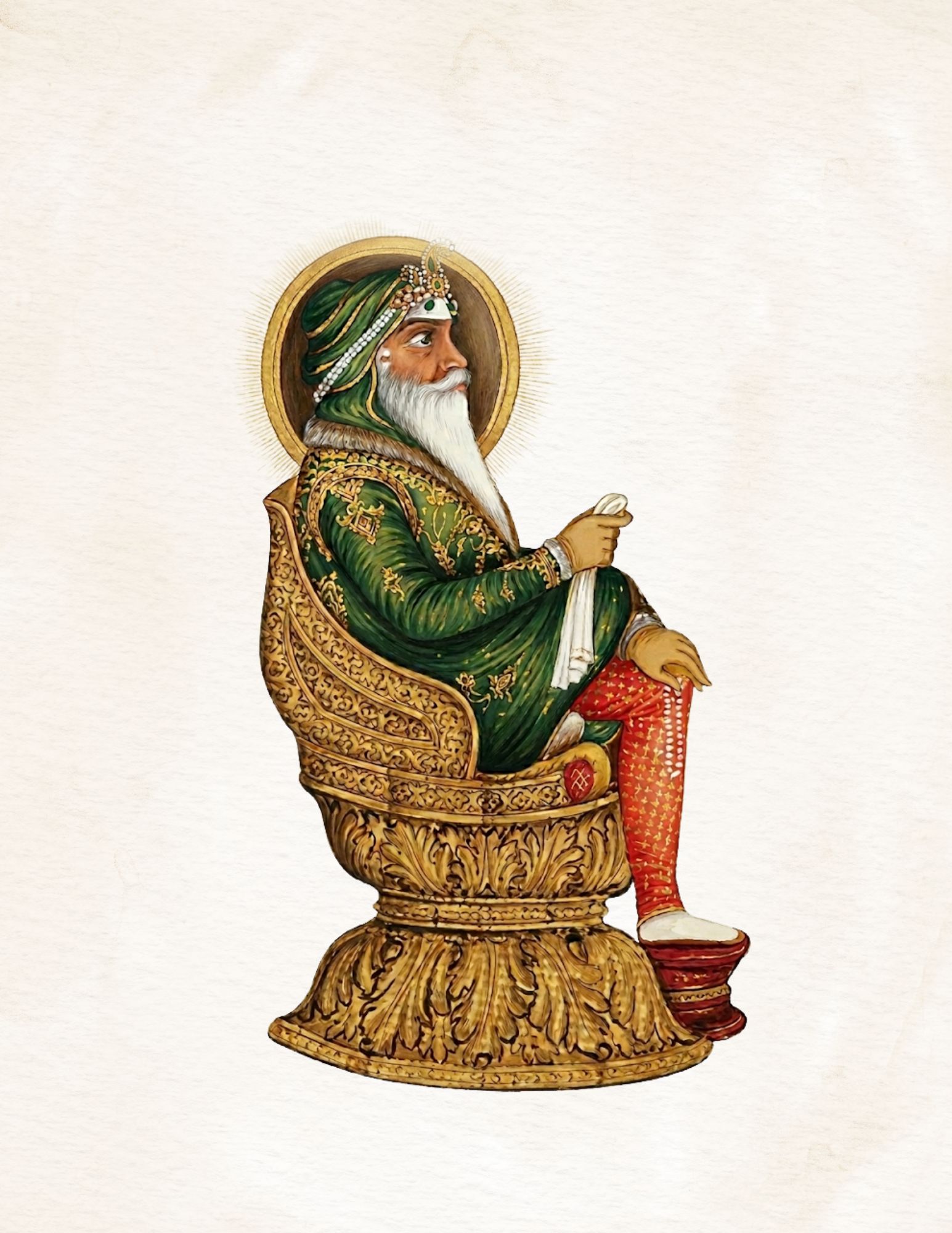
Maharaja Ranjeet Singh: The Lion of Punjab
About This Book
The inspiring true story of Maharaja Ranjeet Singh — the one-eyed boy from Gujranwala who grew up to forge the Sikh Empire, commanding a kingdom where Sikhs, Hindus, Muslims, and Europeans lived and served side by side. A story of extraordinary leadership, courage, and the vision to build something greater than any one faith or people.
Themes
HistoryLeadershipCourage
Best For
- Children ages 4-7 who are curious about history or real-life heroes
- Families with Punjabi or Sikh heritage looking for culturally resonant stories
- Classroom read-alouds during units on leadership, diversity, or world history
- Children who love underdog stories and tales of people who overcame challenges
- Parents wanting to introduce South Asian history in an engaging, age-appropriate way
Why Parents Love This Book
This picture book introduces young readers to one of history's most remarkable leaders through a lens that is both accessible and genuinely inspiring. Maharaja Ranjit Singh's origin story — a one-eyed boy from Gujranwala who lost his father young and faced smallpox as a child — is the kind of underdog beginning that children connect with immediately. What makes this book stand out is its honest portrayal of leadership as something earned through wisdom and inclusion, not just strength. The Sikh Empire Ranjit Singh built was extraordinary for its time: Sikhs, Hindus, Muslims, and Europeans all served and thrived within it. For young children growing up in diverse communities, this historical truth is profoundly relevant. The story shows that a leader's greatest achievement is not conquest but the ability to bring different people together under a shared vision. It is rare to find a children's biography that makes South Asian and Sikh history this vivid, this human, and this genuinely exciting.
Reading Tips for Parents
Before reading, show your child a simple map of Punjab on your phone so they have a sense of where this story takes place. As you read, pause to explain that Ranjit Singh lived in the early 1800s — before cars, electricity, or the internet. When the book describes his empire welcoming people of different faiths, ask your child what they think that means and why it might have been unusual. The concept of a "maharaja" is a great vocabulary moment: break it down (maha = great, raja = king). If your child asks about his eye, answer matter-of-factly — he lost sight in one eye from smallpox as a baby, and it did not stop him. Plan for follow-up curiosity; many children want to know more after this one.
Awards & Recognition
- No major awards on record at time of publication (2026)
- Published by Maastarji, a publisher focused on Sikh and South Asian children's literature
Educational Value
This book helps children develop skills across multiple areas:
- History: Introduces children to the Sikh Empire of the early 19th century and the real figure of Maharaja Ranjit Singh, laying a foundation for South Asian history.
- Social-emotional: Models resilience by showing how Ranjit Singh overcame early hardship — childhood illness and loss — to become a leader.
- Cultural awareness: Illustrates how a pluralistic society can function, with people of different faiths and backgrounds serving alongside one another.
- Vocabulary: Introduces rich words such as maharaja, empire, Punjab, and courage in meaningful context.
- Leadership and character: Explores what qualities make a great leader beyond physical strength, emphasizing vision, inclusion, and fairness.
- Geography: Sparks curiosity about the Indian subcontinent and encourages map exploration as a companion activity.
Discussion Questions
Use these questions to spark conversation before, during, or after reading:
- Ranjit Singh was just a boy when he faced many hard things. What is one hard thing he went through, and how do you think he felt?
- His empire included people from many different religions and countries. Why do you think it was special that everyone worked together?
- What does it mean to be a good leader? Do you think Ranjit Singh was one? Why?
- If you could ask Maharaja Ranjit Singh one question, what would it be?
- The book calls him the Lion of Punjab. Why do you think people gave him that name? What animal would you choose to represent someone brave?
Content Notes for Parents
There are references to childhood illness (smallpox) and the early death of Ranjit Singh's father, which may prompt questions about loss and illness. The book's depictions of leadership and empire-building are age-appropriate and not graphic; there is no frightening or violent content.
Frequently Asked Questions
Is this book historically accurate?
The core facts — Ranjit Singh's origins in Gujranwala, the loss of his eye to smallpox, and the religiously diverse nature of his empire — are well-documented history. As with any picture book biography for young children, the story is simplified and adapted for a beginning reader audience rather than being a scholarly account.
My child is 5 and doesn't know much about Sikh history. Will they still enjoy this?
Absolutely. The book is written for children who are coming to this story fresh. The themes of courage, overcoming hardship, and bringing people together are universal, and the story works even without prior knowledge of Sikh history. It may spark curiosity that leads to further exploration together.
Are there any scary or upsetting parts?
The book mentions that Ranjit Singh lost sight in one eye from smallpox as a baby, and that his father died when he was young. These are handled matter-of-factly rather than in a frightening way, but they may prompt questions about illness or death. There is no violent or frightening imagery.
What age range is this best for?
The book is targeted at ages 4 to 7 and is listed as a beginning reader level. It works well as a read-aloud for children on the younger end of that range, and early independent readers around ages 6 to 7 may enjoy reading it themselves with light support.
Are there other books like this for kids interested in Sikh history?
Maastarji publishes a growing catalog of Sikh and South Asian children's books. For children who connect with this story, exploring other titles in their lineup — covering Sikh figures, values, and history — is a natural next step.