
Rosie Revere, Engineer
About This Book
Shy Rosie dreams of becoming a great engineer but is afraid of failure. When her great-great-aunt Rose, a real-life Rosie the Riveter, visits and shares her own unfulfilled dream of flying, Rosie builds a contraption that crashes — and learns that the only true failure is quitting.
Themes
PerseveranceCreativityCourage
Best For
- Children who are perfectionists or who avoid trying new things for fear of making mistakes
- Classroom or home read-alouds kicking off a maker, STEM, or engineering unit
- Girls (and boys) who need to see creative, inventive characters who look like them
- Families wanting to open a conversation about resilience after a child has experienced failure or embarrassment
- Bedtime reading that leaves children feeling encouraged rather than wound up
Why Parents Love This Book
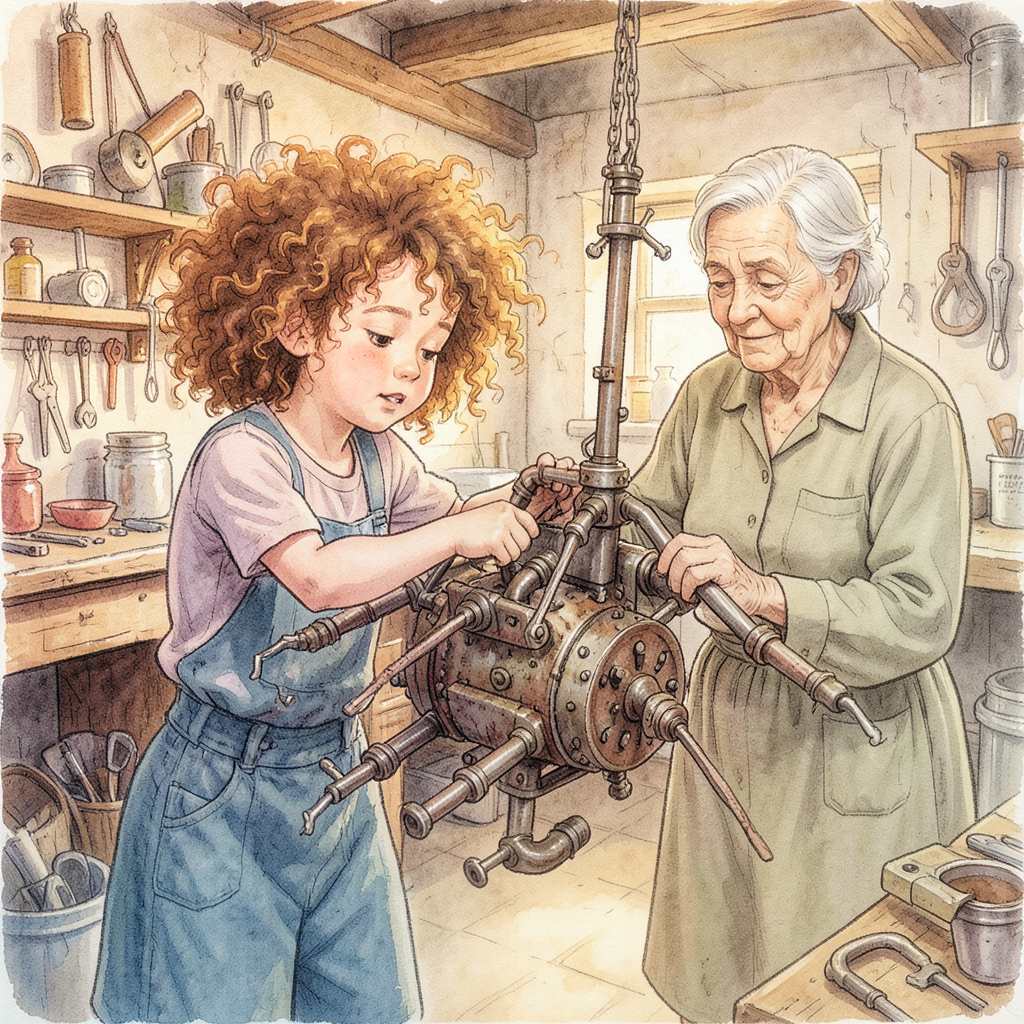
Rosie Revere, Engineer has become a modern classic for good reason. Andrea Beaty and illustrator David Roberts have created a book that speaks directly to the fear every child (and adult) knows: the fear of looking foolish. Rosie is not a generic "girl who loves science" — she is a genuinely shy, inventive kid who hides her contraptions under her bed because she cannot bear for anyone to laugh at them. The turning point is quietly brilliant. When her great-great-aunt Rose — a nod to the real Rosie the Riveter — sees Rosie's flying machine crash and laughs with pure delight, Rosie must rethink what failure even means. The rhyming text is buoyant and fun to read aloud without feeling forced. David Roberts's illustrations are full of whimsical detail: every page rewards a slow look. The book's core message — that a first flop is just the beginning of figuring things out — lands with warmth rather than lecture. It celebrates the messy, joyful process of making things.
Reading Tips for Parents
Before you read, flip through the illustrations together and ask your child what they notice in Rosie's room. Roberts hides wonderful invention sketches and gadget details throughout. When you reach the moment Rosie's flying machine crashes, pause before turning the page and ask your child how they think Rosie feels. The aunt's joyful reaction surprises most children — use it to talk about what laughing-with versus laughing-at looks like. The rhyming couplets make this ideal for choral reading: let your child join in on repeated phrases after the first pass. If your child has recently experienced embarrassment over something they made or tried, this book pairs beautifully with a simple conversation about your own failed attempts at something new. The STEM themes are organic, not preachy, so resist over-explaining the engineering angle — let the story carry it.
Awards & Recognition
- New York Times Bestseller
- Amazon Best Book of the Year (2013)
- Chicago Public Library Best of the Best Books
Educational Value
This book helps children develop skills across multiple areas:
- Social-emotional: Models how to process embarrassment and fear of judgment, showing that vulnerability around creative work is normal and manageable.
- Growth mindset: Directly illustrates the concept that a first attempt is data, not a verdict — aligns with the language educators use in classroom growth-mindset instruction.
- Vocabulary: Introduces words like engineer, contraption, catastrophe, and resilience in context, with playful rhyming that helps children retain new words.
- STEM awareness: Presents engineering as a creative, iterative process accessible to all children, not just a technical career for a select few.
- Historical connection: The reference to Rosie the Riveter opens a gentle door to conversations about women's contributions during World War II.
- Phonological awareness: The rhyming couplet structure supports early literacy skills and makes the text ideal for read-aloud participation.
Discussion Questions
Use these questions to spark conversation before, during, or after reading:
- Why did Rosie hide the things she made under her bed? Have you ever kept something you made or tried a secret because you were worried what people would think?
- When Aunt Rose laughed at Rosie's flying machine, Rosie thought she was being made fun of. What did the laugh actually mean? How can you tell the difference between kind laughter and unkind laughter?
- Aunt Rose says her own dream of flying never came true. How did sharing that story help Rosie? Has someone ever shared a story about their own hard times to help you feel better?
- What would you invent if you could build anything? What materials would you use and what problem would it solve?
- The book says the only real failure is giving up. Do you agree? Can you think of a time when trying again after something went wrong felt good?
Content Notes for Parents
There are no scary, violent, or mature elements in this book. The only emotional tension is Rosie's fear of embarrassment and a brief moment of feeling humiliated, both of which are resolved warmly within the story.
Frequently Asked Questions
What age is Rosie Revere, Engineer best for?
The book is ideal for ages 4 through 8. The rhyming text and picture-book format are accessible to preschoolers, while the emotional themes of fear of failure and creative courage resonate most deeply with kindergarten and early elementary children who are starting to care about how peers perceive them. Strong readers ages 8-9 may enjoy it independently, though it works best as a shared read.
Is this book part of a series?
Yes. Andrea Beaty and David Roberts have created the Questioneers series, which includes Iggy Peck, Architect (2007), Ada Twist, Scientist (2016), Sofia Valdez, Future Prez (2019), and Aaron Slater, Illustrator (2021), among others. Each book follows a different inventive child and shares the same growth-mindset themes. Families who love Rosie almost always love the rest of the series.
How do I talk to my child about the fear of failure theme without it feeling like a lesson?
Let Aunt Rose do the work. When she laughs at Rosie's crash and says it was 'a brilliant first try,' that moment usually prompts children to ask questions themselves. Follow your child's lead. Sharing a small, real story about something you tried and got wrong the first time is often more powerful than explaining the moral directly.
Are there any content concerns parents should know about?
None. The book contains no scary content, no sad events, and no mature themes. The only mild tension is Rosie's embarrassment, which resolves positively. It is suitable for even sensitive younger children in the 4-5 age range.
What books are similar to Rosie Revere, Engineer?
The closest companions are the other Questioneers books, especially Iggy Peck, Architect and Ada Twist, Scientist. Outside the series, The Most Magnificent Thing by Ashley Spires covers nearly identical ground — a child builds something that fails and learns to persist — and is another excellent pairing. Beautiful Oops! by Barney Saltzberg is a shorter, interactive pick for younger children in the 3-5 range who need the same encouragement around creative mistakes.