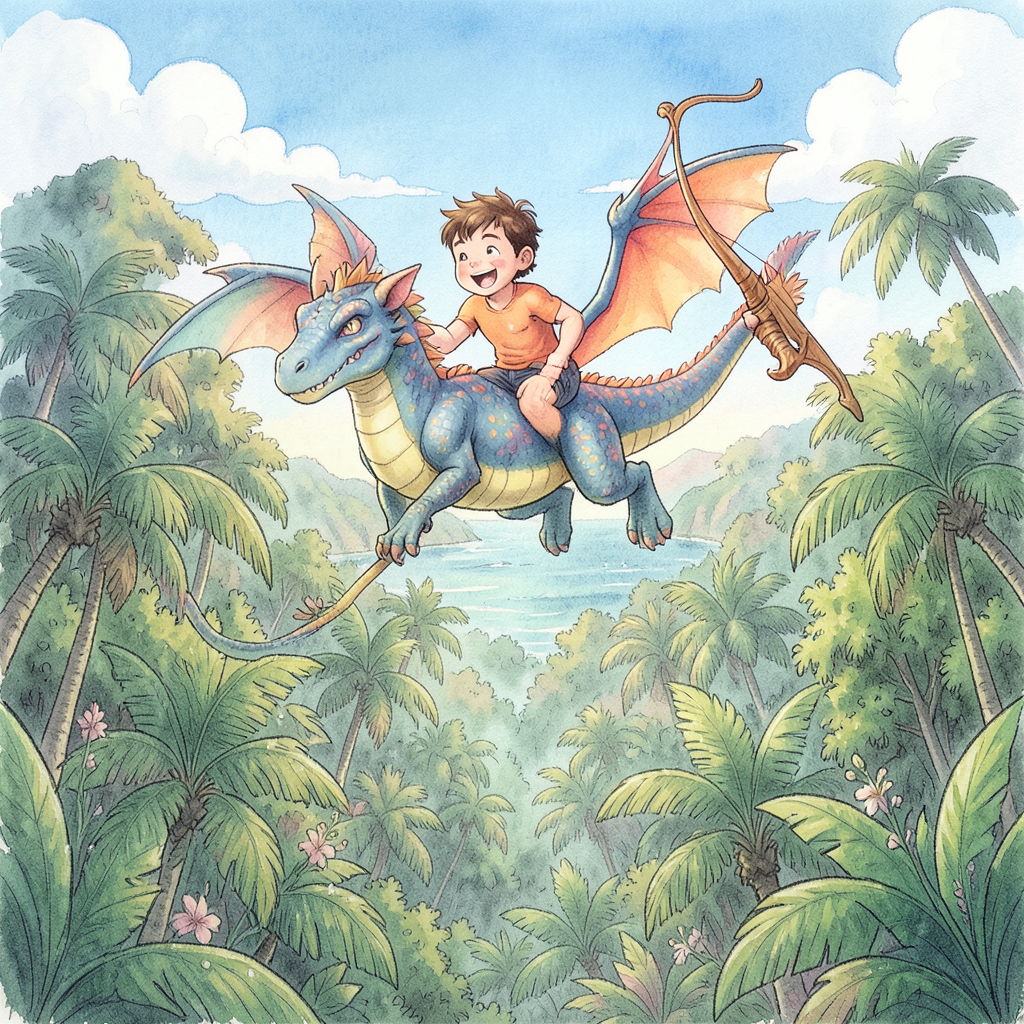
My Father's Dragon
About This Book
Elmer Elevator has a plan to rescue a baby dragon from Wild Island, armed with nothing but a knapsack full of unlikely items — chewing gum, hair ribbons, rubber boots, and lollipops. Ruth Stiles Gannett's Newbery Honor fantasy adventure is a masterpiece of gentle, logical problem-solving and pure narrative fun, beloved by children for nearly eighty years.
Themes
AdventureFantasyProblem-Solving
Best For
- Children who are transitioning from picture books to chapter books and need short, satisfying chapters to build reading stamina
- Reluctant readers who respond to humor, fast pacing, and a clever underdog hero
- Bedtime read-alouds for ages 5-8 with a parent, even though the target independent reading age is 8-12
- Children who enjoy problem-solving games and puzzles — the knapsack challenge makes a great pre-reading activity
- Families looking for a classic series with no objectionable content that holds up across multiple re-reads
Why Parents Love This Book
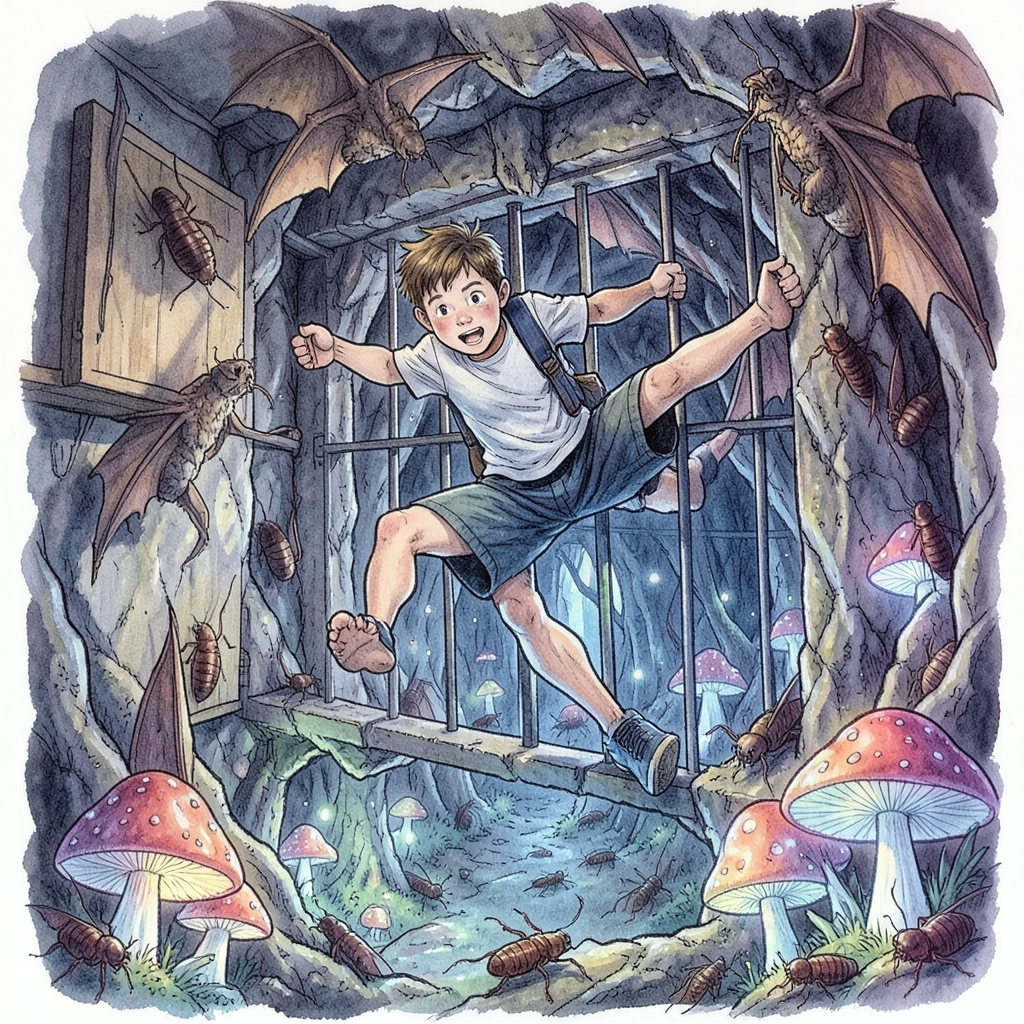
My Father's Dragon has enchanted readers since 1948, and its staying power comes down to something deceptively simple: it trusts children to be clever. Young Elmer Elevator sets off to rescue a captive baby dragon from Wild Island, and the animals he encounters — tigers, rhinoceroses, gorillas — each present an obstacle he outsmarts using the ordinary items in his knapsack. Chewing gum pacifies a tiger, lollipops distract the gorillas, and hair ribbons go further than you might expect. Ruth Stiles Gannett never pads the story with sentiment or lectures; every chapter moves briskly, every problem has a satisfying, logical solution. The tone is warm but never saccharine, and the friendship between Elmer and the dragon feels genuinely earned by the story's end. For children just stepping into chapter books, the episodic structure means each chapter feels complete and thrilling, while the cumulative adventure builds real narrative momentum. It is the rare classic that reads as fresh today as it did to the children of 1948.
Reading Tips for Parents
Read this aloud or encourage independent reading chapter by chapter — the episodic format makes it ideal for a bedtime-book routine, with each chapter landing at a natural stopping point. Before starting, look at the list of items in Elmer's knapsack together and ask your child to predict what each might be used for; this primes them to engage actively with the problem-solving rather than just following the plot. When an animal blocks Elmer's path, pause and ask "What would you use?" before reading the solution. The book is part of a trilogy (Elmer and the Dragon and The Dragons of Blueland follow), so if your child finishes hungry for more, the sequels are ready. Reluctant readers tend to respond especially well because chapters are short and victories come quickly.
Awards & Recognition
- Newbery Honor Book, 1949
- ALA Notable Children's Book
Educational Value
This book helps children develop skills across multiple areas:
- Problem-solving: Each chapter presents a new obstacle that Elmer overcomes through logical, creative thinking rather than brute strength, modeling lateral problem-solving strategies.
- Vocabulary: Rich, precise language throughout — words like "satisfied," "indignant," and "lollygagging" appear in natural context, expanding reading vocabulary organically.
- Sequencing and planning: The knapsack inventory and its systematic use across the story builds understanding of cause-and-effect and advance planning.
- Social-emotional learning: Elmer's calm, resourceful demeanor under pressure models emotional regulation and persistence in the face of repeated challenges.
- Narrative structure: The episodic chapter format helps early chapter-book readers understand how episodes build toward a larger story goal, a foundational reading comprehension skill.
- Empathy and animal welfare: The central mission to free a captive dragon introduces themes of compassion for creatures who cannot speak for themselves.
Discussion Questions
Use these questions to spark conversation before, during, or after reading:
- Elmer packs his knapsack with chewing gum, lollipops, rubber boots, and other everyday items. If you were going on a rescue mission, what three things would you pack and why?
- Each animal on Wild Island tries to stop Elmer in a different way. Which animal do you think was the hardest to get past? What made Elmer's solution clever?
- Elmer doesn't use fighting or magic to solve his problems — he thinks his way through them. Can you think of a time you solved a problem by being creative instead of using force?
- The baby dragon is being kept on the island against his will. How do you think the dragon felt before Elmer arrived? How do you think he felt at the end?
- If you could visit Wild Island, which animal would you most want to meet? What would you say to it?
Content Notes for Parents
There are no significant content concerns in this book. The animals are mildly threatening in a fairy-tale way, but Elmer is never in genuine danger and there is no violence, fear, or distressing content — it is an exceptionally gentle adventure.
Frequently Asked Questions
What age is My Father's Dragon best for?
The book is typically recommended for independent readers ages 7-10. Confident readers on the younger end of that range will find it manageable and deeply satisfying. It also works beautifully as a read-aloud for children as young as 5 or 6, since the vocabulary and themes are accessible even when the text itself is slightly above a child's independent reading level.
Is this book scary? My child is sensitive to frightening content.
It is not scary in any meaningful sense. Wild Island is populated with tigers, gorillas, and other animals who try to stop Elmer, but the tone is playful rather than menacing and Elmer is never in real peril. Even the most sensitive children typically find this adventure cozy rather than frightening. It is one of the gentlest classic adventure stories available.
Is this a standalone book or part of a series?
My Father's Dragon is the first book in a trilogy by Ruth Stiles Gannett. It is followed by Elmer and the Dragon and The Dragons of Blueland. Each book works on its own, but they are best read in order. Many families blow through all three in a single month once they discover how quickly children get attached to Elmer and his dragon.
What books are similar to this one that we could read next?
Children who love My Father's Dragon tend to enjoy The Phantom Tollbooth by Norton Juster for its similar wit and wordplay, the Mrs. Piggle-Wiggle series for its episodic problem-solving structure, and Stuart Little by E.B. White for its small-protagonist-big-adventure feel. For something more recent, The Bad Guys series scratches a similar itch for humor and fast chapters.
Is this a good book for classroom read-alouds?
Yes, it is an excellent classroom read-aloud for grades 2-4. Each chapter functions as a self-contained episode, making it easy to read one chapter per session. The problem-solving structure invites genuine class discussion and prediction activities, and the Newbery Honor pedigree makes it a credible choice for any reading curriculum.