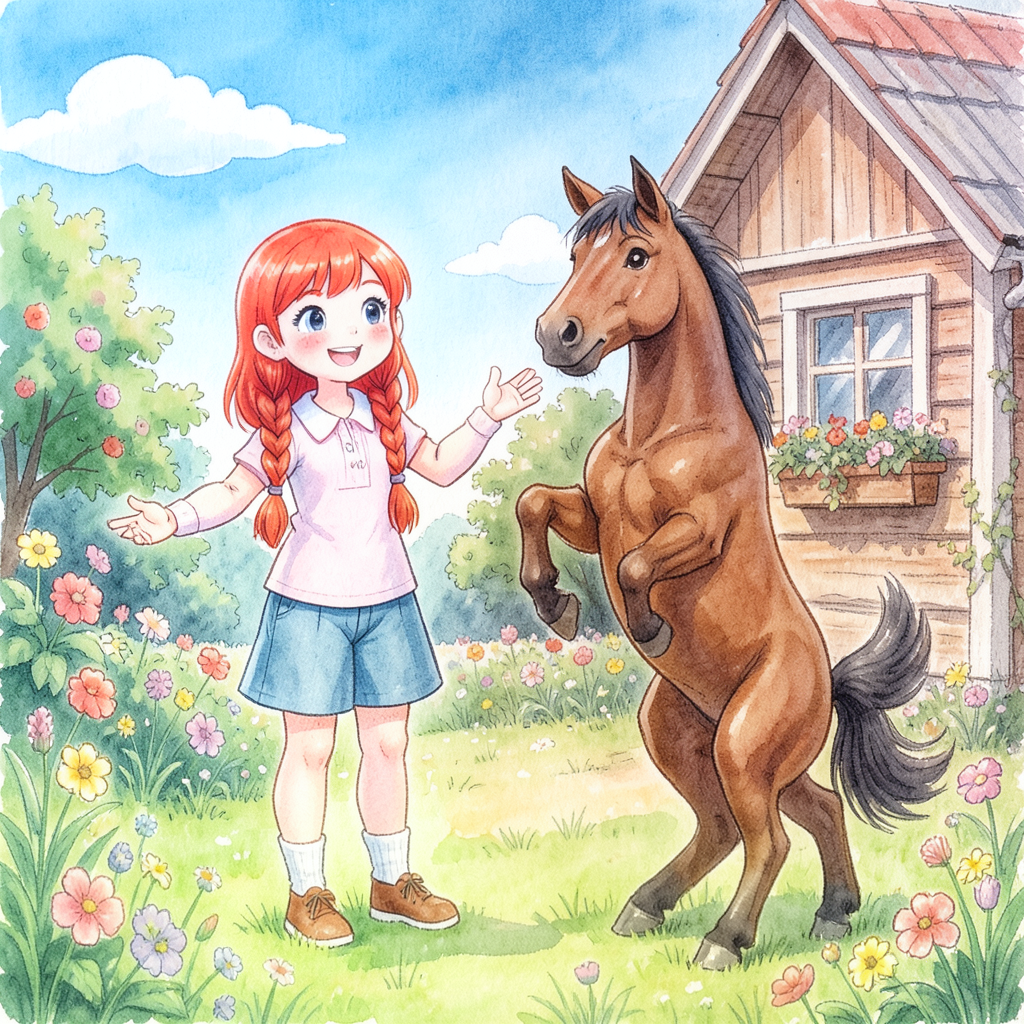
Pippi Longstocking
About This Book
Pippi is the strongest girl in the world — she lives alone with a monkey and a horse, has a suitcase full of gold, and answers to no one. Her wild adventures with neighbors Tommy and Annika include outsmarting burglars, attending school for the first time, and hosting the most chaotic coffee party ever.
Themes
IndependenceHumorAdventure
Best For
- Kids aged 7-10 who love rule-breaking characters and big laughs
- Children who are strong independent readers and ready for their first beloved chapter book series
- Family read-aloud sessions where parents want to perform a character with real comedic range
- Kids who feel like outsiders or who are told they are "too much" — Pippi's unapologetic self is deeply validating
- Rainy-day or summer reading when children want something episodic they can dip in and out of
Why Parents Love This Book
Pippi Longstocking has enchanted readers for over eighty years, and it is not hard to see why. Astrid Lindgren created in Pippi Efraim's daughter a character who is genuinely unlike anyone else in children's literature: a nine-year-old girl who lives alone, sets her own rules, lifts a horse with one hand, and still somehow manages to be the kindest person in the room. What makes Pippi endure is not just the gleeful chaos she brings to every situation — the burglar-foiling, the school-day disasters, the coffee party gone magnificently wrong — but the deeper fantasy she represents. She is competent, generous, and completely free from adult control, yet she never uses that freedom cruelly. Children respond to her because she validates something they deeply feel: that they are capable of more than grown-ups give them credit for. The humor is broad and physical but also surprisingly clever. Translated from Swedish by Florence Lamborn, the prose has a warm, almost oral quality that makes it perfect for reading aloud, even as kids grow old enough to read it independently.
Reading Tips for Parents
This book is ideally suited for reading aloud together in chapters, even with readers who could handle it independently — Pippi's dialogue begs to be performed with voices. Expect your child to want to imitate Pippi's tall tales and logic games afterward; lean into this as a chance to talk about the difference between creative storytelling and dishonesty. A few scenes, particularly Pippi's interactions with the police and her dismissal of adult authority figures, may prompt useful conversations about why rules exist and when questioning them is healthy. The episodic chapter structure means you can pause anywhere without losing momentum, making it a great bedtime book that does not require a long commitment each session. Pair the book with a map of Sweden if your child is curious about Pippi's home, Villa Villekulla.
Awards & Recognition
- International Hans Christian Andersen Award — Astrid Lindgren won this lifetime achievement award in 1958, in part for the Pippi Longstocking series
- Astrid Lindgren Memorial Award — established in Lindgren's honor in 2004, this is now the world's largest children's literature prize
- Pippi Longstocking is recognized as one of the best-selling children's book series of all time, with over 100 million copies sold worldwide
Educational Value
This book helps children develop skills across multiple areas:
- Vocabulary: Lindgren's text introduces playful invented words alongside genuine advanced vocabulary, encouraging children to infer meaning from context and appreciate wordplay.
- Social-emotional: Pippi's radical self-confidence and indifference to others' judgments opens discussion about self-worth, peer pressure, and the courage to be different.
- Critical thinking: Pippi frequently uses literal logic to subvert adult instructions, modeling a form of reasoning that children can practice and discuss.
- Cultural literacy: Originally published in Sweden in 1945, the book introduces children to Scandinavian culture and the concept that great stories travel across languages and borders.
- Ethics: Pippi's generous treatment of other children despite her own lonely situation provides a natural entry point into conversations about empathy and friendship.
- Media literacy: Comparing the book to the many film and TV adaptations teaches children how stories change across different formats and why the original text matters.
Discussion Questions
Use these questions to spark conversation before, during, or after reading:
- Pippi says she is "the strongest girl in the world." What do you think makes someone truly strong — physically or in other ways?
- Pippi lives alone without parents. Does that sound exciting or scary to you? What would be the hardest part?
- Tommy and Annika always follow the rules, but Pippi never does. If they were your friends, which one do you think you would be most like, and why?
- Pippi tells some wild stories that are not exactly true. Why do you think she does this? Is there a difference between her kind of story-making and lying?
- If Pippi came to live on your street for one week, what do you think would happen?
Content Notes for Parents
Pippi lives without parents (her mother is said to be in heaven and her father is absent at sea), which may be briefly sensitive for children who have experienced loss, though the book treats this lightly and Pippi herself is cheerfully unbothered. There is no violence, no scary content, and no mature themes; the overall tone is comic and warm throughout.
Frequently Asked Questions
What age is Pippi Longstocking really best for?
Most children enjoy it most between ages 7 and 10. Confident readers at age 6 can handle it independently, and the humor still lands for 11- and 12-year-olds, especially if they missed it earlier. The episodic structure and short chapters make it accessible without feeling babyish.
Is there anything in the book parents should be aware of before reading it with younger children?
Nothing that qualifies as genuinely mature content. Pippi's mother is said to be dead and her father is away, which could prompt questions from children who are sensitive about family separation. The book also depicts Pippi cheerfully ignoring police officers and school authorities, so it is worth deciding in advance how you want to frame that humor with your child.
My child loved Pippi — what should they read next?
Astrid Lindgren wrote two sequels, Pippi Goes on Board and Pippi in the South Seas, which follow the same characters and are equally fun. Beyond Lindgren, children who love Pippi often enjoy Mary Poppins by P.L. Travers, Matilda by Roald Dahl, and The Worst Witch by Jill Murphy — all feature bold, unconventional girls with a touch of magic.
Is this book part of a series?
Yes. Pippi Longstocking is the first of three novels by Astrid Lindgren. The sequels are Pippi Goes on Board (1946) and Pippi in the South Seas (1948). There are also several short story collections and picture book adaptations featuring the same character.
Does the book hold up, or does it feel dated?
Remarkably well, with one small caveat. A single chapter in some older editions contains a racial caricature related to Pippi's father being a king of a fictional island; many modern editions have revised or removed this passage. It is worth checking which edition you have. Outside of that, the humor, the themes of independence, and Pippi's personality feel as fresh and funny as ever.