Stuart Little
About This Book
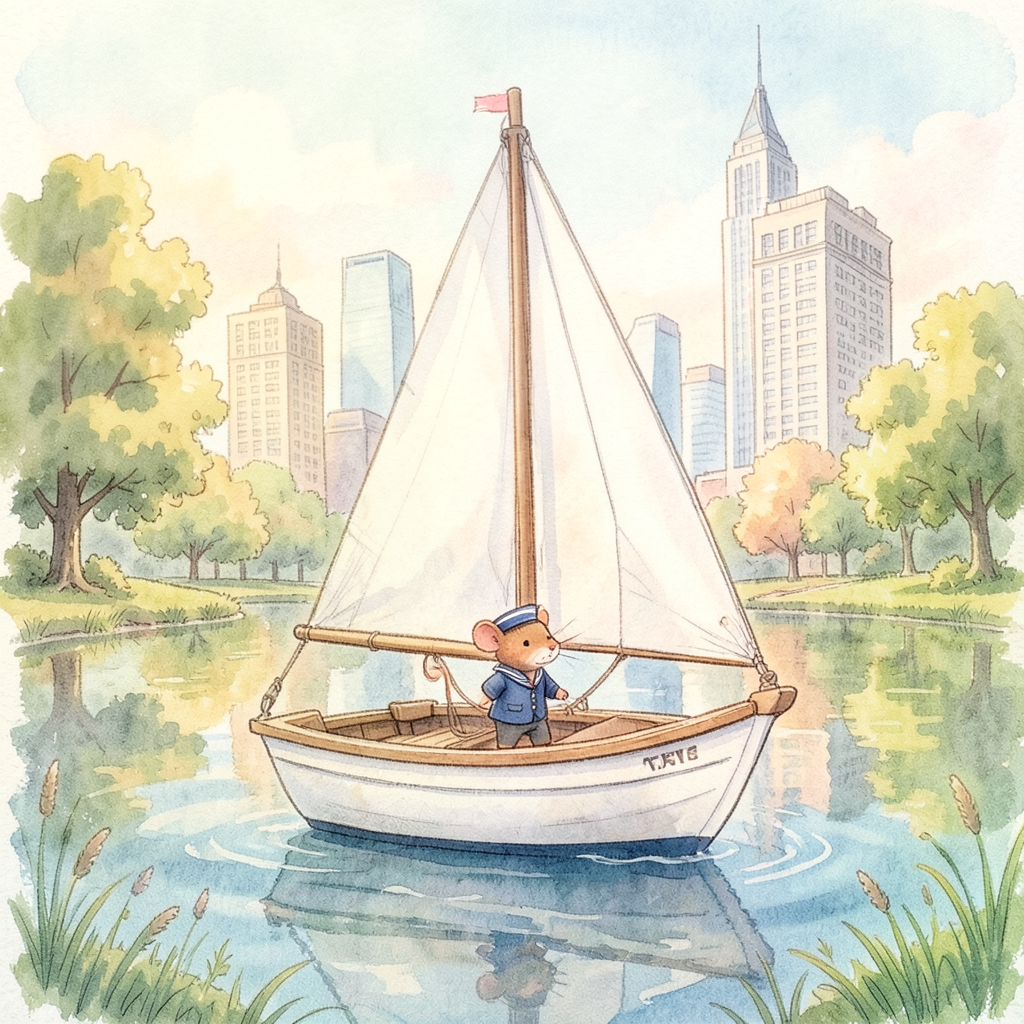
Born to a human family in New York City, Stuart Little is a mouse-sized boy who faces a world built for people much larger than himself. He navigates drains, sails boats in Central Park, and eventually sets off on a journey north to find his dear friend Margalo, a bird who has flown away.
Themes
AdventureIdentityPerseverance
Best For
- Children who feel different or like they do not quite fit in with the world around them
- Family read-aloud sessions that work for a wide age range, from kindergarteners listening to parents reading aloud through middle-grade independent readers
- Young readers ready to move from picture books into their first chapter books — the short, episodic chapters and abundant illustrations ease the transition
- Children who love animals and adventure stories set in recognizable real-world places like New York City's Central Park
Why Parents Love This Book
Stuart Little endures because E.B. White refuses to condescend to his readers or his hero. Stuart is a mouse born to a perfectly ordinary New York City family, and White treats this extraordinary situation with complete seriousness — no winking, no explaining it away. What results is a story of remarkable emotional depth about a small creature navigating a world that simply was not built with him in mind. Stuart sails a model boat in Central Park, drives a tiny car, briefly becomes a substitute teacher, and ultimately sets off alone to find his missing friend Margalo, a bird whose company meant everything to him. That final journey — open-ended, north-bound, hopeful — is one of the most quietly affecting endings in all of children's literature. Garth Williams's delicate pencil illustrations perfectly match White's tone: warm, precise, and never precious. The book teaches children that courage is not the absence of smallness, and that loyalty to a friend is worth a very long road.
Reading Tips for Parents
Stuart Little works beautifully as a read-aloud even though it sits in the independent chapter book range, because White's prose is crisp enough for adults to enjoy and accessible enough for younger listeners. Read one or two short chapters per session — the book's episodic structure makes it easy to pause and pick back up. When Stuart sets off on his solo journey in the final chapters, use that as an opportunity to ask your child how they feel about an ending that does not fully resolve. Some children find this unsatisfying; others find it liberating. Either reaction is worth talking through. The book's 1945 New York City setting offers natural opportunities to discuss how cities and family life have changed. At around 130 pages with generous illustrations, confident readers ages 7-8 can handle it independently, while the themes reward deeper discussion with older children.
Awards & Recognition
- New York Times Bestseller (original publication 1945, enduring classic status)
- Included on the American Library Association's lists of notable children's books
Educational Value
This book helps children develop skills across multiple areas:
- Vocabulary: White's prose introduces precise, varied language — words like 'ominous,' 'peculiar,' and 'enterprise' appear naturally in context, building reading comprehension without feeling like a lesson.
- Social-emotional: Stuart's experience of being different from everyone around him and finding his own place in the world is a powerful model for children who feel like outsiders or who do not fit a standard mold.
- Perseverance: Nearly every chapter presents Stuart with a new obstacle. Watching him assess each problem calmly and try again teaches children that setbacks are part of any worthwhile effort.
- Friendship and loyalty: Stuart's willingness to leave home and travel alone to find Margalo illustrates that meaningful relationships require sacrifice and effort, not just proximity.
- Literary appreciation: The book's open ending is an excellent introduction to the idea that not all stories resolve neatly — a concept that builds literary sophistication and tolerance for ambiguity.
- Geography and setting: Stuart's journey through New York City and into rural upstate New York offers a concrete sense of place that can spark interest in maps and regional geography.
Discussion Questions
Use these questions to spark conversation before, during, or after reading:
- Stuart is a mouse but his family treats him like a regular member of the family. Do you think they did the right thing? How would you feel if someone very different joined your family?
- Stuart faces problems every day because the world is sized for people much bigger than him. Can you think of a time you felt too small — or too big — for a situation? What did you do?
- Stuart travels a long way to find Margalo because she is his friend. What do you think true friendship means, and how much would you do for a friend you cared about?
- The book ends with Stuart still traveling north, still searching. Does that feel like a good ending to you, or does it bother you? What do you imagine happens next?
- Stuart is very resourceful — he finds clever solutions to problems using what is around him. Can you think of one problem from the story and explain how Stuart solved it?
Content Notes for Parents
There are no scary, violent, or mature elements. Younger or more sensitive readers may find the open-ended conclusion emotionally unsettling, as Stuart does not find Margalo and the story simply ends with him still searching — parents should be prepared for questions about whether Stuart ever succeeds.
Frequently Asked Questions
What age is Stuart Little really appropriate for?
The book is marketed for ages 6-10 and sits comfortably there. Confident readers ages 7-8 can read it independently. It also works beautifully as a read-aloud for children as young as 4 or 5, since White's clear prose and Garth Williams's illustrations carry younger listeners along easily. Older readers up to age 12 will still enjoy the themes of identity and friendship.
The ending seems incomplete — Stuart never finds Margalo. Should I be worried about how my child will react?
This is the most common parental concern about Stuart Little, and it is a fair one. E.B. White deliberately left the story open-ended, and some children find this deeply unsatisfying while others find it poetic and hopeful. It is worth preparing your child by noting before the final chapter that the story ends while Stuart is still traveling. Most children process it fine, and the open ending creates one of the richest post-reading conversations the book offers.
Is the 1990 film version a good companion to the book?
The film diverges significantly from the book — it invents a new plot involving a cat and a villainous family, while the book is a quieter, more episodic journey story. Children who love the movie may be surprised by how different the book feels. Both are enjoyable, but it is worth setting that expectation before reading. Many families find the book more emotionally resonant than the film.
What books should we read after Stuart Little?
E.B. White's Charlotte's Web is the obvious next step — it shares White's emotional clarity, Garth Williams's illustrations, and a similar willingness to engage children honestly with big feelings. The Wind in the Willows by Kenneth Grahame offers a comparable small-creatures-in-a-large-world sensibility. For readers who loved Stuart's solo journey, The Incredible Journey by Sheila Burnford delivers a more sustained adventure in a similar spirit.
Can I use this book in a classroom or homeschool setting?
Stuart Little works very well in classroom settings for grades 2 through 5. The episodic chapter structure makes it easy to assign in sections, and each chapter naturally generates its own discussion. The themes of identity, perseverance, and friendship lend themselves to writing prompts and character analysis exercises. The open ending is particularly useful for teaching students that literature does not always provide clean resolutions.