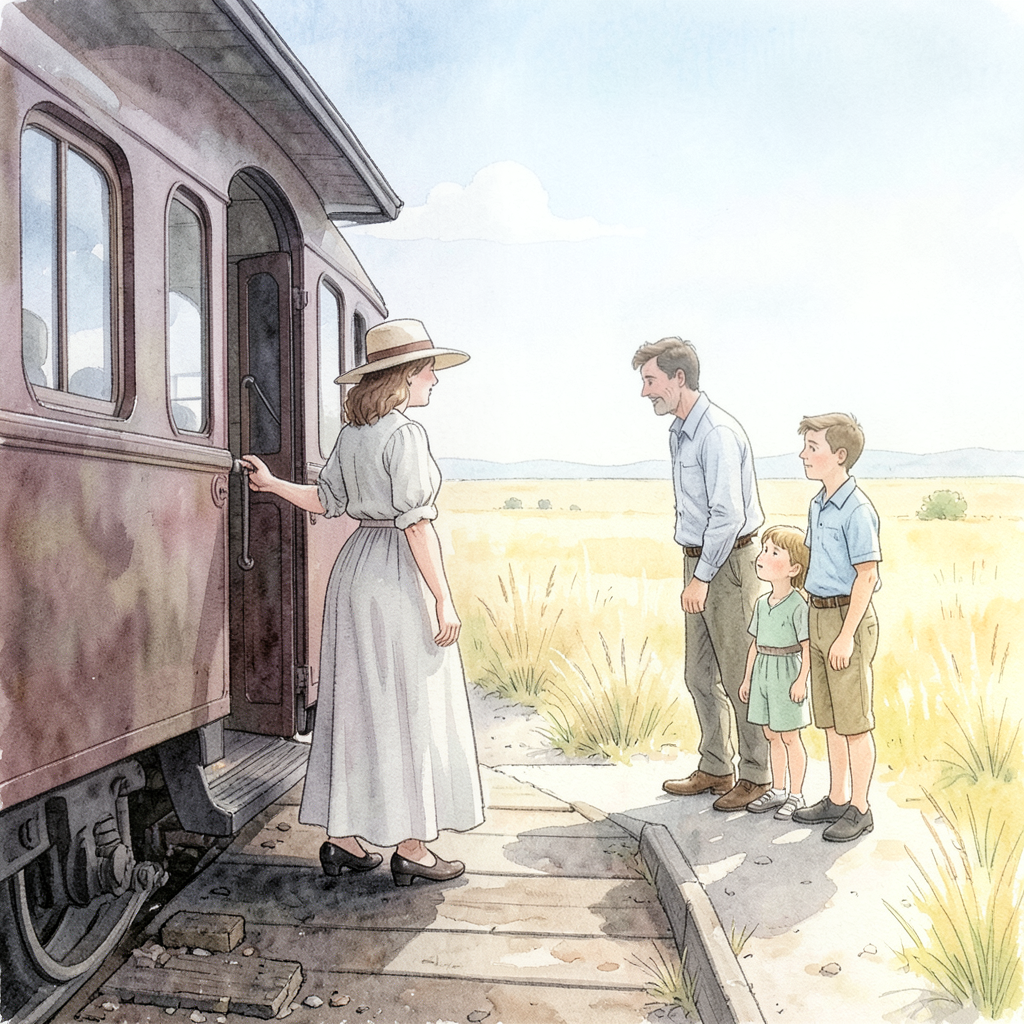
Sarah, Plain and Tall
About This Book
When Papa advertises for a wife, Sarah Elisabeth Wheaton answers his letter from her home in Maine. She comes to the prairie for a trial visit, bringing the colors of the sea. Anna and Caleb wonder if this tall, plain, loving woman will stay — or if she'll miss the ocean too much.
Themes
FamilyBelongingLove
Best For
- Children ages 7-10 reading independently for the first time who need a short, satisfying chapter book
- Families navigating a move, remarriage, or other major household change
- Classroom read-alouds in grades 2-4 as an introduction to historical fiction and point-of-view narration
- Children who love stories set in nature or wide open landscapes
- A gentle first conversation-starter about grief and family belonging
Why Parents Love This Book
Sarah, Plain and Tall is a quiet masterpiece that earns its place in the canon of American children's literature through restraint and precision. Patricia MacLachlan writes in spare, luminous prose that trusts young readers to feel what is not said — the grief of a motherless family, the longing of a woman who has left the sea behind, the fragile hope that holds everything together. The story unfolds through Anna's watchful eyes, making children active interpreters rather than passive observers. What endures is the book's emotional honesty: Sarah is not idealized, the children's longing is not sugar-coated, and the ending is earned rather than guaranteed. At under 100 pages, it reads in a single sitting but leaves an impression that lasts far longer. It is the rare book that makes children feel seen in their own private anxieties about home, change, and whether love is strong enough to hold a family together.
Reading Tips for Parents
This book rewards slow reading aloud with pauses for reflection. Before you begin, show children a photo of the Great Plains and the Maine coast so they can feel the contrast Sarah feels. As you read, pause when MacLachlan uses color — blues, greens, the gray of the sea — and ask your child what Sarah might be picturing. The story is short enough to finish in two or three reading sessions, which helps sustain the emotional arc. After finishing, consider asking your child to write or dictate a short letter as if they were Sarah writing home to Maine. Children who have moved, changed schools, or experienced family transitions will find particular resonance here; be ready to open that conversation gently if it arises.
Awards & Recognition
- Newbery Medal, 1986
- Scott O'Dell Award for Historical Fiction, 1986
Educational Value
This book helps children develop skills across multiple areas:
- Vocabulary: Introduces prairie and coastal landscape words — dune, hearthstone, squall, bonnet — in meaningful context that makes definitions memorable.
- Social-emotional: Explores anxiety about change and belonging; helps children name feelings of uncertainty when family structures shift.
- Literary analysis: MacLachlan's use of color as emotional shorthand is an ideal first lesson in symbolism for readers moving from picture books to chapter books.
- Perspective-taking: The first-person narration through Anna's eyes teaches children to notice what a narrator knows versus what they are guessing.
- History and geography: Set in the late 19th-century American prairie, the book naturally prompts discussion of homesteading life, mail-order customs, and regional geography.
- Writing craft: The book's brevity and precision make it an excellent model for young writers learning that less can be more.
Discussion Questions
Use these questions to spark conversation before, during, or after reading:
- Why do you think Anna and Caleb watch Sarah so carefully throughout her visit? What are they hoping to find out?
- Sarah brings shells and other things from Maine. Why do you think those objects matter so much to her?
- If you had to leave your home and move somewhere very different, what three things would you bring with you and why?
- At the end of the story, how do you think Sarah feels about staying? What clues does the author give you?
- Papa advertises for a wife in a newspaper. Why do you think he did it that way instead of another way? How would you feel if you were Caleb or Anna?
Content Notes for Parents
The story touches on the death of Anna and Caleb's mother, which is referenced with quiet sadness rather than graphic detail, but may prompt emotional conversations for children who have experienced loss. There are no scary, violent, or otherwise concerning elements.
Frequently Asked Questions
What age is Sarah, Plain and Tall best suited for?
The book is generally recommended for ages 7-10 and is commonly taught in grades 2-4. It is short enough for a confident second-grader reading independently and rich enough to reward older readers in a classroom setting. The emotional themes around loss and belonging mean that very sensitive children under 7 may benefit from a parent reading alongside them.
Is there anything upsetting or scary in the book?
The children's mother died before the story begins, and her absence is a quiet presence throughout the book. MacLachlan handles this with great sensitivity — there are no disturbing scenes — but the theme of a missing parent may bring up feelings for children who have experienced loss or family change. It is worth being prepared for that conversation.
How long does it take to read?
The book is approximately 96 pages with large print and wide spacing. Most independent readers ages 7-10 will finish it in one to three sittings. It is an ideal choice when you want a complete, emotionally satisfying story without a multi-week commitment.
What books are similar to Sarah, Plain and Tall that we could read next?
Patricia MacLachlan wrote several sequels — Skylark, Caleb's Story, and More Perfect than the Moon — that follow the same family. For a similar emotional tone and historical setting, try Little House on the Prairie by Laura Ingalls Wilder or Caddie Woodlawn by Carol Ryrie Brink. For readers who loved the quiet introspective voice, The One and Only Ivan by Katherine Applegate offers a similar gentle depth.
Is this a good book to read aloud as a family?
Yes, it is exceptionally well-suited for family read-aloud. The chapters are short and end at natural pausing points, and MacLachlan's prose is beautiful to hear spoken. Parents often find the book as moving as children do, which can make for genuine shared conversation about home, love, and what makes a family.