The Boxcar Children
About This Book
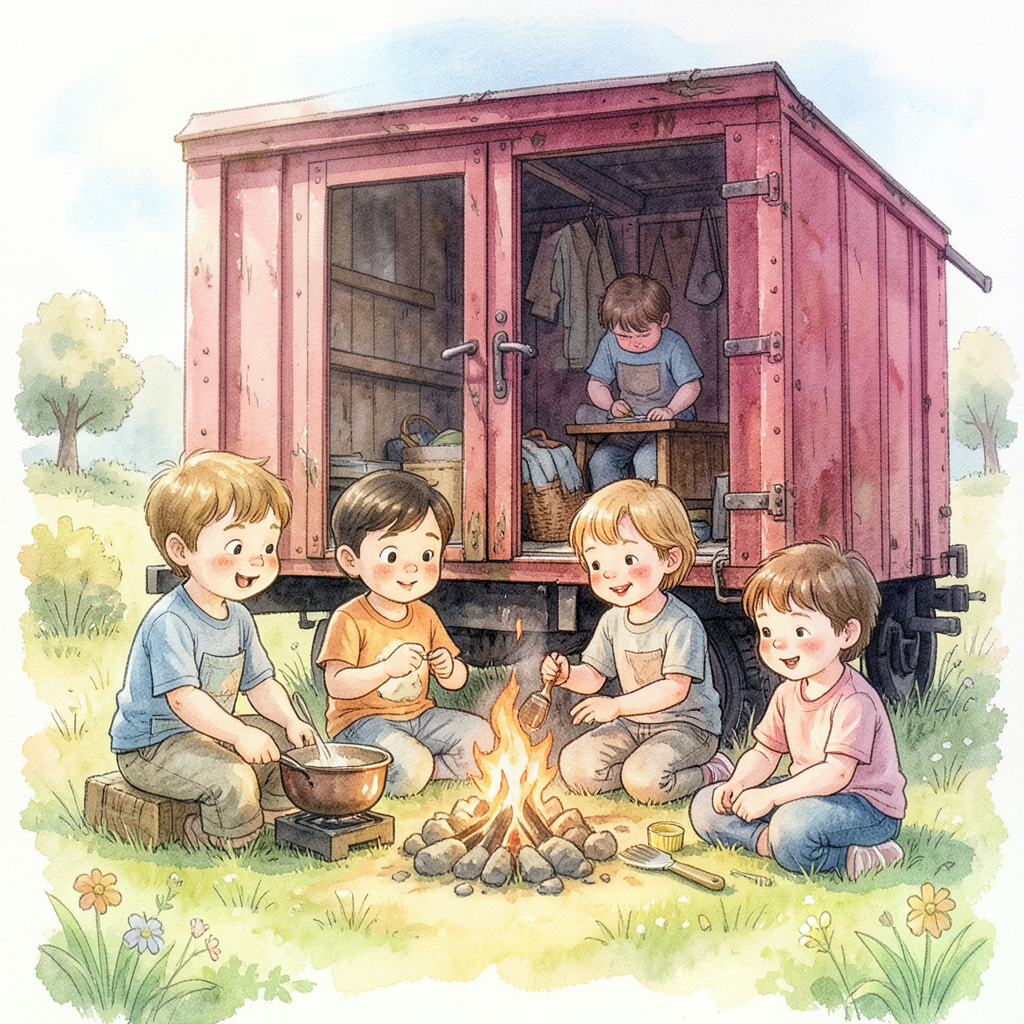
Four orphaned siblings — Henry, Jessie, Violet, and Benny — make a home for themselves in an abandoned boxcar in the woods. They create a cozy life with found objects and odd jobs, unaware that a wealthy grandfather is searching for them.
Themes
FamilyResourcefulnessIndependence
Best For
- Children ages 6-9 who are ready to graduate from early readers to their first real chapter book
- Families who enjoy reading aloud together chapter by chapter over a week or two
- Kids who love cozy, domestic stories as much as — or more than — action-packed adventure
- Encouraging resourcefulness and independence conversations at home or in the classroom
- Summer reading programs looking for a timeless, accessible classic with broad appeal
Why Parents Love This Book
First published in 1924, The Boxcar Children has captivated young readers for over a century — and the reasons are not hard to see. Gertrude Chandler Warner, a schoolteacher who wrote the story from her imagination after years spent near a freight car on her walk to school, created something quietly revolutionary: four children who take care of themselves and each other with ingenuity and warmth rather than panic or helplessness. Henry, Jessie, Violet, and Benny do not wait to be rescued. They haul water from a stream, make dishes from cracked crockery, and turn blueberry picking into a celebration. The boxcar itself becomes one of children's literature's most beloved homes — a symbol of what family and effort can make out of almost nothing. What endures most is the book's emotional tone: cozy rather than grim, hopeful rather than maudlin. Children who read it often finish longing to furnish their own hideaway. It is a quiet adventure story, and that quietness is precisely its power.
Reading Tips for Parents
The Boxcar Children is an ideal bridge book for newly independent readers in grades 2-4. The chapters are short and satisfying, making it perfect for nightly read-aloud sessions of one or two chapters at a time — or for children who are just starting to tackle longer books on their own. Before reading, it helps to briefly explain what an orphan is, since the children's situation (running away from a grandfather they believe to be unkind) is the engine of the plot. Parents may want to pause and ask "What would you do if you were in their shoes?" after the early setup chapters. The domestic problem-solving — how the children find food, build furniture, and organize chores — is a rich source of conversation. Consider pairing the read with a simple outdoor activity, like building a "camp" in the backyard, to channel the book's spirit of resourcefulness.
Awards & Recognition
- Publishers Weekly bestseller — has remained continuously in print since its 1942 revised publication, selling tens of millions of copies
- Launched one of the best-selling children's mystery series in American publishing history, with over 150 titles in the Boxcar Children series
Educational Value
This book helps children develop skills across multiple areas:
- Vocabulary: Introduces context-rich words like 'ingenious,' 'makeshift,' and 'provisions' in a narrative setting where meaning is easy to infer, building reading confidence.
- Social-emotional: Models cooperation, sibling loyalty, and calm problem-solving under stress — children see conflict resolved through communication and shared effort rather than conflict.
- Life skills / practical reasoning: The children's domestic arrangements (rationing food, dividing labor, managing money from odd jobs) give young readers an early, concrete introduction to household economics.
- History and context: Set in the early 20th century, the book naturally prompts discussion about how daily life, child labor, and family structures differed a hundred years ago.
- Reading stamina: Short chapters with clear cause-and-effect structure make this an excellent training ground for readers moving from picture books to longer chapter books.
- Critical thinking: The children's mistaken assumption about their grandfather introduces the concept of prejudgment and how incomplete information shapes decisions.
Discussion Questions
Use these questions to spark conversation before, during, or after reading:
- Why do Henry, Jessie, Violet, and Benny decide to live in the boxcar instead of going to their grandfather's house? Do you think they made the right decision?
- The children have to find or make almost everything they need. What was the most clever thing they did to take care of themselves? What would you have done differently?
- If you could furnish your own secret hideout with found objects, what three things would you most want to find and why?
- How do the four siblings share responsibilities? Which role — Henry's, Jessie's, Violet's, or Benny's — would suit you best, and why?
- Were you surprised by how the story ends with their grandfather? What does the ending tell you about judging people before you know them?
Content Notes for Parents
The four children are orphans who run away from a grandfather they fear, and the early chapters carry a mild undercurrent of anxiety about homelessness and being alone in the world — sensitive children may find this briefly unsettling, though the tone remains warm and hopeful throughout. There is no violence, no scary content, and the story resolves happily; it is suitable for most readers in the target age range.
Frequently Asked Questions
What age is The Boxcar Children really appropriate for?
Most children enjoy The Boxcar Children somewhere between ages 6 and 10. As an independent read, it suits confident readers in grades 2-4. Younger children (ages 5-7) often love it as a parent read-aloud. The vocabulary and sentence structure are accessible, and the chapters are short enough to hold attention without overwhelming early readers.
Is the story too sad or scary for younger children?
The premise — four orphaned children living alone in the woods — sounds more alarming than it reads. Warner's tone is consistently warm, practical, and optimistic. There are no frightening scenes, no death depicted on the page, and the story resolves with the children finding a loving home. Sensitive children may need a brief reassurance that the story has a happy ending before they begin.
My child loved this book. What should we read next?
The most natural next step is the rest of the Boxcar Children series, which continues with the same siblings taking on new mysteries. Outside the series, similar reads include My Father's Dragon by Ruth Stiles Gannett, The Penderwicks by Jeanne Birdsall, and the Little House books by Laura Ingalls Wilder — all share the cozy, family-centered adventure feel.
Is this the original 1924 version or a rewritten one?
Most editions in print today are the 1942 revised version, which Gertrude Chandler Warner substantially rewrote from her original 1924 text to make it more accessible and to soften some harsher plot elements. The 1942 version is the one most readers know and the one your child is likely to encounter at a library or bookstore.
Can this book be used in a classroom setting?
Yes — it is a popular choice for grades 2-4 classroom read-alouds and literature circles. It supports discussions about family, cooperation, and resilience, and the early 20th-century setting connects naturally to social studies units on American history and daily life. The short chapter structure also makes it easy to pace across a two- to three-week unit.