The Boy Who Picked Up Stones: A Story of Bhagat Puran Singh
About This Book
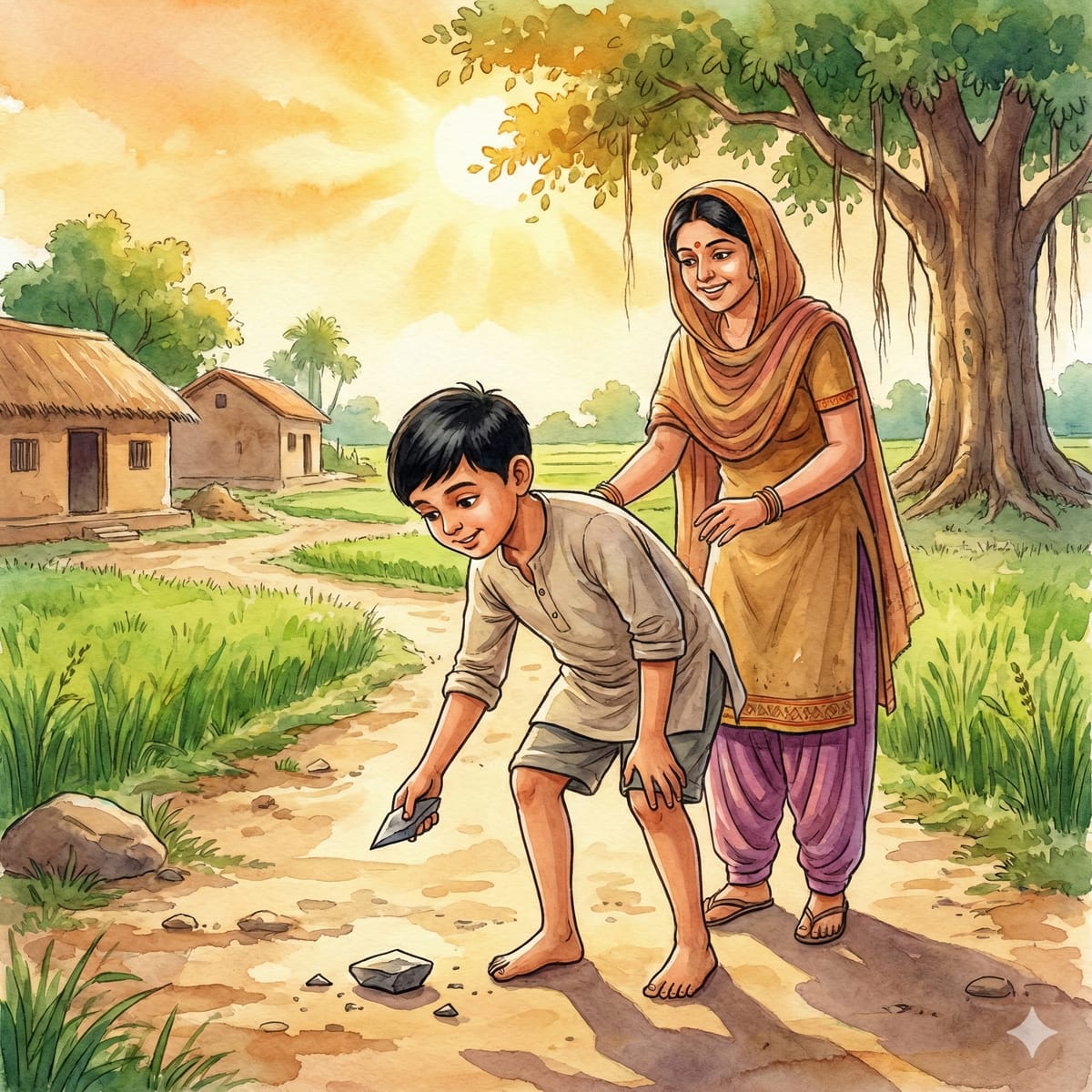
When his mother teaches young Ramji Das to pick sharp stones off the road so no one else gets hurt, she plants a seed that grows into a lifetime of selfless service. This gentle origin story of Bhagat Puran Singh — who would go on to found Pingalwara and care for thousands of the forgotten — shows how seva begins with one small, compassionate act.
Themes
KindnessServiceCompassion
Best For
- Families who want to introduce the concept of seva and Sikh values of selfless service to young children
- Parents looking for a biography that meets ages 4-7 where they actually are — in childhood moments rather than adult achievements
- Classroom or library read-alouds paired with a discussion about community helpers and everyday kindness
- Children who respond well to quiet, character-driven stories rather than action-heavy plots
- Families with roots in Punjab or a connection to Sikh history who want to share a meaningful cultural figure with their children
Why Parents Love This Book
What elevates this picture book above a simple biography is its focus on a single quiet moment: a mother and her young son clearing sharp stones from a dirt road so strangers won't be hurt. That one act, taught by a mother's gentle example, becomes the root of a lifetime devoted to caring for the abandoned and forgotten. Most books about great humanitarians leap straight to adult achievement. This one slows all the way down to childhood — to the moment when a value is first planted — and trusts young readers to feel its weight. Bhagat Puran Singh, who would go on to found Pingalwara in Amritsar and spend decades tending to people society had discarded, began here: with stones on a road and a mother who showed him what seva looks like in its smallest, most honest form. The story is quiet, warm, and surprisingly moving — a reminder that big lives grow from very small seeds.
Reading Tips for Parents
Before reading, you can ask your child if they have ever moved something dangerous out of the way for someone else — a rock, a wet floor, a toy on the stairs. That simple anchor makes the story immediately personal. As you read, pause after the mother explains why she picks up the stones; let the idea breathe before turning the page. After finishing, you might take a short walk together and invite your child to notice anything that could hurt someone and decide what to do about it. The book pairs naturally with a brief, age-appropriate conversation about Pingalwara — even just explaining that Bhagat Puran Singh grew up to run a home for people who had nobody to care for them makes the childhood scene feel both meaningful and consequential.
Awards & Recognition
- No major awards have been publicly verified for this 2024 title at this time.
- Published 2024 — award eligibility cycles are ongoing and no verified recognitions are confirmed as of this writing.
Educational Value
This book helps children develop skills across multiple areas:
- Social-emotional learning: Introduces empathy in its most concrete, physical form — removing harm from another person's path — making the concept accessible to young children.
- Character education: Models how values are transmitted from parent to child through everyday action rather than lecture, opening discussion about family traditions of kindness.
- History and biography: Provides an age-appropriate first introduction to Bhagat Puran Singh and the founding spirit behind Pingalwara, a real humanitarian institution in Amritsar.
- Vocabulary: Gently introduces the Punjabi concept of seva (selfless service) in context, giving children a meaningful word to attach to the idea of helping without expectation of reward.
- Cause and effect: The narrative arc — one childhood act leading to a lifetime of service — helps early readers practice thinking about how small choices can have long-term consequences.
- Listening and prediction: The understated storytelling rewards attentive listeners who are encouraged to connect the childhood moment to the larger story hinted at in the closing pages.
Discussion Questions
Use these questions to spark conversation before, during, or after reading:
- Why did Ramji Das's mother pick up the sharp stones from the road? What was she trying to do for people she didn't even know?
- Have you ever done something kind for a stranger — or seen someone else do it? How did it make you feel?
- The story shows that one small act of kindness can grow into something very big. Can you think of a small kind thing you could do today?
- Why do you think the author chose to start Bhagat Puran Singh's story when he was a little boy, instead of when he was a grown-up?
- If you were walking and found something sharp on the path, what would you do — and why?
Content Notes for Parents
There are no scary, violent, or age-inappropriate elements in this book. Parents should be aware that the story briefly alludes to Bhagat Puran Singh's adult work caring for people who were sick, disabled, and abandoned, which may prompt gentle questions about poverty and illness that caregivers should be prepared to address simply.
Frequently Asked Questions
What age is this book best suited for?
The book is written for children ages 4 to 7 and is categorized as a beginning reader. The vocabulary and page length are well matched to read-aloud sessions with preschoolers and kindergarteners, and early independent readers in first or second grade should find it comfortable on their own.
Do we need to be Sikh to connect with this story?
Not at all. While the book draws on the Sikh value of seva and introduces a real figure from Sikh history, the core lesson — that we can ease other people's pain through small, deliberate acts of kindness — is universal. Families of any background will find the central message immediately relatable.
Is there anything in the book that might be upsetting for sensitive children?
The book is gentle and warm throughout. The only element that might spark harder questions is the brief reference to Bhagat Puran Singh's adult work helping people who were sick or had been abandoned — but this is handled with care and is far more likely to inspire compassion than distress.
How can I use this book to extend the learning beyond reading time?
The most natural extension is a simple act of service: take a walk with your child and invite them to notice anything that could be improved for others — litter, a gate left open, a neighbor who might need help. The book also opens the door to age-appropriate conversations about Pingalwara if your child is curious about what Bhagat Puran Singh built as an adult.
Are there similar books you would recommend alongside this one?
Families who enjoy this book often appreciate other quiet, value-centered picture book biographies that focus on a single defining childhood moment. Books about figures who dedicated their lives to serving marginalized communities pair especially well thematically, as does any picture book that centers the parent-child relationship as the source of a child's moral compass.