The Good Egg
About This Book
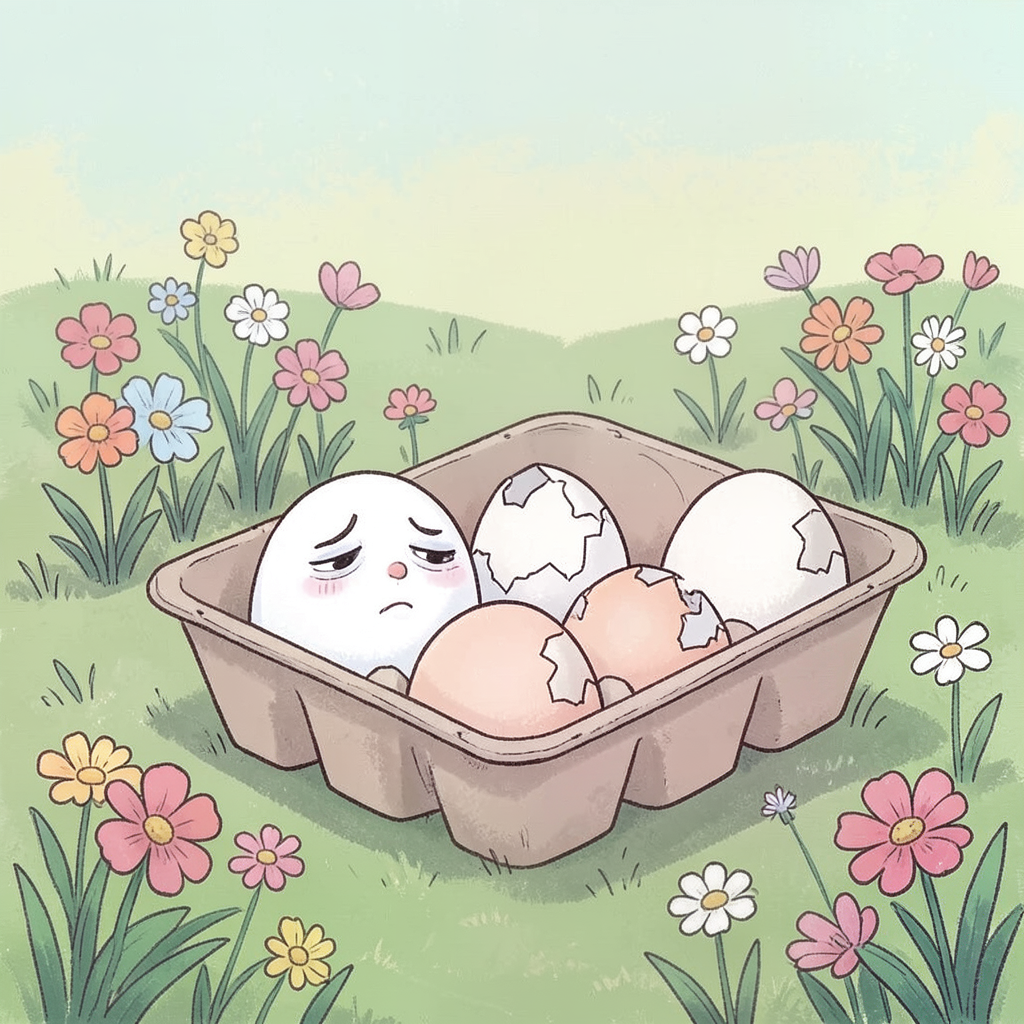
The good egg tries so hard to be perfectly good, all the time, that he eventually cracks under the pressure. He needs to take a break, stop trying to fix everyone around him, and learn that nobody — not even a good egg — needs to be perfect. A funny, quietly wise story about self-compassion and the trap of perfectionism.
Themes
PerfectionismSelf-CareKindness
Best For
- Children who tend toward perfectionism or anxiety about making mistakes
- Kids who take on responsibility for other people's feelings or behavior
- Classroom read-alouds on social-emotional learning and self-care
- A follow-up pairing with The Bad Seed by the same author and illustrator
- Families looking for a funny, low-pressure way to open conversations about burnout and personal limits
Why Parents Love This Book
The Good Egg stands out in a sea of "be kind" picture books because it goes one step further and asks: what happens when being good becomes exhausting? Jory John and Pete Oswald take a premise that could easily feel preachy and spin it into something genuinely funny and quietly profound. The good egg burns out not from doing bad things, but from trying to do everything right all the time — picking up litter that isn't his, fixing problems that aren't his to fix, carrying the weight of every imperfection around him. That specific kind of burnout is remarkably relatable to both children and adults. Pete Oswald's bold, expressive illustrations bring the egg's strained smile and eventual collapse to life with warmth and humor. By the end, the message lands with grace: you can be a good person without being a perfect one, and taking care of yourself is not the same as giving up on goodness. It's a rare book that speaks directly to anxious, high-achieving children while also giving their parents something to think about.
Reading Tips for Parents
Before reading, ask your child if they've ever felt tired from trying too hard to be good or to fix things around them — this primes them to connect personally with the egg's journey. Pause at the moment the egg "cracks" and let children notice the illustration detail before you read the text. After the egg goes on his solo trip, ask: "What do you do when you need a break?" This is a natural opening to discuss healthy self-care habits without it feeling like a lecture. The book works especially well for children who tend toward perfectionism or people-pleasing, but keep the conversation light — the story's humor does the heavy lifting. You don't need to hammer the message; just let them sit with it.
Awards & Recognition
- New York Times Bestseller
- #1 New York Times Bestselling Series (The Bad Seed series)
Educational Value
This book helps children develop skills across multiple areas:
- Social-emotional learning: Introduces the concept of perfectionism and burnout in age-appropriate, concrete terms that young children can recognize in themselves.
- Vocabulary: Words like 'exhausted,' 'pressure,' 'imperfect,' and 'self-care' appear in context and are supported by illustrations that make their meanings accessible.
- Perspective-taking: Encourages children to consider why someone might act badly — the other eggs have flaws, but the story invites empathy rather than judgment.
- Critical thinking: Challenges the simple equation of 'being good = always doing more,' asking children to think about limits and balance.
- Emotional regulation: Models that stepping away from stressors is a healthy and responsible choice, not a failure or act of selfishness.
Discussion Questions
Use these questions to spark conversation before, during, or after reading:
- Why do you think the good egg felt like it was his job to fix all the other eggs?
- Have you ever felt really tired from trying to be good or do everything right? What did that feel like?
- What did the good egg do to feel better? What do YOU do when you need a break?
- At the end, the good egg is still good — but something has changed. What is different about how he acts now?
- If you were friends with the good egg, what would you have told him before he cracked?
Content Notes for Parents
There are no scary, violent, or mature elements in this book. The egg's "cracking" is depicted metaphorically and humorously, not in a distressing way, and the overall tone is warm and reassuring throughout.
Frequently Asked Questions
What age is The Good Egg best for?
The book is ideal for ages 4 to 7 as a read-aloud, with the humor and illustrations doing most of the work. Older children up to age 9 or 10 who struggle with perfectionism may connect with the themes even more personally, and it reads well independently at that level.
Is this part of a series?
Yes. The Good Egg is a companion to The Bad Seed (2017) and The Cool Bean (2019), all by Jory John and Pete Oswald. Each book features a different food character working through a social-emotional challenge. They work as stand-alones but are fun to read together.
Are there any upsetting moments I should prepare my child for?
The egg does 'crack' under pressure, but this is handled with gentle humor and warmth — it reads more like a cartoon pratfall than a distressing event. The story resolves happily and reassuringly, so sensitive children should be fine.
How can I use this book with a child who is hard on themselves?
Rather than pointing directly at the child's behavior, let the story do the work first. After reading, ask open questions about the egg's feelings rather than drawing immediate parallels to your child. Over time, you can use 'remember the good egg' as a gentle, shared shorthand when they seem to be putting too much pressure on themselves.
What books are similar to The Good Egg?
The Bad Seed and The Cool Bean by the same creative team are natural companions. For similar themes of self-acceptance and managing expectations, try Beautiful Oops! by Barney Saltzberg, The Most Magnificent Thing by Ashley Spires, or After the Fall by Dan Santat.