The Story of Ferdinand
About This Book
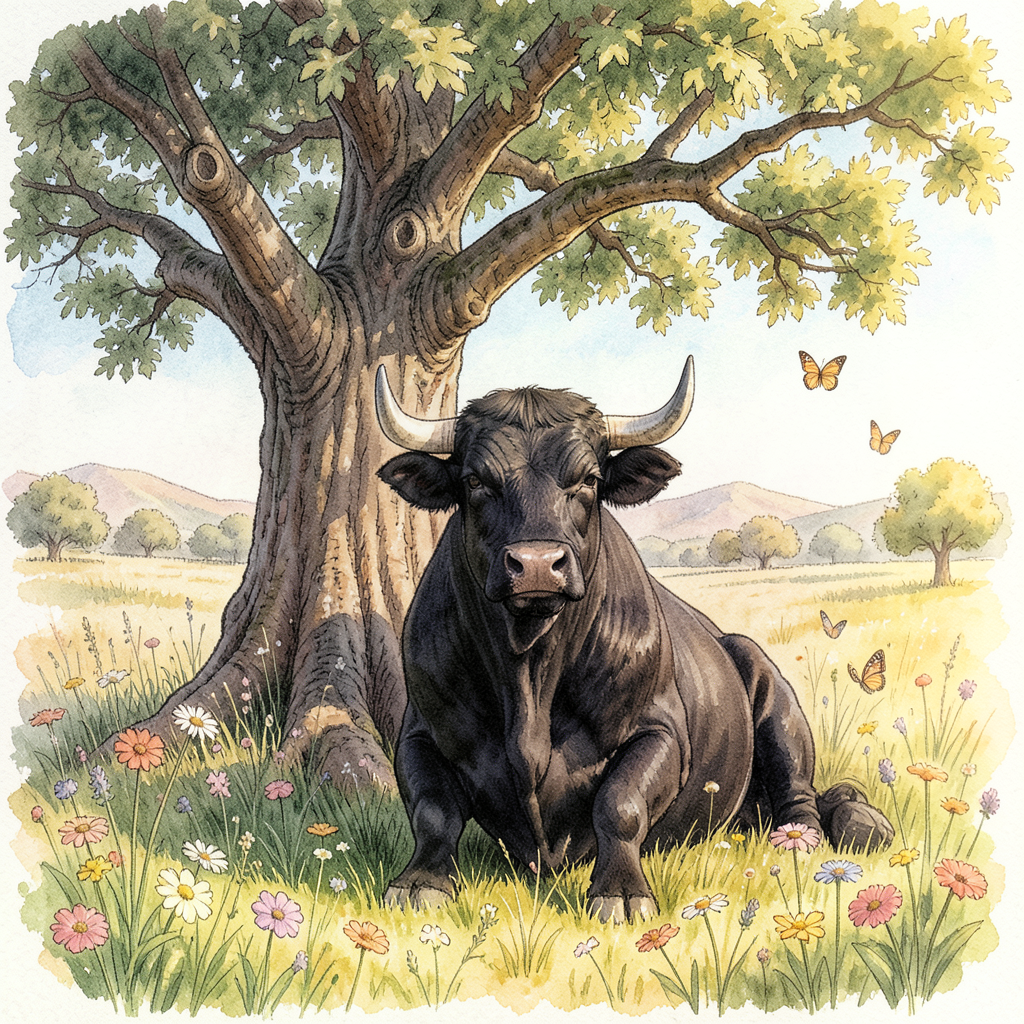
Ferdinand is a young bull in Spain who would rather sit quietly under a cork tree and smell flowers than run and butt heads with the other bulls. When he accidentally sits on a bee and his wild reaction gets him selected for the bullfight, he simply sits in the ring and smells the flowers.
Themes
IndividualityPeaceSelf-Acceptance
Best For
- Children who feel pressure to act like their peers or join activities they do not enjoy
- Quiet or introverted children who need to see their temperament reflected and celebrated in a story
- Read-alouds with ages 4 through 7, especially in preschool or kindergarten classrooms discussing individuality
- Families looking for a classic picture book with humor, warmth, and lasting staying power
- Introducing children to settings beyond their own country, with Spain as a gentle starting point
Why Parents Love This Book
Published in 1936, "The Story of Ferdinand" has remained in continuous print for nearly ninety years, and for good reason. Munro Leaf's story of a large, gentle bull who simply refuses to be something he is not captures something rare in children's literature: the quiet dignity of knowing yourself. Ferdinand does not fight his nature or feel ashamed of preferring flowers to fighting. He just sits. That simple act — sitting peacefully in the middle of a bullfighting ring while the crowd gasps around him — is one of the most quietly powerful moments in any picture book. Robert Lawson's detailed pen-and-ink illustrations give warmth and wry humor to the story, making Ferdinand himself utterly lovable. The book never lectures children about being different or kind. It simply shows a character who is so comfortable in his own skin that no pressure from the outside world can change him. That confidence, delivered without preachiness, is what makes this story feel timeless and true.
Reading Tips for Parents
Before reading, point out Spain on a globe or map — it gives young children a small sense of place and adventure. As you read, give Ferdinand a low, calm voice, contrasting it with the excited voices of the other bulls. This helps children feel the difference between Ferdinand's peaceful nature and the bustle around him. Pause on the bullfight scene: many children find it funny that Ferdinand simply sits and smells flowers, but take a moment to name what is happening in the ring so nothing feels confusing. After reading, invite your child to name something they love doing that is quiet or different from what their friends enjoy. The book opens naturally into a conversation about not needing to change who you are to please others, without parents needing to force that message.
Awards & Recognition
- Caldecott Honor Book, 1938 (illustrated by Robert Lawson)
- New York Times Best Illustrated Children's Book of the Year, 1938
- Has remained continuously in print since its 1936 publication, a rare distinction in children's publishing
Educational Value
This book helps children develop skills across multiple areas:
- Social-emotional learning: Models gentle self-acceptance and the courage to remain true to one's own nature under social pressure, without framing it as conflict.
- Vocabulary: Introduces words like cork tree, matador, banderilleros, and picadores in natural context, offering a rich opportunity to discuss Spanish bullfighting traditions.
- Cultural awareness: Set in Spain, the book introduces children to another country, landscape, and cultural tradition in an accessible, story-driven way.
- Narrative comprehension: The story follows a clear cause-and-effect chain — bee sting leads to selection leads to the ring — giving children practice tracking story logic.
- Character study: Ferdinand is a strong example of a character with consistent inner values, helping children understand how characters stay the same across changing situations.
- Critical thinking: The humor of the ending invites children to consider what "winning" or "being strong" can mean — a quiet bull who refuses to fight wins in his own way.
Discussion Questions
Use these questions to spark conversation before, during, or after reading:
- Why do the other bulls want to run and butt heads, but Ferdinand does not? What does Ferdinand like to do instead?
- What happens when Ferdinand sits on the bee? How does sitting on a bee end up changing his whole day?
- When Ferdinand is in the big bullfighting ring, everyone expects him to fight. What does he do instead? How do you think he felt sitting there?
- Can you think of something you like to do that your friends might not be as interested in? Does that make it less fun for you?
- If you were one of the people watching the bullfight that day, what would you have thought when Ferdinand just sat down and sniffed the flowers?
Content Notes for Parents
The book includes a bullfighting setting, and the men in the ring with capes, swords, and elaborate costumes are depicted in Robert Lawson's illustrations. No violence occurs — Ferdinand refuses to engage — but parents of very sensitive children may want to briefly explain what a bullfight is before reading. There are no other content concerns.
Frequently Asked Questions
What age is this book best for?
The Story of Ferdinand is most commonly recommended for children ages 4 through 7. The vocabulary and story length suit preschool through early elementary readers well. Older children who love classics or who are particularly thoughtful about characters may also enjoy it independently at ages 8 or 9.
Is the bullfighting content too scary or confusing for young children?
For most children ages 4 and up, no. The bullfighting setting is present in the illustrations, but no violence takes place — Ferdinand refuses to fight, and he is simply sent home. Sensitive children may benefit from a brief explanation beforehand that bullfighting is a tradition in Spain, but the story itself handles the topic with humor rather than darkness.
Why was this book considered controversial when it was published?
When it came out in 1936, some readers read political messages into Ferdinand's refusal to fight — seeing it as either pacifist or fascist propaganda, depending on the reader's viewpoint. Munro Leaf always maintained he wrote it simply as a story about a bull who liked flowers. Today it is universally read as a celebration of individuality and gentleness.
Are there similar books I could pair with this one?
Good pairings include Leo Lionni's "Frederick," about a mouse who gathers colors and words instead of food for winter, and "Chrysanthemum" by Kevin Henkes, about a child who loves her unusual name despite teasing. Both share Ferdinand's theme of a character whose inner nature sets them apart in a positive way.
Is this a good book to read in a classroom setting?
Yes, it works very well in preschool and kindergarten classrooms. The story is short enough for a single sitting, the illustrations are detailed enough for group sharing, and the themes of individuality and self-acceptance connect naturally to social-emotional learning goals. It also opens easy discussions about the idea that being different is not a problem to fix.