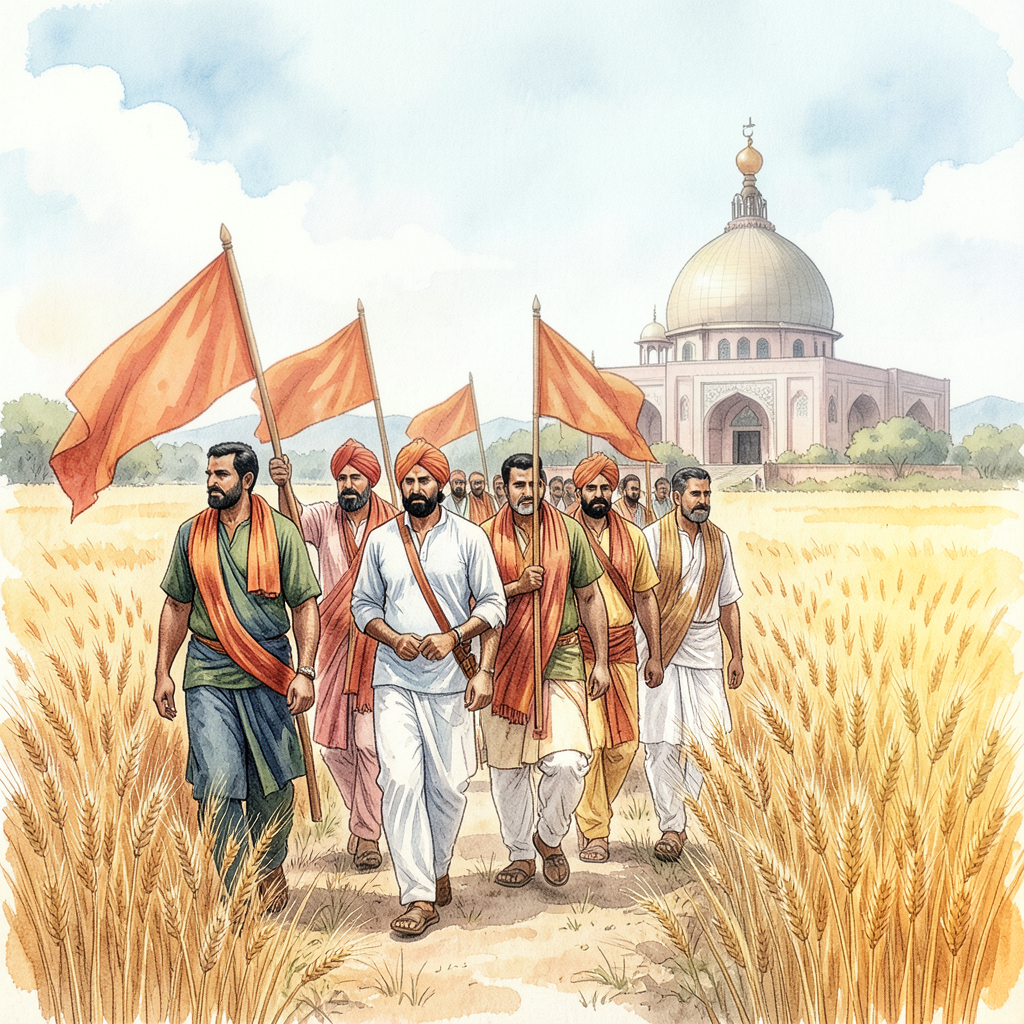
The Story of Jaito Da Morcha
About This Book
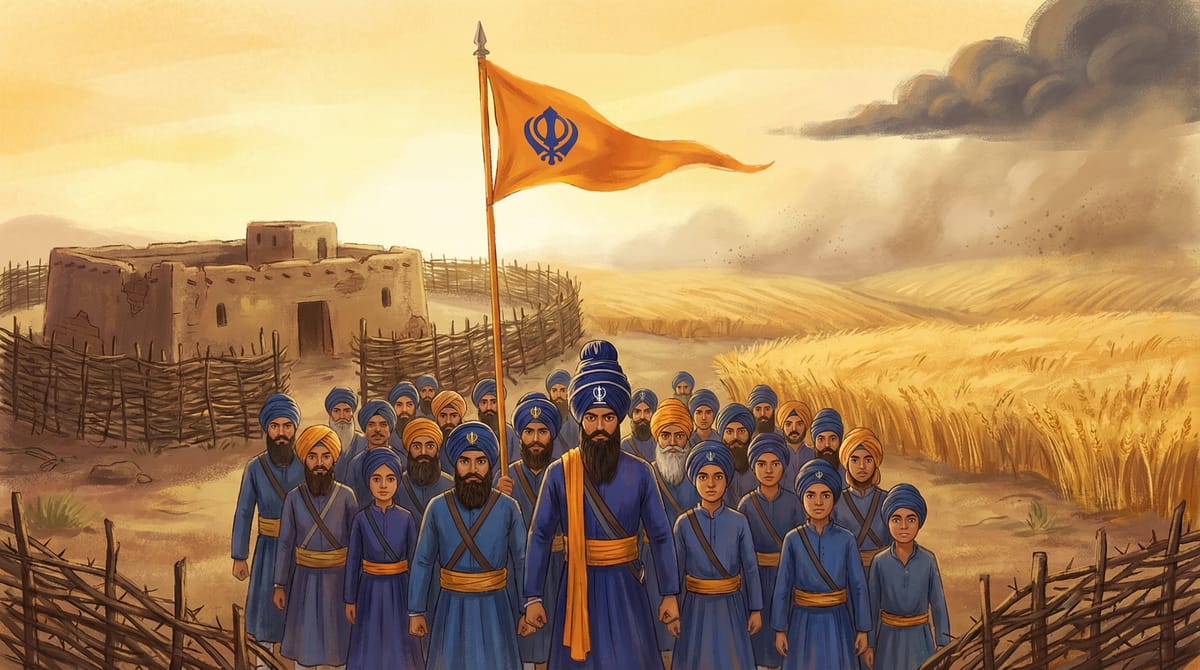
In the 1920s, when the colonial government tried to stop an unbroken recitation of Gurbani at Gurdwara Gangsar Jaito, thousands of Sikhs walked peacefully in jathas — group after group, wave after wave — accepting lathi blows and arrest rather than give in. This is the remarkable true story of how love, non-violence, and sheer steadiness won the day.
Themes
Sikh HistoryNon-ViolenceCourage
Best For
- Sikh families wanting to share their history with young children in an age-appropriate way
- Classroom or home discussions about non-violent protest and peaceful resistance
- Children ages 5-7 who are beginning to understand concepts of fairness and injustice
- Paired reading alongside other books about Gandhi, Rosa Parks, or civil rights movements
- Families observing Sikh historical commemorations and gurpurabs related to the Gurdwara Reform Movement
Why Parents Love This Book
What sets this picture book apart is how it brings one of Sikh history's most quietly heroic episodes to young readers without softening the truth or turning it into spectacle. The Jaito Morcha of the 1920s is a story of extraordinary moral courage — thousands of ordinary Sikhs walking forward in jathas, group after group, to accept lathi blows and imprisonment rather than allow colonial authorities to silence the continuous recitation of Gurbani at Gurdwara Gangsar Jaito. What makes this account so powerful for young children is its emphasis on steadiness over drama. Nobody fights back. Nobody runs. They simply keep walking, keep coming, wave after wave. That image — of people who love something so deeply they will absorb pain rather than surrender it — is both age-appropriate and deeply moving. For Sikh families, this is a vital piece of living history. For any family, it is an invitation to talk about what non-violence really looks like when it takes real courage to practice it.
Reading Tips for Parents
Before reading, briefly tell your child that this story happened in real life in the 1920s, when India was under British rule and Sikhs had their own leaders trying to protect their places of worship. Explain what a gurdwara is and what Gurbani means if your child does not already know. The word "jatha" appears throughout — explain it simply as a group of people walking together with a shared purpose. During reading, pause when each jatha is struck or arrested and ask your child how they think the people walking behind felt. After reading, connect the non-violent action here to other peaceful protest movements your child may have heard of. Keep the tone calm rather than angry — the book's message is one of love and steadiness, not outrage.
Awards & Recognition
- No major mainstream awards (such as Caldecott or Newbery) are associated with this title
- Published 2024 by Maastarji — award history is not yet established at time of cataloging
Educational Value
This book helps children develop skills across multiple areas:
- History: Introduces the 1920s Sikh Gurdwara Reform Movement and the specific Jaito Morcha, grounding children in a real chapter of South Asian colonial history.
- Social-emotional learning: Models non-violent resistance, showing children that courage does not require aggression and that steadiness under pressure is a form of strength.
- Vocabulary: Words like jatha, morcha, Gurbani, and gurdwara build Punjabi and Sikh religious vocabulary in context, making them accessible rather than intimidating.
- Civic values: Opens discussion of why people protest, what civil disobedience means, and how communities protect the things they hold sacred.
- Sequencing and narrative structure: The wave-after-wave structure of the jathas gives early readers a clear, repeating pattern to track, supporting comprehension skills.
Discussion Questions
Use these questions to spark conversation before, during, or after reading:
- Why did the Sikhs keep sending more jathas even after the first group was stopped? What does that tell you about what they believed in?
- Have you ever had to be brave without fighting back? What did that feel like?
- Why do you think the colonial government wanted to stop the Gurbani recitation? Was that fair?
- If you were in one of the jathas, what would you be thinking as you walked toward the gurdwara?
- What does this story teach us about how people can stand up for something they love?
Content Notes for Parents
The book depicts peaceful protesters being struck with lathis (batons) and arrested by colonial authorities, which is historically accurate and handled with age-appropriate restraint rather than graphic detail. Parents of very sensitive children ages 4-5 may want to preview the scenes of physical confrontation and frame them gently before reading aloud together.
Frequently Asked Questions
Is this book appropriate for 4-year-olds, or is the history too complex?
The book is written for ages 4-7, but the youngest end of that range will need more parental context-setting. A 4-year-old can grasp the core emotional message — people kept walking because they loved their gurdwara — without needing to understand the full political history. Save the deeper colonial history discussion for ages 6 and up.
My child is not Sikh. Will they still connect with this story?
Yes. The themes of standing up for something you love, not fighting back even when it is hard, and ordinary people doing brave things together are universal. The Sikh context is specific and worth explaining, but the emotional core of the story speaks across backgrounds. It pairs naturally with discussions of other peaceful protest movements your child may already know.
Does the book explain what a morcha or jatha is?
The book uses these Punjabi terms in context, which helps children absorb them naturally. A brief parent explanation before reading — a morcha is a peaceful campaign, a jatha is a group walking together — will make the story much clearer for children unfamiliar with the terms. The glossary, if included, is worth reviewing in advance.
Are the scenes of protesters being hit too scary or upsetting for young children?
The depiction is historically honest but handled with restraint appropriate for a picture book. Most children ages 5 and up handle it well, especially when a parent frames it as a story of bravery rather than violence. Very sensitive 4-year-olds may find it unsettling, so a preview read is recommended for that age.
What other books pair well with this one?
For Sikh history, other Maastarji titles on Sikh figures and events pair naturally. For the broader theme of non-violent resistance, picture books about Gandhi, the Salt March, or the American civil rights movement make excellent companions and help children see this as part of a global pattern of peaceful courage.