The True Confessions of Charlotte Doyle
About This Book
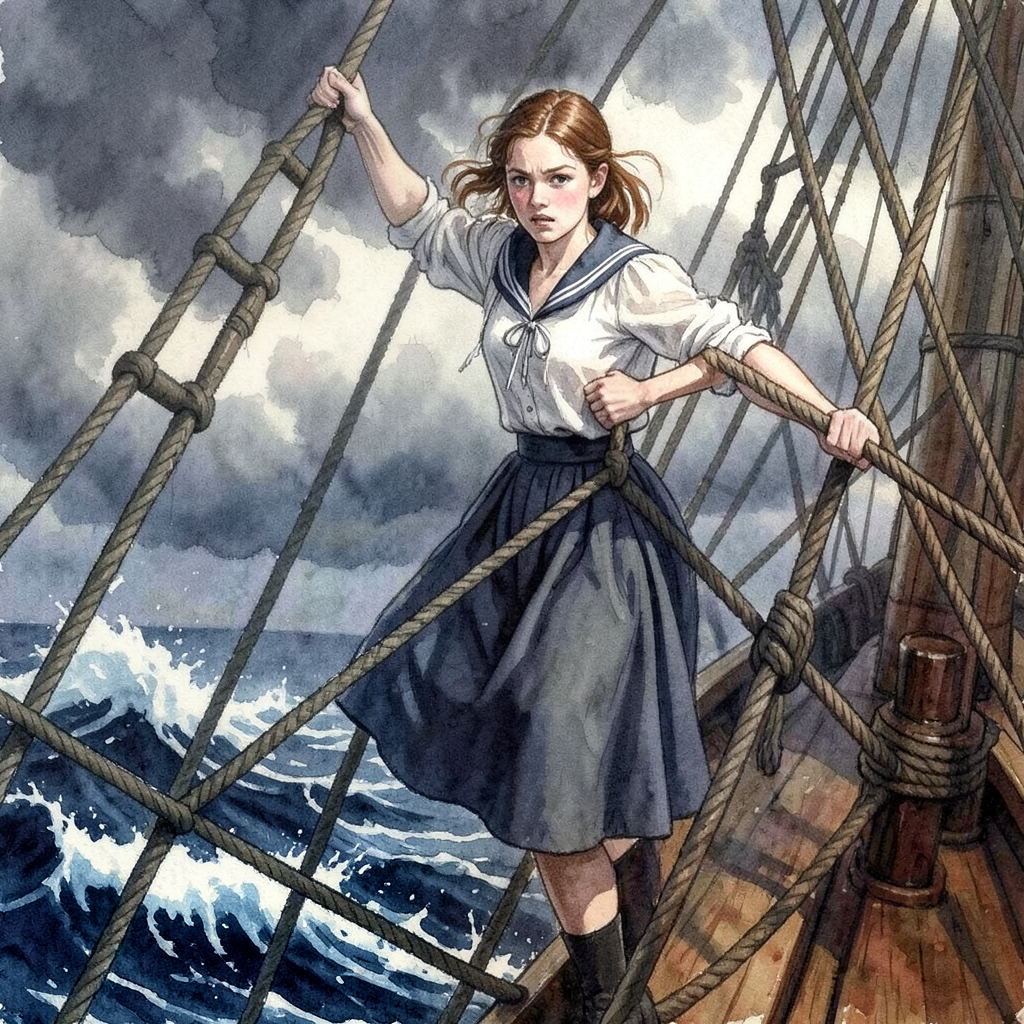
In 1832, thirteen-year-old Charlotte Doyle boards a ship bound from England to America expecting a safe, proper voyage — and finds herself in the middle of a mutiny, accused of murder, and forced to choose sides. Avi's Newbery Honor thriller is a brilliant upending of Victorian propriety, a story about class, loyalty, and a girl who discovers she is not who she thought she was.
Themes
AdventureJusticeComing of Age
Best For
- Strong readers ages 10-12 who are ready for moral complexity in their fiction
- Children who loved action-adventure but are ready to move beyond plot-only stories
- History or sailing enthusiasts looking for immersive historical fiction
- Book clubs or classroom read-alouds where the trial and mutiny scenes can generate discussion
- Kids who identify as rule-followers or people-pleasers and are ready to question that identity
Why Parents Love This Book
The True Confessions of Charlotte Doyle earns its place as one of the great adventure novels for young readers by doing something genuinely surprising: it starts with a perfectly proper Victorian girl and systematically dismantles every expectation she — and we — bring to the story. Charlotte boards the Seahawk in 1832 as a prim, rule-following daughter of a wealthy merchant, and Avi slowly, deliberately strips away her assumptions about class, obedience, and what a young woman is supposed to be. The story moves at an almost thriller-like pace, with a crew hiding secrets, a captain who is something far darker than he seems, and a mutiny that forces Charlotte to choose between safety and conscience. What lingers long after the last page is not just the adventure but the moral weight of it: the cost of telling the truth, the loyalty owed to those who treat us with dignity, and the courage required to become a different person than the one you were raised to be. Avi never condescends to his readers.
Reading Tips for Parents
This book rewards reading aloud for a chapter or two before handing it to a child independently — Avi's opening chapters establish Victorian social conventions that benefit from a brief conversation about the historical context. Before starting, it helps to explain the rigid class hierarchy aboard 19th-century ships and why an accusation of murder would carry such extreme consequences for a girl like Charlotte. The novel builds slowly for the first few chapters, so encourage reluctant readers to push through to Chapter 4, where tension escalates quickly and most children become hooked. After finishing, ask your child which moment felt like Charlotte's true turning point — there is genuine disagreement about this, and the discussion reveals a lot about how a child thinks about identity and courage.
Awards & Recognition
- Newbery Honor Book, 1991
- ALA Notable Children's Book
Educational Value
This book helps children develop skills across multiple areas:
- Historical context: Immerses readers in 1832 transatlantic sailing life, Victorian social class, and the rigid gender expectations placed on girls of privilege
- Vocabulary: Rich period-appropriate language — rigging terminology, nautical commands, and formal 19th-century diction expand reading range significantly
- Critical thinking: Charlotte's reliability as a narrator invites readers to question point of view, consider bias, and evaluate evidence — ideal for introducing literary analysis
- Social-emotional learning: Explores conscience, moral courage, and the cost of standing up against authority when it is wrong
- Justice and ethics: The trial sequence provides a natural entry point for conversations about fairness, evidence, and how social power shapes outcomes
- Coming-of-age themes: Examines identity formation and the tension between the self others expect and the self a person chooses to become
Discussion Questions
Use these questions to spark conversation before, during, or after reading:
- Why does Charlotte initially side with Captain Jaggery instead of the crew? What does that tell us about how she was raised?
- Was Charlotte right to testify at the trial the way she did, even knowing the risk to herself? What would you have done?
- How does Charlotte change from the beginning of the voyage to the end? Pick one specific moment where you felt her change.
- The book is written as Charlotte's own account of what happened. Do you trust her as a narrator? Are there places where you think she might be leaving something out?
- At the very end, Charlotte makes a final choice about her life. Did that ending feel right to you? What do you think happens to her next?
Content Notes for Parents
The book contains violence including a flogging scene, a murder, and a character's death at sea — depicted with period-appropriate seriousness rather than graphic detail, but likely to disturb sensitive readers around ages 8-9. Parents of younger middle-grade readers may want to preview Chapters 10-14 before their child reaches them.
Frequently Asked Questions
Is this book appropriate for my 8-year-old?
Technically within the 8-12 age range, but the content — including a flogging, a murder accusation, and an on-page death — skews toward the older end. Most 8-year-olds will find the Victorian social context harder to engage with than 10-12 year olds will. We recommend it most confidently for ages 10 and up, or for mature 9-year-olds reading alongside a parent.
My daughter isn't usually into historical fiction. Will she still like this?
Quite possibly yes. Avi buries the history inside a genuine thriller structure — there is a villain, a mystery, a trial, and a mutiny. Readers who resist history-heavy books often find this one moves too fast to feel like a history lesson. The key is getting her through the slower opening chapters, after which most readers are hooked.
What books are similar that we could read next?
Readers who love Charlotte Doyle often enjoy Hatchet by Gary Paulsen for survival intensity, Island of the Blue Dolphins by Scott O'Dell for a lone protagonist against the odds, and Treasure Island by Robert Louis Stevenson for maritime adventure. For something with a similarly strong girl protagonist questioning the world she was raised in, The Witch of Blackbird Pond by Elizabeth George Speare is a natural next read.
Does the book have a hopeful ending?
Yes, though the ending is unconventional and some younger readers find it bittersweet. Charlotte makes a bold, self-determined choice that affirms everything she learned on the voyage. Parents who want to discuss it should be prepared for their child to have strong feelings either way — the ending is deliberately surprising.
Is this a good choice for a school book report or class assignment?
It is an excellent choice for that purpose. The novel offers rich material for essays on themes of justice, identity, class, and gender. The reliable-narrator question gives students something genuinely interesting to argue about, and the historical setting supports research projects on 19th-century seafaring or Victorian social norms.